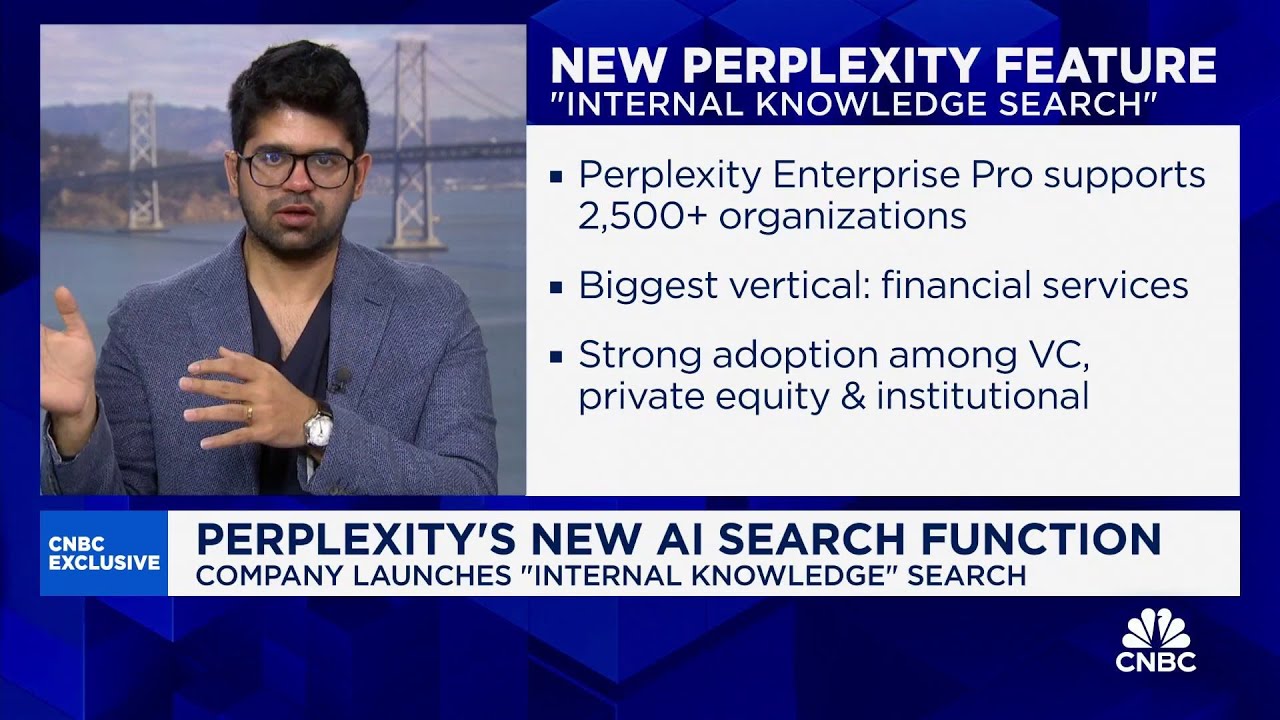
Aravind Srinivasan, CEO of Perplexity, introduced the “Internal Knowledge Search” feature, which integrates external web data with internal company information to enhance research capabilities, particularly for the financial services industry. He also discussed the shifting competitive landscape in AI search technologies, highlighting how changing consumer behaviors present opportunities for Perplexity to challenge established players like Google and Meta.
In a recent discussion, Aravind Srinivasan, CEO of Perplexity, highlighted the company’s new feature, “Internal Knowledge Search,” aimed at enhancing research capabilities for users. This feature is designed to consolidate external web data with internal proprietary company information, allowing users to conduct comprehensive research without the hassle of managing multiple tools. The goal is to create a centralized knowledge base that facilitates due diligence, investment decisions, and other critical business processes by integrating various data sources into one platform.
Srinivasan emphasized the importance of this feature for the financial services industry, which is a primary target for Perplexity. By enabling users to query both internal and external data, financial professionals can make more informed investment decisions. The integration of internal data with publicly available information allows users to assess the risk and reward of potential investments more effectively, potentially leading to significant financial gains.
The discussion also touched on the competitive landscape of AI search technologies, particularly in relation to established players like Google. Srinivasan suggested that Google and Meta’s dominance in search and advertising is becoming vulnerable as consumer behavior shifts. Users are increasingly moving away from traditional keyword searches towards more interactive and engaging applications, which presents an opportunity for new entrants like Perplexity to capture market share.
Srinivasan noted that the average query on Perplexity consists of 11 words, compared to just two to three words on Google. This shift in user behavior indicates a demand for more nuanced and detailed search capabilities, which Perplexity aims to fulfill. By catering to this evolving consumer preference, the company hopes to redefine how users interact with search engines and access information.
Overall, Perplexity’s advancements in AI search technology and its focus on integrating internal knowledge with external data position it as a formidable competitor in the AI landscape. The company’s commitment to enhancing research efficiency and providing targeted results could disrupt the current search engine duopoly, offering users a more comprehensive and user-friendly alternative for their information needs.