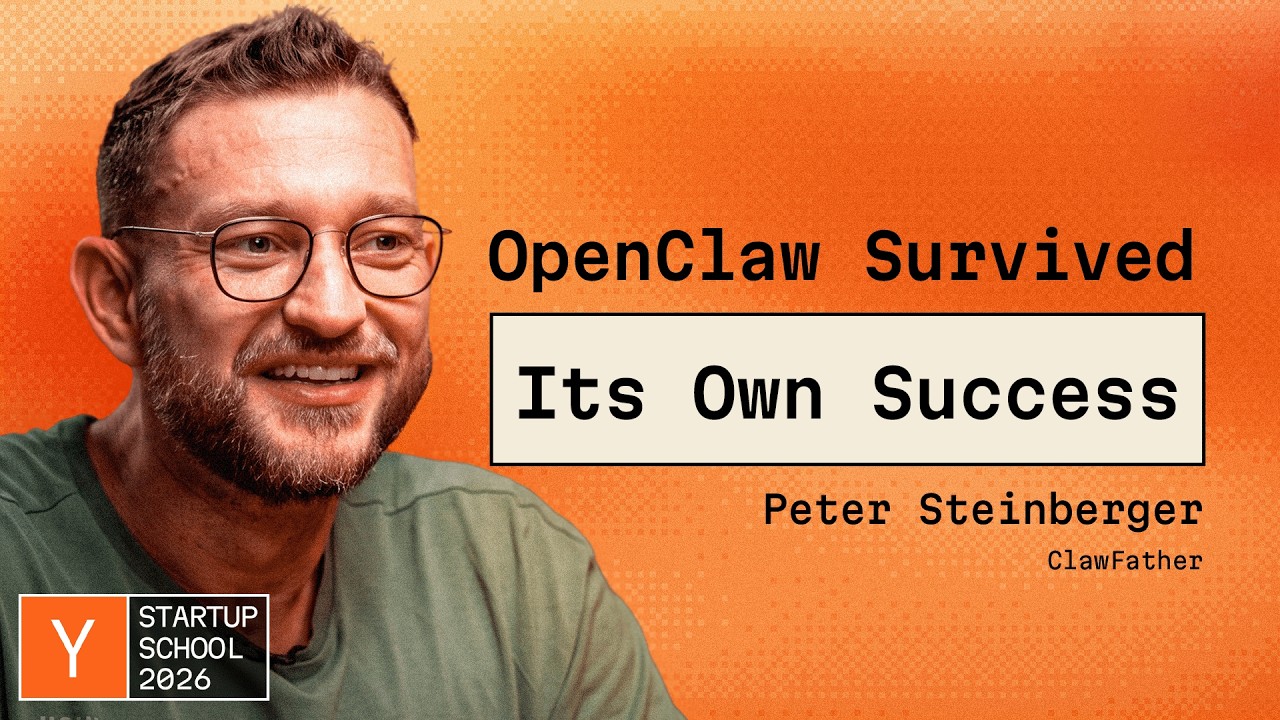
Peter Steinberger reflects on the rapid evolution and impact of OpenClaw, an open-source AI agent project he initiated about eight months ago, which in AI terms feels like several years of development. His journey began with a simple frustration—wanting to send prompts from his phone to his computer while multitasking—which led him to build a WhatsApp relay powered by AI. This early prototype felt magical to him, offering proactive, concise interactions that resembled a friend more than a machine. Despite his enthusiasm, the broader community initially struggled to grasp its significance until he shared it with friends, eliciting strong emotional reactions and validating its potential product-market fit.
The project quickly gained momentum after he launched it on Discord, where users engaged deeply, tested its limits, and helped it go viral. This sudden popularity brought intense media attention, security scrutiny, and community contributions, with tens of thousands of people opening issues or pull requests and thousands contributing code. However, the overwhelming response nearly broke him, leading to burnout and privacy invasions. Despite these challenges, Peter navigated offers from major companies, ultimately choosing to maintain OpenClaw’s open-source ethos, emphasizing the importance of personal brand and trust over quick commercial gains.
Peter candidly discusses the difficulties of managing an open-source project at scale, especially balancing security, feature development, and community expectations. He faced numerous security reports, some of which were more about gaining recognition than genuine help, and struggled with the complexity of maintaining a rapidly evolving codebase with thousands of configuration options. Competition from well-funded companies and dependency on external AI models also posed significant challenges, highlighting the critical lesson that a project’s business model is deeply tied to its dependencies. Despite setbacks, OpenClaw saw a resurgence in downloads and community engagement, underscoring the unpredictable nature of hype cycles.
The fun and joy of building OpenClaw waned as it became a responsibility rather than a passion, with Peter spending more time fixing bugs, addressing security, and managing community demands than innovating. However, support from companies like Nvidia and the formation of a nonprofit helped restore balance and rekindle his enthusiasm. He stresses the importance of having fun in development, listening to one’s gut, and focusing on building what truly matters. OpenClaw’s mission remains to demystify AI, making it accessible, enjoyable, and secure for users, while fostering a vibrant open-source ecosystem.
Looking ahead, Peter envisions OpenClaw evolving beyond text-based interactions into voice and multimodal interfaces, with agents that are always on and collaboratively orchestrate work within teams. He emphasizes the value of open-source alternatives that respect user data privacy by running locally and highlights ongoing efforts to improve reliability, scalability, and proactive agent behavior. His advice to developers is to build tools they themselves want to use, maintain focus amidst distractions, and embrace the iterative process of shipping improvements. Ultimately, OpenClaw represents a pioneering step toward integrating AI agents seamlessly into everyday workflows, driven by community, openness, and a passion for innovation.