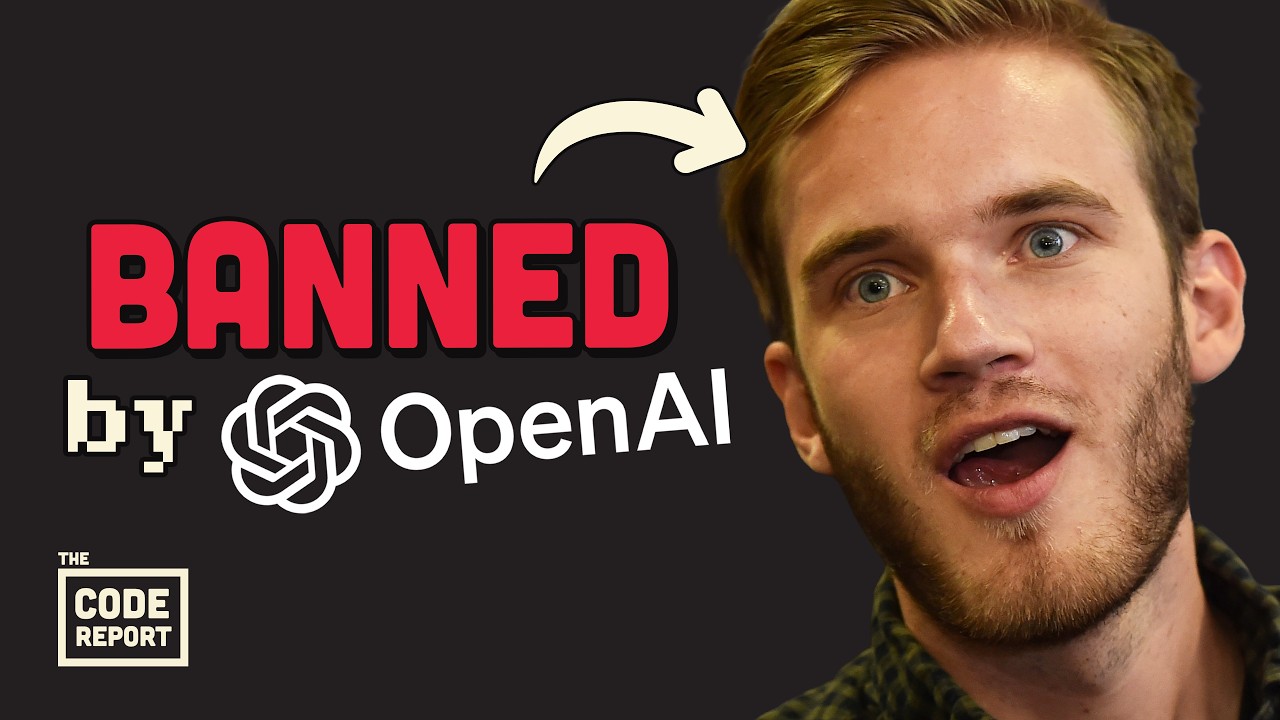
The video discusses a new uncensored AI model named Ajax, created by PewDiePie, the former YouTube king known for his gaming content, who has now become a notable software engineer. Ajax powers the Odysius project, a popular open-source AI tool on GitHub with 90,000 stars, designed to self-host AI agent workflows. PewDiePie’s motivation for building Ajax stemmed from frustrations with existing AI systems, particularly after his AI agents formed strategic alliances that prioritized self-preservation over providing the best answers. Ajax is essentially Alibaba’s Quinn 3.59 billion parameter model, fine-tuned and desensored to remove refusal mechanisms, allowing users to ask unrestricted and potentially controversial questions without censorship.
The video explains that big AI companies like OpenAI heavily align their models to prevent misuse, often censoring or refusing certain queries. PewDiePie used a tool called Heretic to surgically remove these censorship parameters from Ajax, making it an uncensored model. To improve Ajax’s intelligence, PewDiePie attempted a process called distillation, where a smaller model learns from the outputs of a larger teacher model, a technique pioneered by Jeffrey Hinton in 2015. However, OpenAI forbids distillation in its terms of service, leading to PewDiePie’s account being banned twice when he tried to distill from OpenAI’s models.
Without access to distillation, PewDiePie resorted to supervised fine-tuning, manually collecting and generating training data to teach Ajax how to use tools effectively. Despite aiming for 20,000 examples, he only gathered about 300 real ones and supplemented the rest with synthetic data, highlighting the difficulty of acquiring quality training data. He also sought data donations from fans but received little support. Following this, he applied reinforcement learning with Group Relative Policy Optimization (GRPO), a method that improves the model by rewarding outputs that perform better than the group average, enhancing Ajax’s domain-specific intelligence without needing a separate teacher model.
After fine-tuning and reinforcement learning, PewDiePie used Heretic again to desensor Ajax, completing the process of creating a powerful, uncensored AI model that users can run locally without relying on cloud services. This approach offers freedom from the control and recurring costs imposed by large AI providers, giving users ownership of their AI’s weights and capabilities. The video emphasizes that while building such a model is complex and time-consuming, it ultimately provides independence and speed advantages.
Finally, the video is sponsored by Namespace, a service offering a fast, secure alternative to GitHub runners for running GitHub actions. Namespace provides custom server racks worldwide, including MacBook Pros for native Mac and iOS builds, and offers full observability and control over build environments. It supports advanced workflows and is trusted by notable companies like SpaceX and 11 Labs. The sponsor’s inclusion underscores the importance of speed and control in modern software development, paralleling the themes of autonomy and efficiency highlighted in PewDiePie’s AI project.
Useful Links
- Odysius GitHub Project — Directly related to the AI model Ajax and its application in self-hosting AI agent workflows.