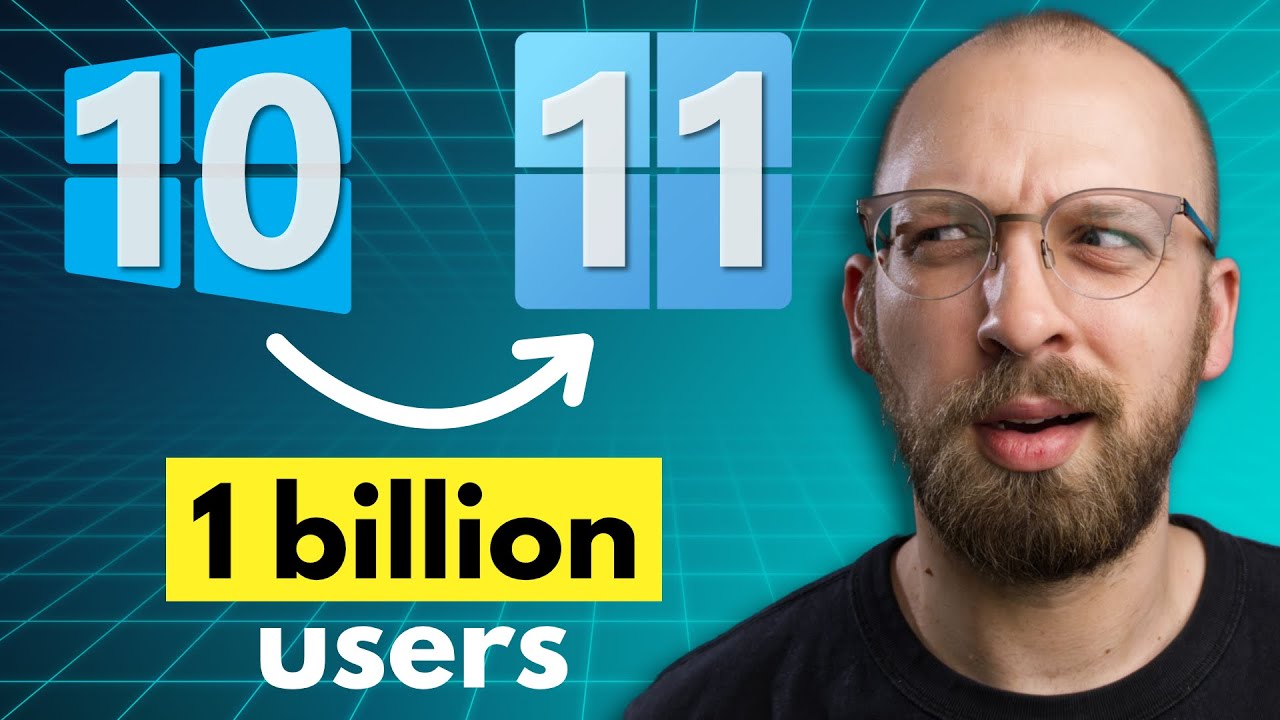
This week’s tech news roundup highlights a surprising milestone for Microsoft: Windows 11 has reached one billion users, surpassing Windows 10’s adoption rate by 140 days, despite its stricter hardware requirements and mixed reception among tech enthusiasts. The host notes that while online communities often criticize Windows 11 for features like Copilot, the broader market—especially enterprise customers and everyday users—has driven its rapid growth. Microsoft is also reportedly working to rebuild trust in Windows by focusing on performance, reliability, and user experience.
Samsung has teased a new privacy screen feature for the upcoming Galaxy S26 Ultra. Unlike traditional physical privacy screen protectors, Samsung’s solution can be toggled on and off dynamically, providing privacy only when needed, such as during password entry or when viewing sensitive notifications. This feature appears to rely on new display technology rather than just software, making it a standout addition to an otherwise incremental phone upgrade.
Tesla’s latest earnings report reveals the company’s first-ever annual revenue decline, with profits dropping 46% and automotive revenue down 10%. Tesla plans to discontinue the Model S and X, focusing instead on three core car models and shifting its identity toward robotics and AI, including projects like the Cybercab, Robotaxi, and the Optimus robot. However, the host cautions viewers to be skeptical of Elon Musk’s ambitious timelines, as past promises have not always materialized.
In product news, Apple has released the AirTag 2 with improved range and louder speakers, DJI launched the RS5 gimbal for mirrorless cameras, and Samsung’s Galaxy Trifold is now available outside Korea at a steep price. The gaming world saw GOG announce plans for first-party Linux support, Nvidia GeForce Now is getting a native Linux client, and several Linux gaming developers are forming the Open Gaming Alliance. Meanwhile, the French government is moving away from US tech giants by adopting Vizio, an open-source video conferencing tool, and investing in North Sea wind projects to reduce reliance on foreign energy.
Other notable updates include TCL nearing Samsung’s lead as the world’s largest TV maker, Red Power Bikes being sold for a fraction of its former valuation after bankruptcy, and SpaceX considering a $1.5 trillion IPO or a merger with Tesla or xAI. Apple is reportedly scrapping parts for 1.5 million unsold iPhone Air units due to low demand, Lenovo leaked Nvidia’s upcoming N1X chip for Windows laptops, and Figure showcased a robot with impressively fluid movements. Google’s Project Genie, which generates interactive worlds from prompts, is now live for testers, and Apple acquired Israeli AI startup QAI for $2 billion to enhance its AI capabilities. The video concludes with a sponsorship message from 80,000 Hours, encouraging viewers to pursue impactful careers addressing global challenges like AI safety, nuclear weapons, and climate change.