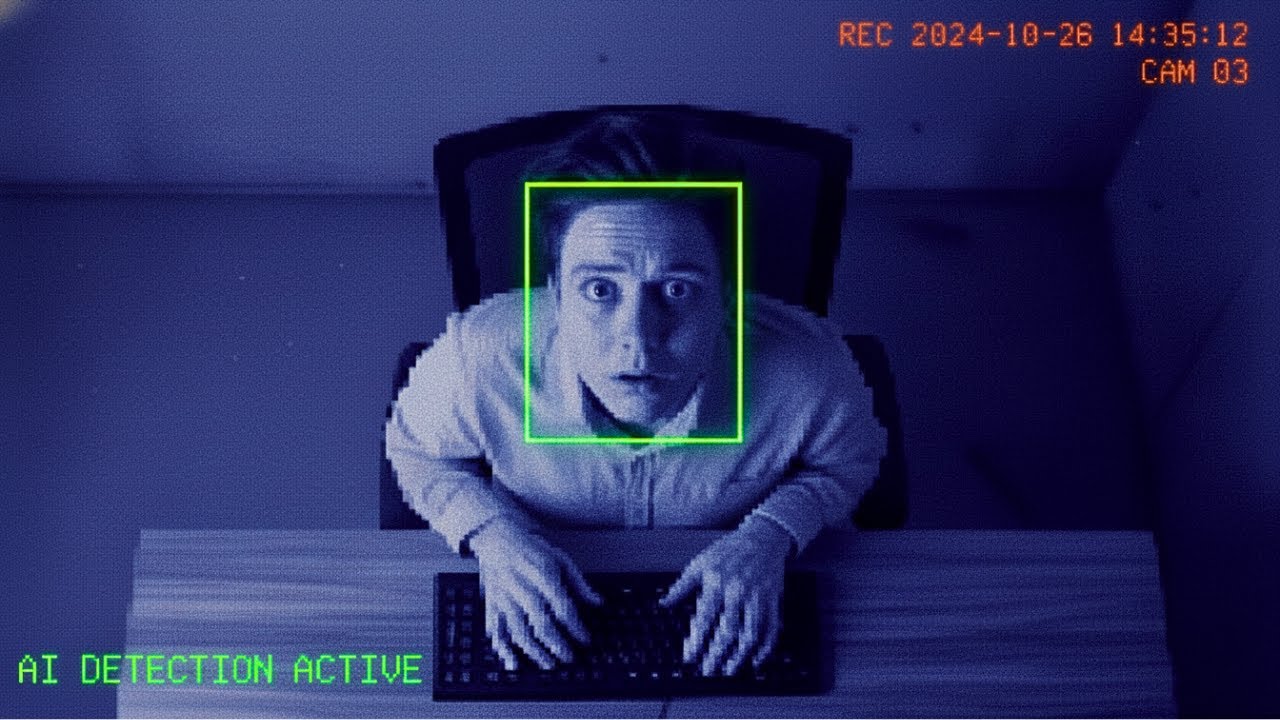
The video depicts a dystopian 2027 workplace where AI surveillance monitors employees’ physical presence and work quality in real-time, deducting pay for any absence and providing constant, critical feedback through voice alerts. It serves as a cautionary tale highlighting the ethical risks of invasive AI monitoring, emphasizing the potential loss of privacy, autonomy, and trust in future work environments.
The video presents a dystopian vision of a future AI-powered workplace surveillance system set in 2027. The creator demonstrates a setup where an AI monitors an employee’s workstation using an IP camera combined with machine learning models like YOLO for person detection and bounding box tracking. The system tracks how long the person stays at their desk and deducts pay for any time spent away, effectively paying employees only for the exact seconds they are physically present and working. The AI also verbally admonishes the user when they leave their workstation, creating a highly invasive and stressful environment.
In addition to physical monitoring, the system captures screenshots of the user’s computer screen and analyzes the content using a vision-language model (Qwen 3VL) and a language model (Qwen 3.6B). This AI then provides real-time voice feedback on the quality of the work, such as pointing out syntax errors and poor coding practices. The feedback is delivered through a text-to-speech service, making the AI’s critique audible and constant. This adds another layer of pressure, as the user is not only watched but also judged continuously on their work output.
The creator explains the technical setup in detail, including the use of CUDA for GPU acceleration to improve performance, threading for smooth operation, and local Whisper for voice recognition. The system logs work activity with timestamps and screenshots, maintaining a detailed record of the employee’s behavior and productivity. The hourly wage is set within the code, and the system dynamically calculates earnings and deductions based on time spent at the workstation, reinforcing the dystopian theme of hyper-surveillance and micromanagement.
Throughout the demonstration, the AI interacts with the user in a cold, robotic voice, issuing warnings and reminders whenever the user leaves their desk. The creator highlights how easy it was to build this system using existing tools and models, emphasizing the frightening potential for such technology to be deployed in real workplaces. The video serves as a cautionary tale about the dangers of excessive workplace monitoring and the erosion of privacy and autonomy in the name of productivity.
In conclusion, the video combines technical explanation with a creative dystopian scenario to provoke thought about the future of AI in the workplace. The creator hopes this vision does not become reality, as it represents a nightmarish loss of freedom and trust between employers and employees. The project showcases both the power and the ethical risks of AI surveillance, encouraging viewers to consider how technology should be used responsibly to support rather than control workers.