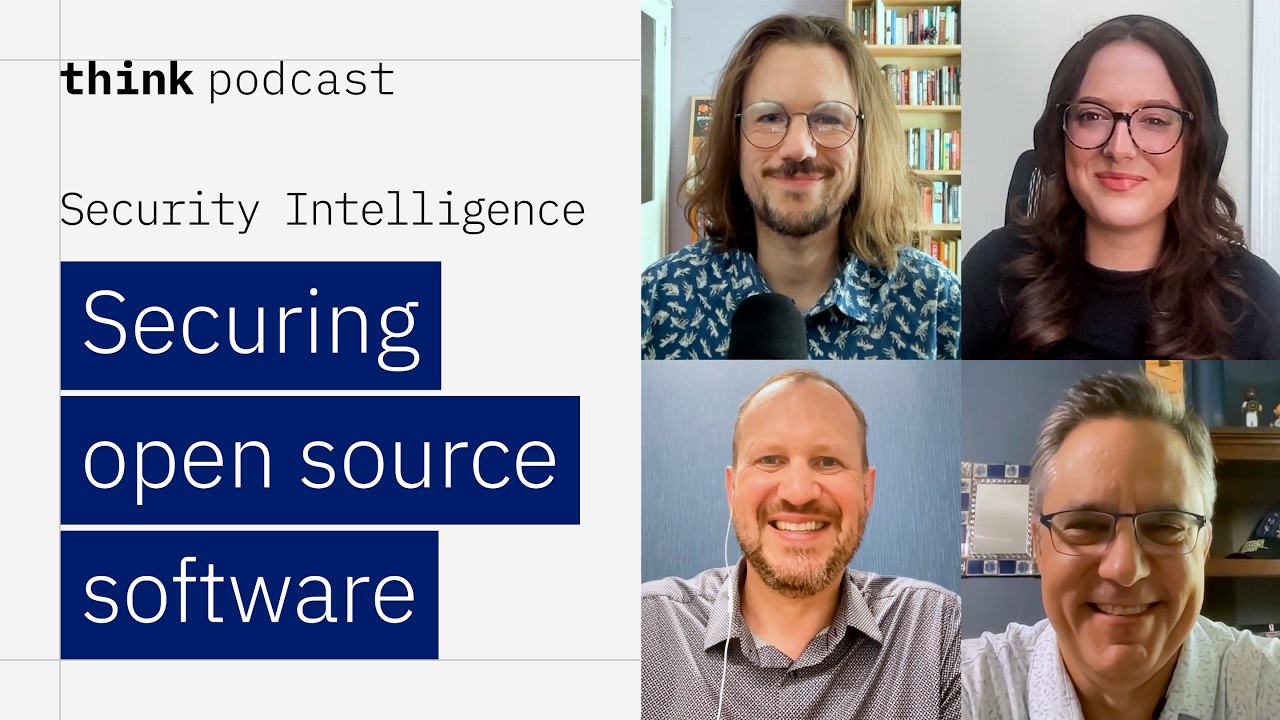
The podcast discusses IBM and Red Hat’s $5 billion Project Lightwell initiative to enhance open-source security amid the rising complexity and AI-driven vulnerabilities in software supply chains. Experts highlight the importance of human oversight, trust, and tailored security policies to address new AI-related threats like SIMJacking, emphasizing that while AI introduces challenges, fundamental security principles and vigilance remain crucial.
The podcast episode centers on the evolving landscape of open-source security in the AI era, highlighting IBM and Red Hat’s launch of Project Lightwell—a $5 billion initiative aimed at enhancing the security of the open-source ecosystem. Brent Holded from Red Hat explains that Lightwell extends Red Hat’s trusted productization model from about 15,000 packages to over 1.5 million language libraries used in development, addressing vulnerabilities that can be chained together for exploits. This expansion is critical given the widespread deployment of these libraries in enterprise environments and the increasing complexity of software supply chains.
The panelists discuss why now is the right time for such an initiative, emphasizing the rapid advancements in AI capabilities that enable the discovery and exploitation of complex vulnerability chains. Dave McInness from IBM expresses optimism about Lightwell, noting that it embodies the trusted open-source model and is a necessary evolution as AI lowers the barrier for attackers. He stresses the importance of trust and multiple layers of review in open-source security, especially as AI-generated code becomes more prevalent, and highlights the industry’s strong support for this effort.
The conversation then shifts to a new AI-related attack technique called SIMJacking, where attackers manipulate AI coding agents by planting malicious instructions disguised as harmless files. While this represents a novel threat vector, the panelists agree that it is essentially a sophisticated form of social engineering rather than a fundamental flaw in AI models. They emphasize the ongoing need for human oversight and guardrails in AI-driven development pipelines to prevent such attacks, acknowledging that while AI tools are powerful, humans remain the critical control point in security.
Further discussion revolves around the findings of Layer X Security’s AI usage report, which reveals that AI adoption and associated risks are concentrated among a subset of “super users” within enterprises. Sophie Cunningham and Brent Holded debate the implications, with Sophie cautioning that less experienced users might pose greater risks due to unfamiliarity, while Brent highlights that power users tend to have a more strategic approach to AI, managing systems rather than just writing code. The panel agrees on the importance of understanding organizational AI usage patterns to tailor security policies effectively.
In closing, the experts underscore that while AI introduces new challenges, many security principles remain the same, and the industry is adapting to the complexity and speed of AI-driven environments. They advocate for continuous vigilance—“being worried about everything all the time”—and stress that solutions lie in combining human judgment with technological guardrails. The episode ends with a reminder to listeners to stay informed and engaged with ongoing developments in AI and cybersecurity.