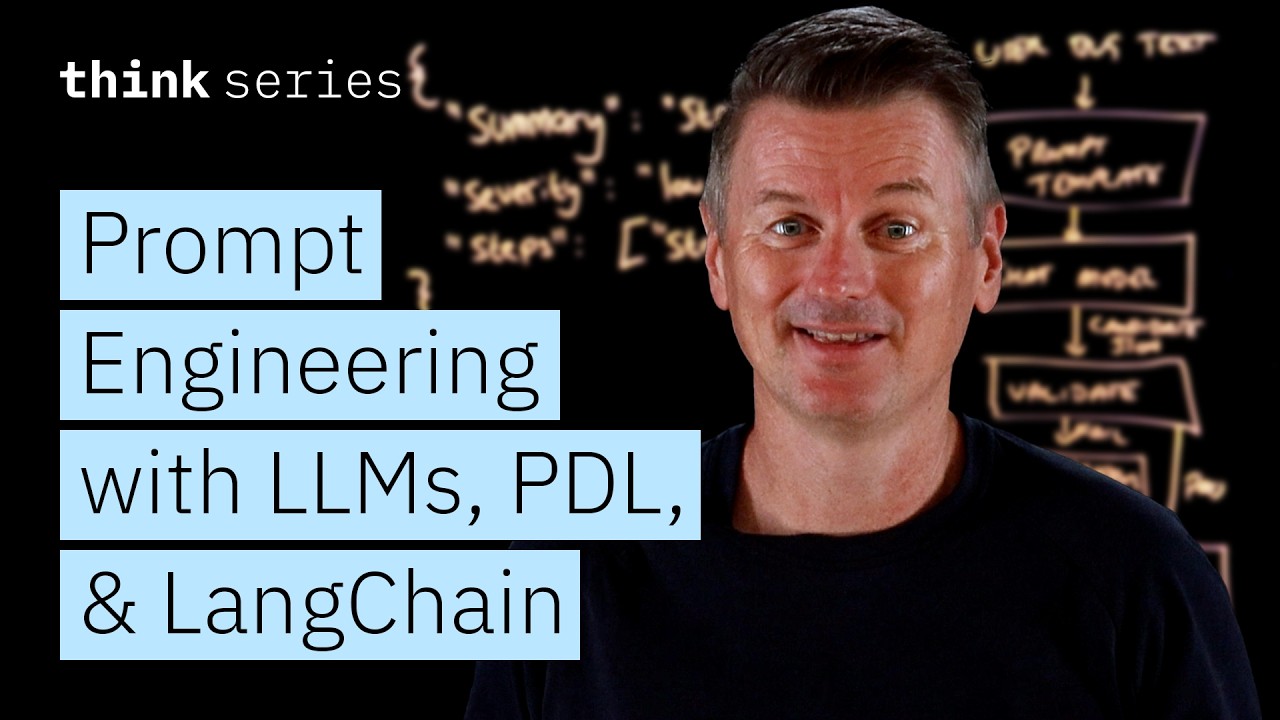
The video begins by reflecting on the early hype around prompt engineering as a profession, where experts could craft precise prompts to coax large language models (LLMs) into performing tasks beyond the reach of typical users. However, as LLMs have evolved to better understand user intent, the mystique around prompt engineering has diminished. Despite this, LLM outputs remain inherently unpredictable because they operate probabilistically, sampling each token based on prior context. This variability can lead to inconsistent responses, which poses challenges when integrating LLMs into software systems that require precise and deterministic outputs.
To illustrate this, the video presents an example of using an LLM to structure bug reports into strict JSON format. The desired JSON includes fields like a summary, severity level, and a list of steps. While an LLM can often produce the correct format when given instructions, it sometimes deviates by adding extra text, renaming keys, or failing to adhere to the schema. Such inconsistencies can cause software failures. Therefore, prompt engineering in this context involves defining a clear contract for the output format, implementing control loops to validate and retry responses if they don’t meet the contract, and ensuring observability to track prompt performance and prevent regressions.
The video then introduces LangChain, an open-source framework designed to build LLM applications through composable pipelines. LangChain allows developers to define multiple steps around an LLM call, such as preparing prompts, invoking the model, validating outputs, and handling retries or fallbacks. Each step is encapsulated as a “runnable” that takes input and produces output, enabling structured workflows. In the bug report example, LangChain manages the prompt template, calls the chat model, validates the JSON response, and either sends it to the application or triggers retries and fallback strategies. This approach helps maintain consistency and reliability in LLM-powered applications.
Next, the video discusses Prompt Declaration Language (PDL), a declarative specification language for LLM workflows. PDL uses a single YAML file to define the prompt, the expected output contract, and control flow mechanisms like conditionals and loops. The PDL interpreter executes this specification by assembling context, calling models and tools, enforcing type checks, and producing results. PDL emphasizes a spec-first approach, where the entire interaction with the LLM is described declaratively, including input/output types and control logic. It also supports tracing and live inspection of each step, aiding debugging and refinement.
In conclusion, the video contrasts LangChain and PDL as complementary tools for robust prompt engineering. LangChain is code-first, focusing on building pipelines with modular runnables, while PDL is spec-first, encapsulating the entire workflow in a declarative YAML file. Together, these tools represent a maturing ecosystem that transforms prompt engineering from an art of “whispering magic words” into a disciplined software engineering practice. They enable developers to build reliable, maintainable, and observable LLM applications that can handle the inherent variability of language models.