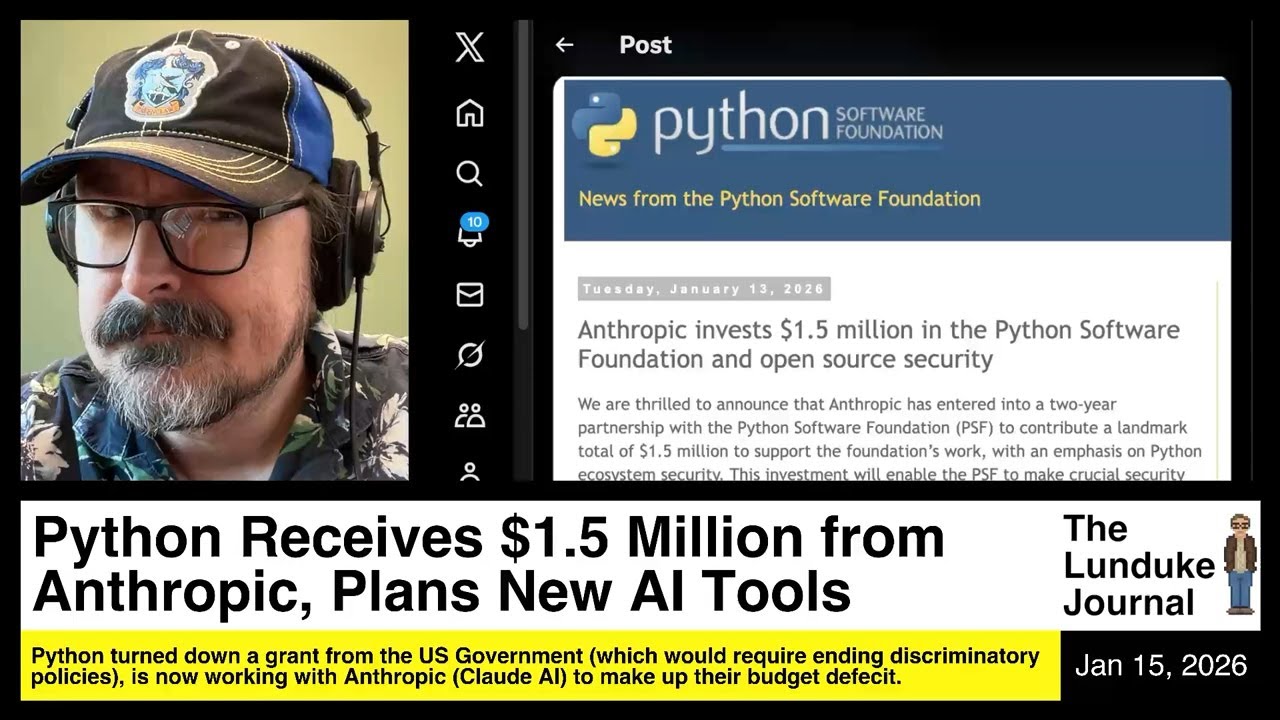
The Python Software Foundation (PSF) recently received a $1.5 million investment over two years from Anthropic, the company behind Claude AI. This funding comes at a critical time for the PSF, which had previously turned down a $1.5 million US government grant due to stipulations that would have required the foundation to cease all discriminatory and DEI (Diversity, Equity, and Inclusion) policies. After rejecting the grant, the PSF faced a significant budget deficit and only had about six months of financial runway left, prompting concerns about potential layoffs or other cost-cutting measures.
In response to its financial challenges, the PSF launched a fundraising campaign called “Python is for Everyone.” The campaign emphasized inclusivity, but its execution was criticized for only featuring images of Black individuals, which some found contradictory to the campaign’s message of universality. Despite the controversy, the campaign managed to raise approximately $314,000, covering about 20% of the PSF’s deficit. However, it became clear that individual donations alone would not be sufficient to resolve the foundation’s financial issues, making corporate backing essential.
Anthropic’s investment, spread over two years at $750,000 per year, goes a long way toward closing the PSF’s budget gap, though it does not fully resolve it. The PSF announced that the funds would be used for several projects, including the development of new tools for automated, proactive review of all packages uploaded to the Python repository. This likely involves integrating AI-powered systems—potentially leveraging Anthropic’s technology—into Python’s infrastructure. Additional funds will support community grants, core infrastructure, and other programs.
Notably, Anthropic’s investment did not come with any requirements regarding the PSF’s DEI policies, unlike the rejected US government grant. This suggests that Anthropic is comfortable with the foundation’s current stance on diversity and inclusion. The video also highlights ongoing changes within the Python ecosystem, such as a proposed hard dependency on the Rust programming language for CPython, which is being led by a relatively new core team member from NVIDIA.
Overall, the video paints a picture of a foundation in transition, facing both financial and cultural shifts. While the new funding from Anthropic provides much-needed relief, the PSF still faces a budget shortfall and ongoing debates about its direction and policies. The integration of AI tools and a potential shift toward Rust signal significant technical changes ahead. The video concludes with a note of appreciation for the Lunduke Journal’s supporters and a promise to continue monitoring developments in the Python community.