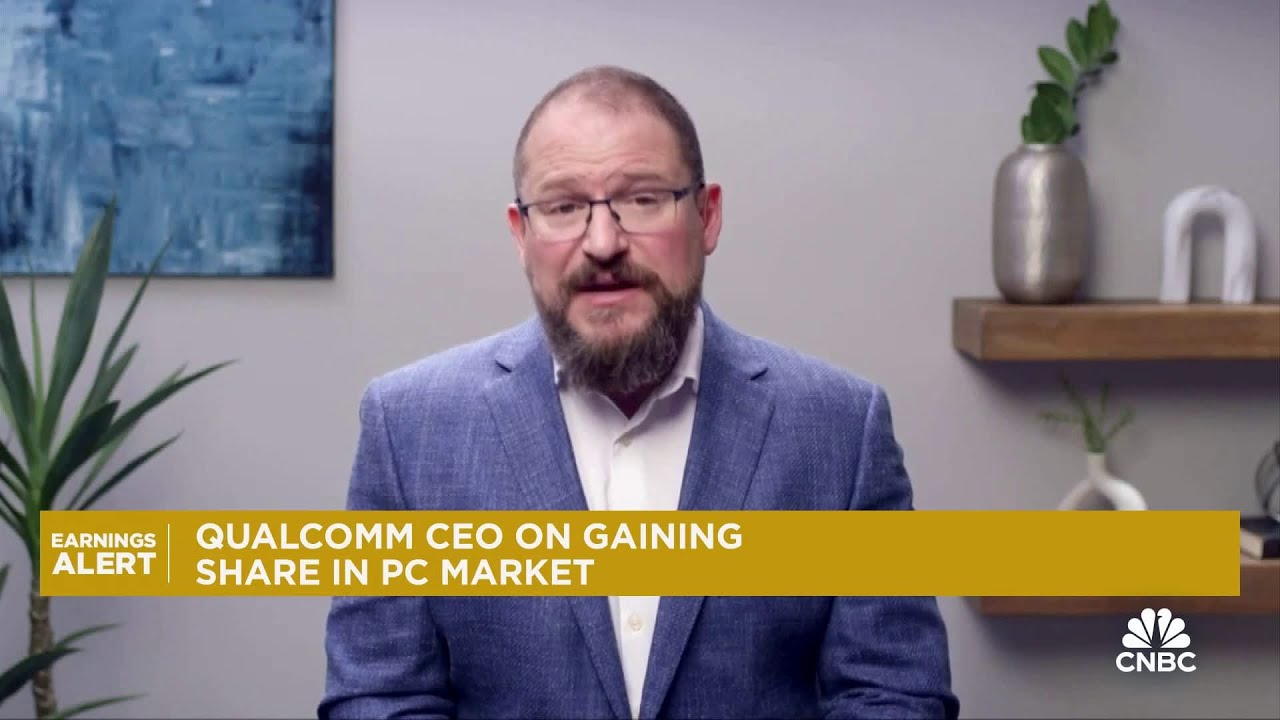
Qualcomm CEO Cristiano Amon highlighted the company’s growth in the PC market, aiming for $22 billion in non-handheld revenues by 2029, with significant gains in the smartphone sector contributing to a strong performance. He also introduced DeepSeek as a positive development for Qualcomm, which is expected to enhance their prospects in both the PC and smartphone markets, despite some concerns about market concentration.
In a recent interview, Qualcomm CEO Cristiano Amon discussed the company’s growth prospects, particularly in the PC market and its performance in the automotive and Internet of Things (IoT) sectors. Amon highlighted that Qualcomm has achieved a 10% market share in the U.S. retail laptop segment priced at $800 or more, indicating that this is just the beginning of their expansion. He emphasized the company’s goal to reach $22 billion in non-handheld revenues by 2029, with a target of $4 billion specifically from Windows PCs, which would represent a 12% market share in a $35 billion addressable market.
Amon also addressed Qualcomm’s success in the smartphone sector, noting that the company is experiencing significant gains in the premium tier of the market, particularly in China. This growth has contributed to Qualcomm’s QCT business achieving its first $10 billion quarter. He stressed that this increase in market share is driven by end customer demand rather than channel stockpiling, which reflects positively in their revenue guidance for the upcoming quarter.
The CEO mentioned the introduction of new products at lower price points, such as a $600 laptop, which will help expand Qualcomm’s addressable market further. He expressed confidence in the company’s trajectory, stating that design wins continue to grow, and they are well-positioned to capture more market share in the PC segment.
Amon also discussed the recent announcement of DeepSeek, which he described as a tailwind for Qualcomm. He noted that within days of the announcement, demonstrations of DeepSeek running on Snapdragon devices were showcased, including its integration with Microsoft’s Copilot on PCs. This development is seen as a positive indicator for Qualcomm’s future prospects in both the PC and smartphone markets.
Despite the optimistic outlook, concerns remain regarding market concentration, particularly in China and the automotive sector. Amon acknowledged these issues but reassured that Qualcomm’s diversified global footprint and partnerships with various automakers would help mitigate potential impacts from tariffs and market fluctuations. Overall, while there are challenges, Amon’s insights suggest a strong growth trajectory for Qualcomm in multiple sectors.