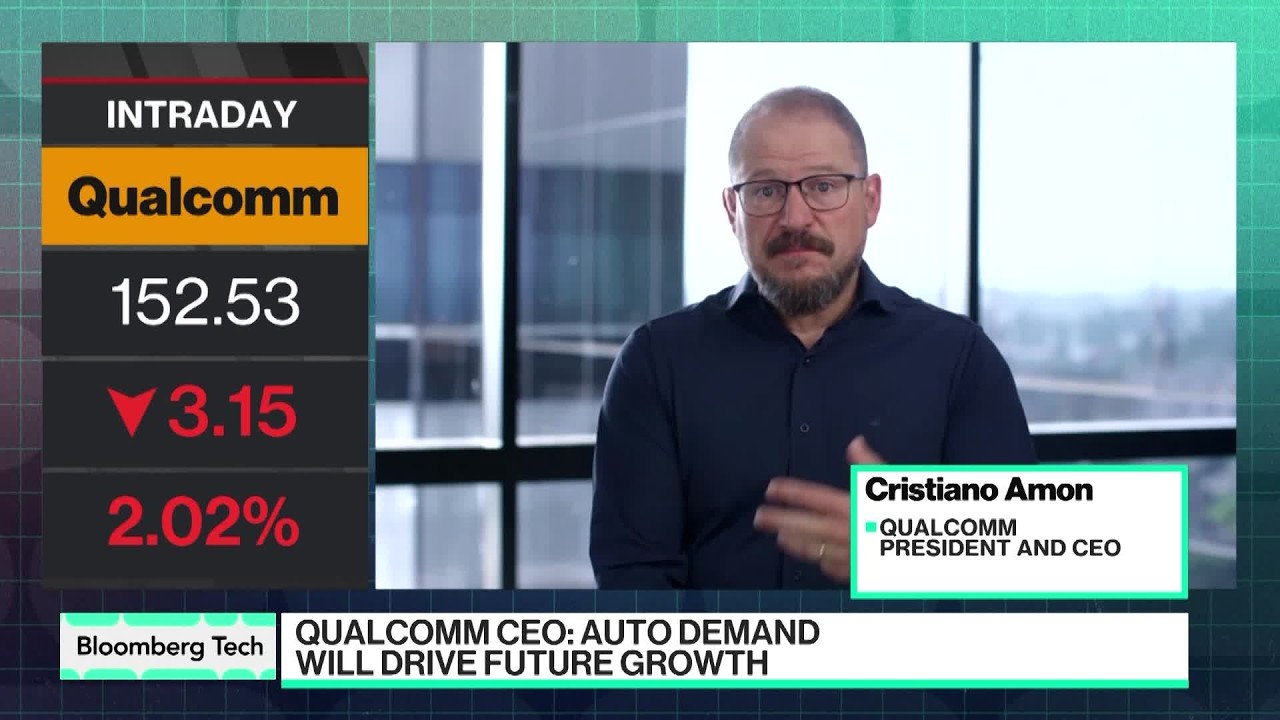
Qualcomm is undergoing a significant transition, similar to what Nvidia experienced, as its traditional smartphone business faces pressure due to unprecedented memory price increases and shortages. The handset market is expected to decline by about 20% from 2026 to 2027, not because of reduced consumer demand but due to supply constraints and high memory costs. This situation has led to consumers opting for older or entry-level premium phones instead of the latest models, impacting Qualcomm’s earnings and gross margins temporarily. However, these issues are expected to normalize as supply improves and pricing adjusts.
The company is actively transforming its business by diversifying beyond handsets. By fiscal year 2027, non-handset revenue is projected to grow by 60%, driven primarily by automotive, data center, and IoT segments. Automotive is becoming a significant growth area with advancements in assisted driving and autonomy technologies. The data center business is ramping up, with a target of $5 billion in revenue by fiscal 2027, and IoT is expanding, particularly in industrial applications. Qualcomm aims for non-handset revenue to reach $40 billion by fiscal 2029, reducing handset business to just one-third of total revenue.
Qualcomm’s data center strategy includes a $15 billion opportunity by 2029, supported by a roadmap involving custom ASICs for hyperscalers in both the U.S. and China, new high-bandwidth compute accelerators, and CPUs expected to ramp in 2028. The company’s data center exposure in China is expected to be comparable to other semiconductor providers, reflecting the market’s size and GDP. Qualcomm’s balanced approach across custom ASICs, accelerators, and CPUs positions it well to capture growth in this sector.
The acquisition of Modula, a software company with a strong team experienced in Apple’s Swift programming language and Tesla Autopilot, is a strategic move to enhance Qualcomm’s software stack capabilities. Modula aims to create an open AI platform scalable from edge to cloud, which will benefit Qualcomm and the broader industry. This acquisition addresses previous concerns about Qualcomm’s software capabilities in the data center and has generated significant interest from other semiconductor companies.
Looking ahead, Qualcomm expects the smartphone market, particularly Android in China, to have bottomed out in Q3, with sequential growth anticipated. However, the overall market will remain suppressed in the near term due to ongoing memory supply and pricing challenges. Despite these short-term headwinds, Qualcomm’s diversified growth strategy in automotive, data center, and IoT segments positions the company for a strong future beyond its traditional handset business.