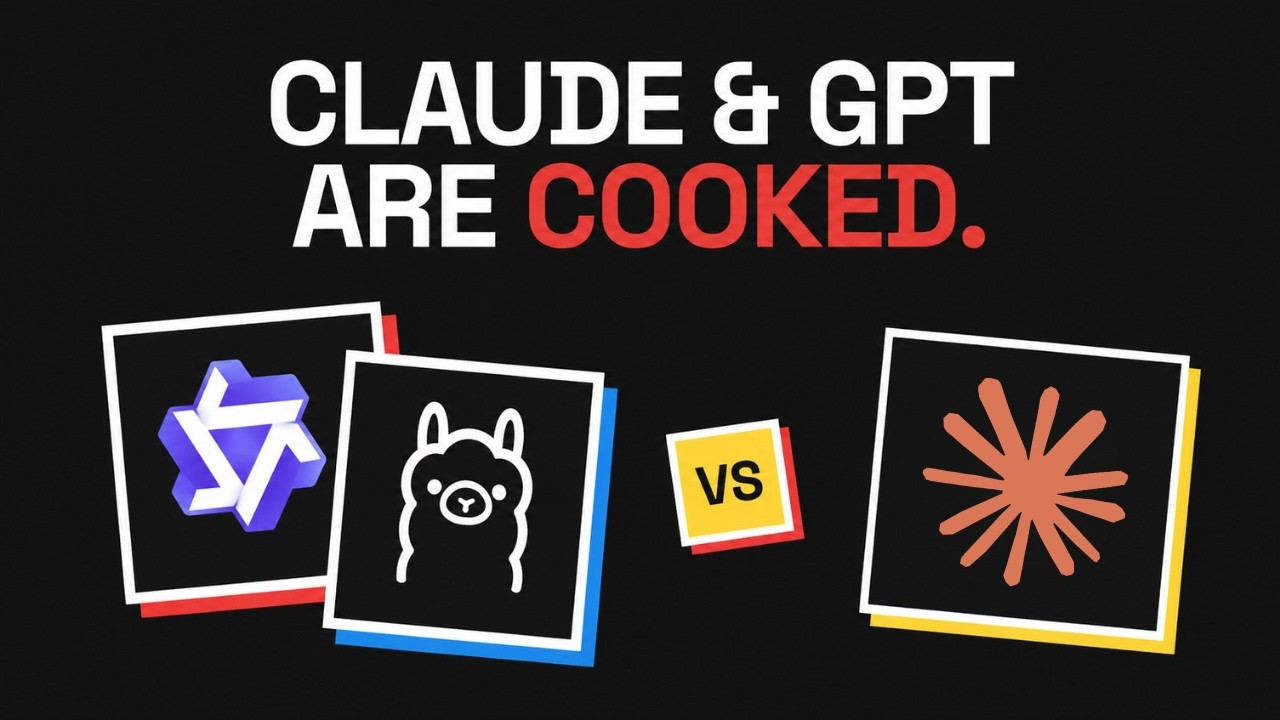
The video introduces Qwen 3.6, a local coding agent developed by Alibaba that runs entirely offline on your own machine, contrasting it with Claude Code, a cloud-based coding tool that costs $200 a month. Unlike Claude Code, Qwen 3.6 requires no API keys, accounts, or cloud access, making it a free and open-source alternative. The standout feature is Qwen Code, an agentic coding harness that reads files, writes code, runs terminal commands, and iterates on its own work autonomously, similar to Claude Code but without the associated costs or cloud dependency.
The presenter tests Qwen 3.6 against Claude Code on three progressively complex coding tasks: building a 3D aquarium with animated fish, creating a portfolio website, and developing a macOS-style desktop environment. While Claude Code completes tasks faster and with slightly more polish, Qwen 3.6 impressively matches or even surpasses it in some aspects, especially considering it runs locally on a laptop. However, Qwen 3.6 struggles with some interactive elements, such as clickable icons in the desktop environment, highlighting its current limitations.
Setting up Qwen 3.6 is straightforward using Ollama, a platform to run local models. The key step is configuring Qwen Code to use the local model instead of defaulting to a cloud API, which involves editing a settings file to point to the local server and increasing the context window size to 64K tokens to prevent the model from forgetting earlier parts of the task. Once configured, the agent behaves like Claude Code, capable of planning, coding, and self-correcting entirely offline on your hardware.
Despite its promise, the video is candid about Qwen 3.6’s limitations. It is slower than Claude Code, taking significantly longer on complex tasks, and it does not yet match the reliability or speed of frontier cloud models on large-scale projects. However, the real value lies in its unique advantages: it can handle code that cannot be sent to the cloud for legal or privacy reasons, supports offline work without metered usage, and is ideal for prototyping, learning, and quick scripting without ongoing costs.
In conclusion, Qwen 3.6 represents a major step forward for local AI coding agents, offering a genuinely usable, free, and offline alternative to expensive cloud services. While it is not a full replacement for high-end cloud models like Claude Code, it opens up new possibilities for developers who need privacy, offline capabilities, or cost-free tools. The video encourages viewers to consider trying Qwen 3.6 on their own machines and invites discussion on its potential impact in the coding community.