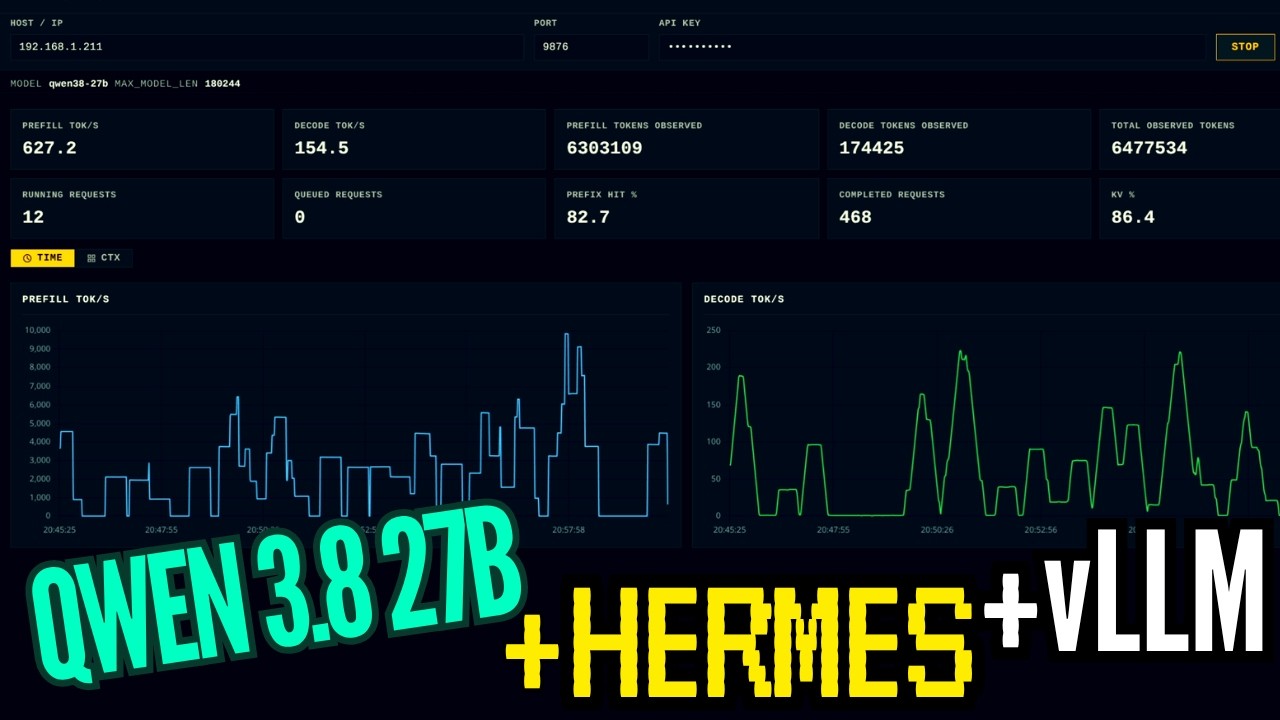
The video discusses the presenter’s experience with various local large language models (LLMs), focusing primarily on the Quinn 3.8 27B and Quinn 3.8 Flash Next models. The presenter highlights the extensive usage and testing of these models, noting that while the Flash Next model requires running at a lower precision (int4) for performance reasons, the 27B model runs at FP16 and delivers high-quality outputs. Key settings such as GPU memory utilization, max model length, batch tokens, and caching strategies are explained, emphasizing the importance of prefix caching and chunk prefill for faster reloads and efficient processing. The presenter also mentions running these models on a powerful quad 3090 GPU rig while multitasking, demonstrating the robustness of the setup.
The presenter shares insights into the performance and quality differences between the models, particularly in agentic workflows using Hermes Agent. While the Flash Next model excels in creative and deep conversational tasks, the 27B model is preferred for complex coding projects and large-scale agentic processes due to its stability and ability to complete tasks reliably. The video also touches on other models like Deep Seek V4 Flash and GLM 5.3, noting their strengths and limitations, especially in terms of speed and code quality. The presenter expresses excitement about upcoming model releases, such as Quinn 4 and Quinn 4 27B, which promise revolutionary improvements.
A significant portion of the video is dedicated to demonstrating the VLM Monitoring App developed with Quinn 3.8 27B and Hermes Agent. The app allows users to monitor and manage multiple agents working simultaneously on research and coding tasks. The presenter explains how running multiple sub-agents in parallel, even on slower models, can yield high-quality results efficiently by distributing the workload. This agent swarm approach is likened to having a box full of geniuses working together, where the collective output surpasses that of fewer, faster agents. The app provides real-time statistics on token usage, request queues, and cache hit rates, enabling users to optimize agent performance dynamically.
The presenter emphasizes the practical benefits of using agentic workflows with local LLMs, especially for users with powerful hardware setups like quad 3090 GPUs. By tuning parameters such as the maximum number of sequences and managing sub-agent delegation, users can balance throughput and output quality effectively. Although running many agents simultaneously can slow down individual response times, the overall productivity and quality gains make this approach worthwhile for complex projects. The video also advises caution against running GPU servers in virtual machines due to performance hits, recommending LXC containers instead for near-native performance.
In closing, the presenter thanks the community and supporters for their engagement and encourages viewers interested in local AI and home lab setups to explore additional resources and playlists available on the channel. The video serves as both a practical guide and a demonstration of the evolving capabilities of local LLMs and agentic systems, showcasing how thoughtful configuration and agent collaboration can overcome hardware limitations and deliver impressive results in coding and research tasks.