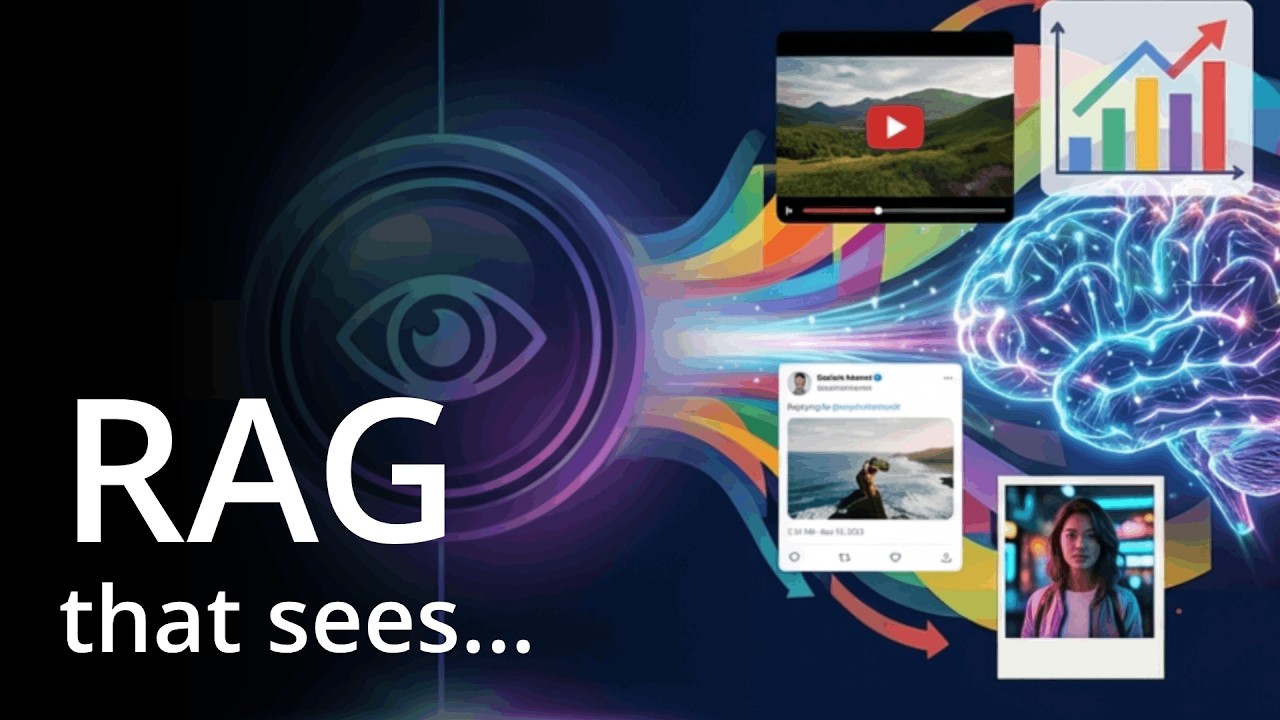
The video introduces the Qwen 3 VL embedding models, which are among the first models from Qwen for 2026. These models are notable for their multimodal capabilities, meaning they can process and embed not just text, but also images and videos into a shared vector space. The presenter explains the concept of embeddings as numerical representations of meaning, allowing for efficient similarity comparisons between different types of content. The key innovation here is that text, images, and videos about the same subject (like a cat) will have similar embeddings, enabling unified search and retrieval across modalities.
A significant part of the video is dedicated to explaining the difference between embedding models and reranker models. Embedding models are optimized for recall, quickly retrieving a set of potentially relevant items, while reranker models provide fine-grained scoring to improve precision by selecting the best matches from the candidates. The combination of both models allows for fast and accurate retrieval, as using only the reranker would be too slow and using only the embedding model would sacrifice precision.
The Qwen 3 VL models are built on vision-language foundations and come in two sizes: 2B and 8B parameters, both available under the Apache 2 license on Hugging Face. These models support over 30 languages, have a 32K context window, and can process a wide range of inputs including text, images, diagrams, screenshots, and even sequences of images (like video clips). An important feature is Matryoshka representation learning, which allows users to use shorter embedding vectors for faster searches without significant loss in accuracy.
The video demonstrates practical use cases for these models, such as visual document search (including images and diagrams in PDFs), e-commerce product search (combining image and text queries), and video frame retrieval (finding specific scenes in surveillance footage). The presenter walks through code examples, showing how to generate embeddings for both text and images, perform similarity searches, and build a simple retrieval-augmented generation (RAG) system. The system can handle mixed-modal queries and return the most relevant text or image results.
Finally, the presenter highlights the flexibility of the Qwen 3 models, including their ability to run locally using quantized versions for efficiency. The video concludes by encouraging viewers to experiment with the models, ask questions, and express interest in more in-depth tutorials on building local multimodal RAG systems. The overall message is that Qwen 3’s multimodal embeddings and reranker models provide powerful tools for unified, efficient, and accurate search and retrieval across text, images, and videos.