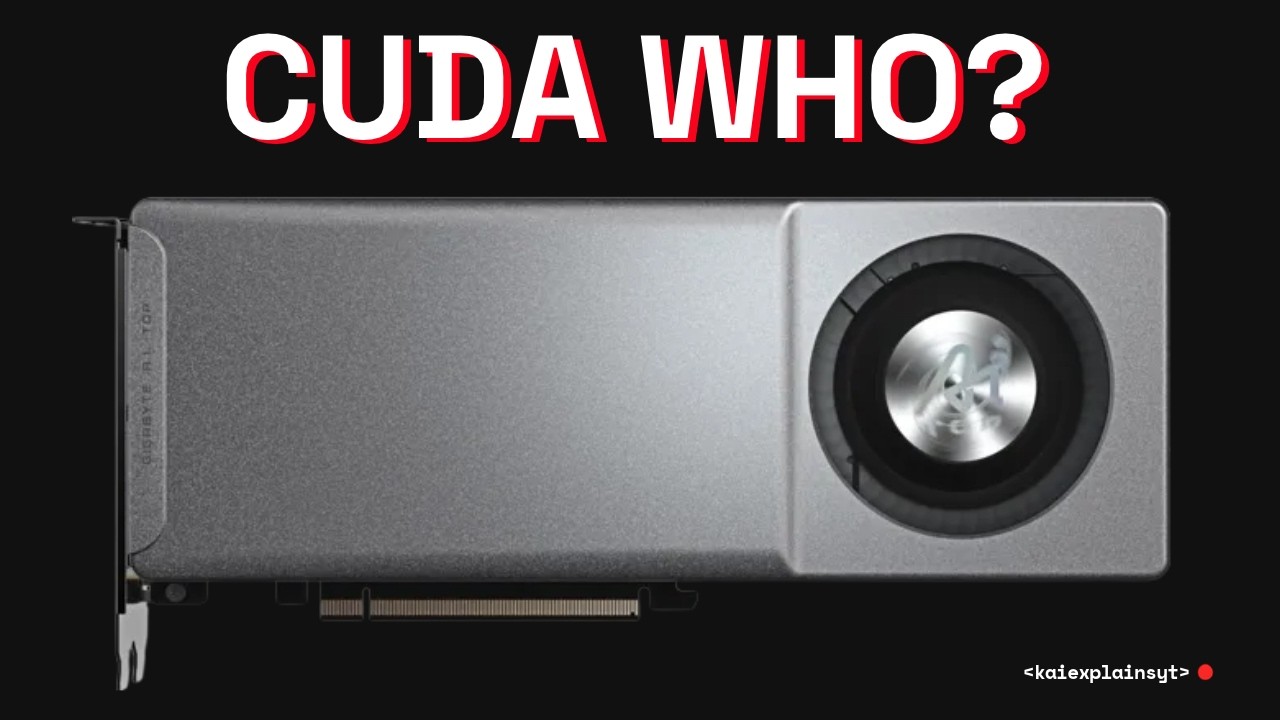
The video discusses the experience of using AMD’s Radeon AI Pro R9700 GPU, a 32GB VRAM card based on the RDNA4 architecture, for running large language models (LLMs) locally. Despite impressive hardware specs like 640 GB/s memory bandwidth and 383 trillion 8-bit matrix operations per second, users found the card underperforming, especially during the prefill phase of model inference where the prompt is read. The GPU was largely idle because the commonly used inference engine, Llama CPP, did not efficiently utilize the specialized AI accelerators on RDNA4, leading to slow prompt processing times and frustrating waits.
The core insight is that LLM inference has two distinct phases: prefill (reading the prompt) which is compute-bound, and decode (generating output tokens) which is memory-bound. While the R9700 performed reasonably well during decode, it severely lagged during prefill due to inefficient kernel code that failed to leverage the GPU’s AI matrix units. This bottleneck was addressed by a developer known as Still Dead Code, who created a new inference engine called Radiance. Radiance rewrote the engine from scratch using hand-tuned kernels optimized for RDNA4’s AI accelerators, dramatically improving prefill speeds by up to 4x compared to Llama CPP.
Radiance also introduced speculative decoding, a clever technique where a smaller draft model predicts multiple tokens at once, and the larger model verifies them in a single pass. This approach significantly speeds up token generation, especially for structured outputs like code and JSON, achieving up to nearly 3x faster decode speeds without compromising output quality. Real-world testing showed that Radiance cuts total AI task times roughly in half compared to Llama CPP, making the GPU much more practical for developers running coding agents and other AI workloads locally.
However, the video cautions that Radiance is Linux-only and rapidly evolving, which may pose challenges for users seeking stability or Windows compatibility. The R9700’s price has also risen from its $1,299 launch to around $2,000-$2,300, reflecting market pressures and increased demand. While still far cheaper than Nvidia’s RTX 5090, buyers should temper expectations and consider whether their workflows align with Radiance’s strengths—mainly Linux environments and structured coding tasks—before investing.
In summary, AMD’s Radeon AI Pro R9700 combined with the Radiance engine transforms a previously underutilized GPU into a powerful tool for local LLM inference, delivering up to 4x faster prompt processing and roughly 2x faster overall task completion. This makes it a compelling option for Linux users focused on coding and structured AI workloads, though it requires careful setup and ongoing maintenance due to rapid software updates. For those already owning the card, installing Radiance is a highly recommended free upgrade that unlocks the hardware’s true potential.