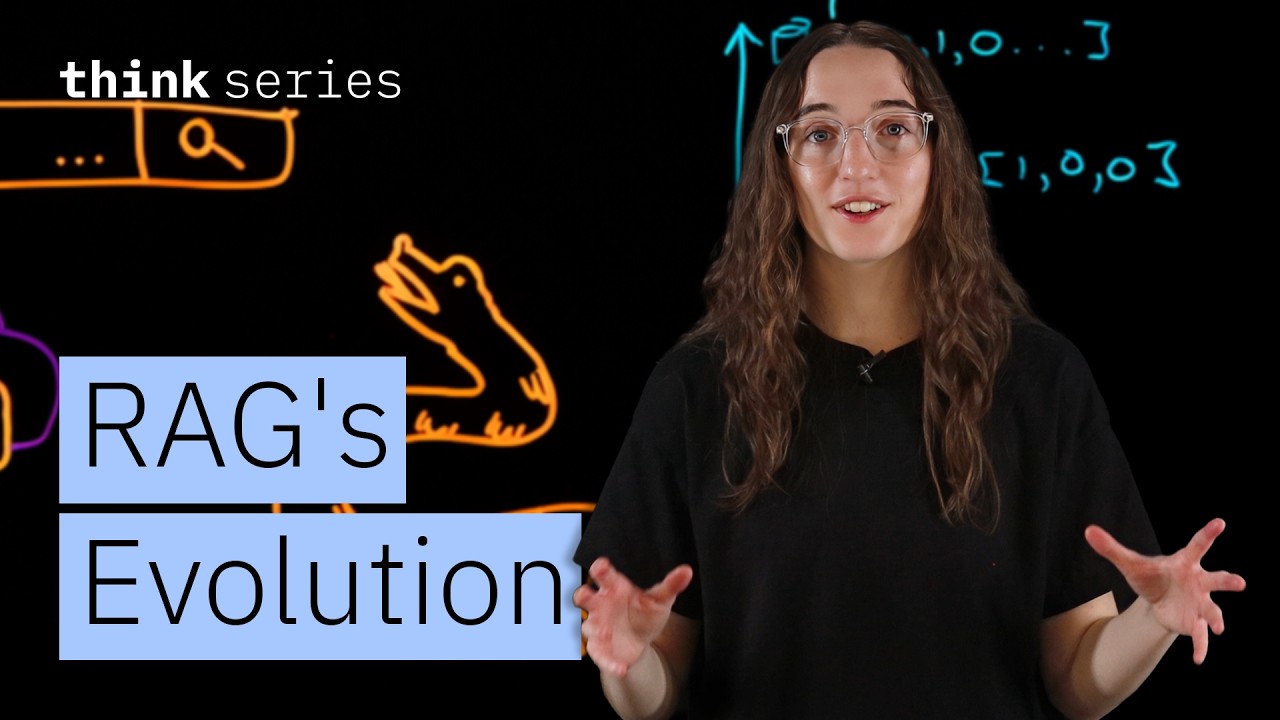
The evolution of information retrieval has progressed significantly from simple keyword-based search systems to sophisticated agentic Retrieval-Augmented Generation (RAG) AI. Early search engines relied on inverted indices, mapping keywords to documents and ranking results using methods like TF-IDF or BM25. While effective for quick keyword matching, these systems lacked true language understanding, struggling with synonyms, ambiguity, and complex user intent. Users had to phrase queries precisely to get relevant results, limiting the search experience.
The next major advancement was semantic search, which represented words as high-dimensional vectors or embeddings learned by neural networks. This approach allowed search systems to grasp the meaning behind words, recognizing relationships between concepts like “coffee” and “espresso” even if different terms were used. Semantic search complemented traditional keyword methods, enabling hybrid systems that combined precise keyword matching with broader semantic recall. This marked the first step toward approximating understanding in search.
The introduction of large language models (LLMs) revolutionized AI by generating text based on learned patterns from massive datasets. However, LLMs have limitations: they cannot access up-to-date or domain-specific information beyond their training data. To overcome this, Retrieval-Augmented Generation (RAG) was developed, combining external document retrieval with LLMs. RAG systems search relevant knowledge bases to augment LLM prompts, enabling models to cite sources, adapt to new information, and operate in specialized fields without retraining. Early RAG pipelines were linear but significantly improved accuracy and reduced hallucinations.
Despite these improvements, traditional RAG systems remained static and limited in adaptability. Enhancements such as rerankers, query rewriting, and hybrid retrieval improved relevance and recall but did not introduce true intelligence into the retrieval process. The next breakthrough came with the emergence of AI agents—autonomous systems that integrate LLMs with various tools like memory, planning, and retrievers. These agents dynamically decide when and where to retrieve information, validate sources, refine queries, and synthesize data across multiple documents, moving beyond fixed pipelines to intelligent, context-aware reasoning.
Today’s agentic RAG systems represent a paradigm shift from simple search to autonomous decision-making AI capable of multistep research and adaptive behavior. Retrieval is no longer a static step but an integral part of the reasoning process, enabling AI to figure out how best to find and generate answers. This evolution highlights that the greatest challenge in AI is not just generating responses but knowing what information to seek and how to use it effectively, paving the way for more intelligent and versatile AI applications.