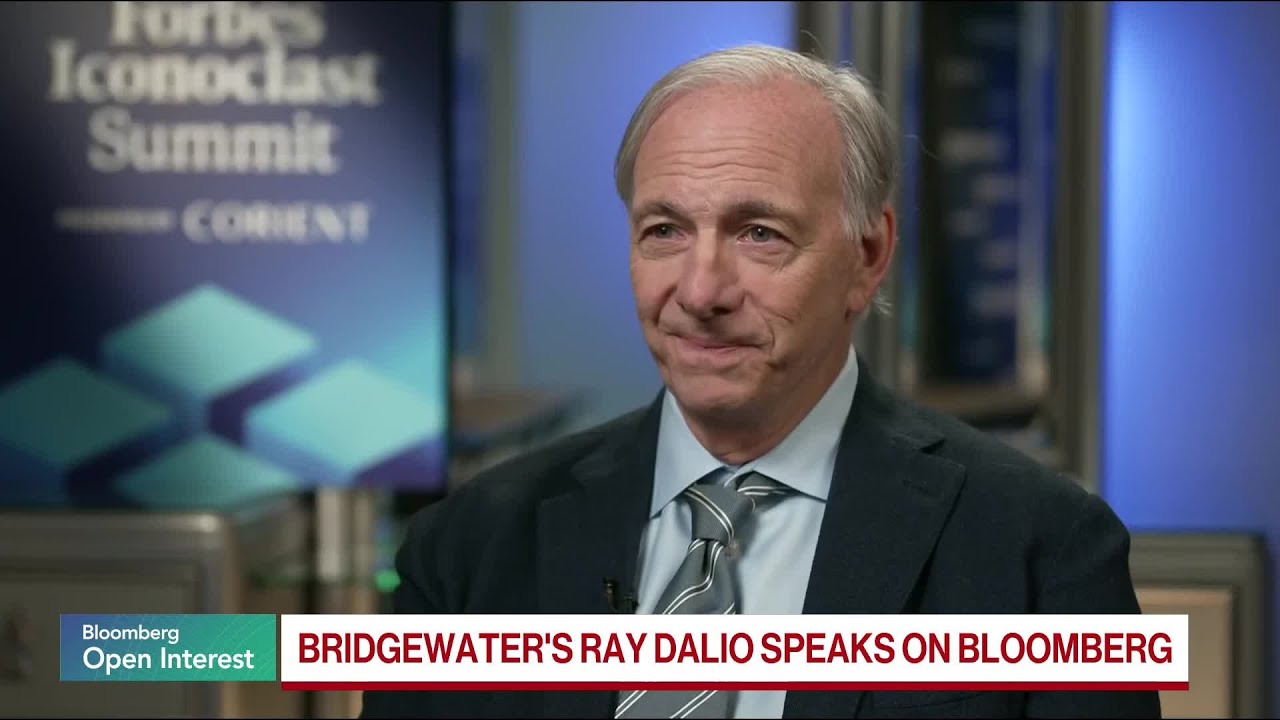
In the discussion, Ray Dalio highlights the unsustainable nature of the U.S. fiscal situation, emphasizing that the country is past the “point of no return” due to its massive spending outpacing revenue, leading to a debt dynamic that squeezes out other spending much like plaque restricts blood flow. This imbalance creates supply and demand pressures in the bond market, causing rising interest rates and weakening the dollar, which in turn impacts stock markets and contributes to a stagflationary environment. Dalio points out that the political conflicts surrounding taxation and spending, especially around election periods, exacerbate these economic tensions and pose significant challenges for policymakers like the Federal Reserve.
Dalio warns that the bond market is approaching a critical test, with long-term interest rates rising despite efforts to keep short-term rates low, signaling potential instability. He suggests that history may repeat itself with the Treasury and Federal Reserve working closely to keep debt servicing costs manageable, a process known as financial repression. This could involve artificially suppressing bond yields, higher inflation, and increased taxation, potentially accompanied by measures like foreign exchange controls. While not predicting extreme measures, Dalio stresses that bond markets will either offer attractive real returns or be manipulated to remain viable, both scenarios leading to unattractive investment conditions.
Geopolitically, Dalio expresses concern about the U.S.'s ability to maintain global influence, particularly regarding the Strait of Hormuz and tensions with China over Taiwan. He notes that global leaders doubt the U.S. can sustain prolonged military engagements due to domestic opposition and economic constraints, signaling a shift away from previous containment policies toward China. The strategic importance of Taiwan, especially its semiconductor industry, means that any disruption could trigger significant market turmoil, particularly in technology and AI sectors, underscoring the interconnectedness of geopolitical risks and financial markets.
On the topic of technology and AI, Dalio acknowledges that major technological advancements often lead to speculative bubbles due to the uncertainty and competition involved in capturing market share. He explains that while these innovations drive productivity and wealth creation, they also exacerbate wealth inequality and create vulnerabilities when wealth must be converted into liquid money, especially under pressures like debt or wealth taxes. Dalio cautions that the current AI-driven market resembles past bubble peaks seen in 2000 and 1929, with similar risks of a sharp correction when the bubble bursts.
Ultimately, Dalio is skeptical about the political will or ability to collaboratively address these intertwined economic, technological, and geopolitical challenges. He foresees a bubble burst driven by the need to convert inflated wealth into cash amid tightening monetary conditions, which historically marks the end of such speculative cycles. Despite the promise of transformative technologies, the broader economic and political environment suggests significant instability ahead. The conversation closes with an acknowledgment of the complexity of these issues and a desire to continue exploring their implications in future discussions.