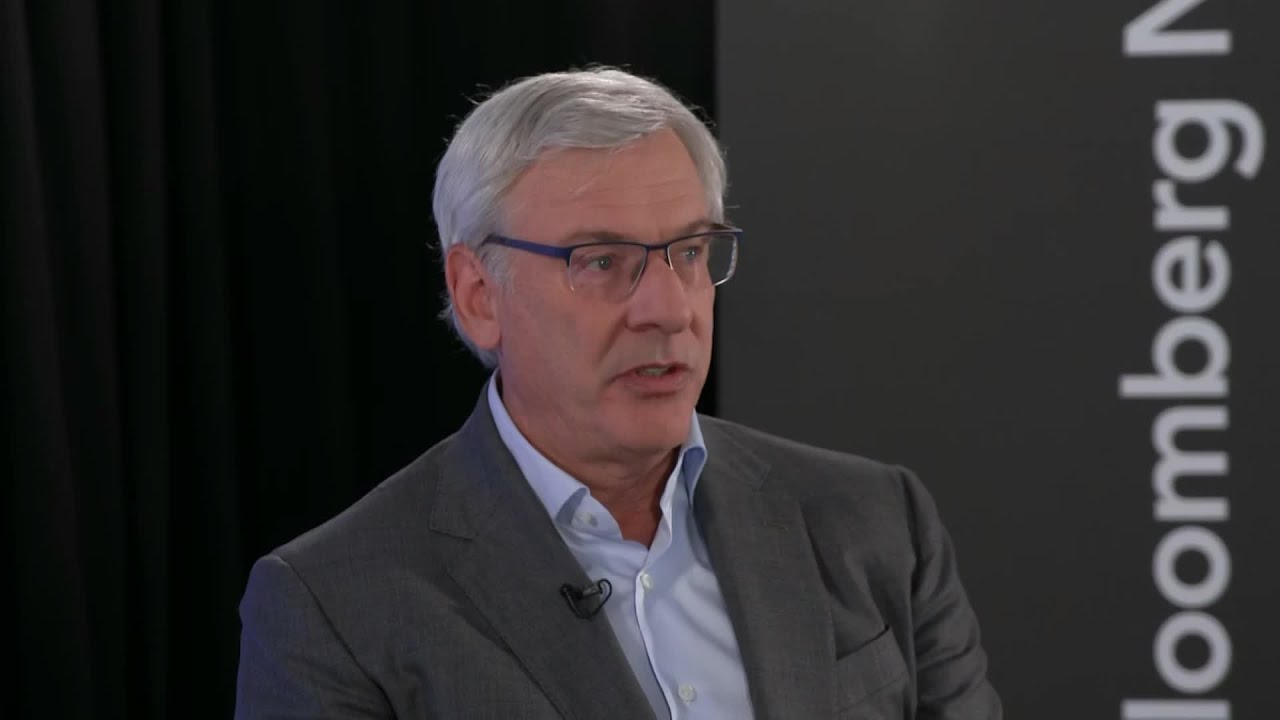
The RBC CEO provides a comprehensive overview of the current market environment, highlighting a strong appetite for risk and investment, particularly in technology sectors such as AI, space, and compute capacity. He notes a significant demand for capital across debt and equity markets, driven by a race among hyperscalers and technology providers to meet growing compute and memory needs. While cautious lending standards remain, the bank is actively supporting this growth, especially in the U.S. market where economic performance is robust, contrasting with a more muted demand in Canada partly due to unresolved trade issues like USMCA.
Regarding U.S.-Canada trade relations, the CEO emphasizes the longstanding and strong economic ties between the two countries, underpinned by $1.3 trillion in annual trade. Although negotiations around USMCA are ongoing and somewhat protracted, he reassures that cancellation of the agreement is unlikely, with termination referring only to the non-extension beyond 2036. He also discusses Canada’s strategic push to diversify trade beyond the U.S., targeting Europe, Asia, and the Middle East to reduce dependency on a single market and capitalize on opportunities in energy, agriculture, and rare earth minerals.
The CEO highlights RBC’s strategic investments in Canadian growth companies, particularly those with technological innovation in sectors like quantum computing, healthcare, and plant-based proteins. He stresses the importance of scaling Canadian companies domestically to prevent intellectual property and talent from migrating to the U.S. This approach aims to build a robust ecosystem of homegrown tech leaders, supporting economic growth and innovation within Canada.
On technology adoption within RBC, the CEO describes how AI and large language models (LLMs) have transformed his daily workflow and the bank’s operations. He has implemented AI-driven tools that provide real-time insights into macroeconomics, markets, consumer behavior, and risk, significantly enhancing decision-making speed and efficiency. Rather than reducing staff, AI is enabling employees to learn faster, serve more customers, and shift focus from back-office functions to front-line revenue generation, ultimately expanding the bank’s capacity and ambition.
Finally, the CEO addresses the broader economic outlook, noting that while Canada experienced a technical recession, indicators suggest a positive growth trajectory supported by strong job creation and upcoming infrastructure investments. He views AI and technology as initially inflationary but ultimately deflationary forces that will boost productivity. He encourages young professionals entering finance to embrace continuous learning and AI tools to accelerate their careers, emphasizing RBC’s commitment to hiring and developing talent to meet demographic challenges and future growth opportunities.