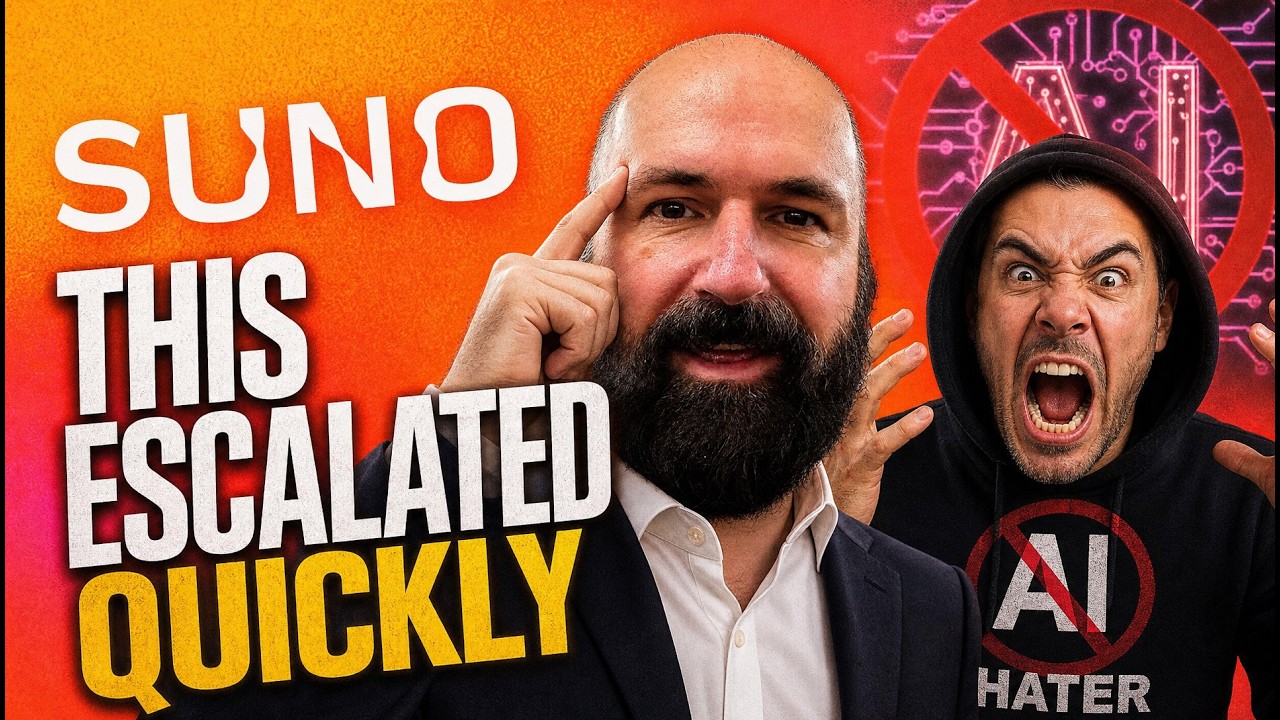
The creator discusses how AI has shifted music creation from a focus on technical skill and quality to creativity, challenging traditional musicianship and enabling anyone to produce music quickly and commercially. They highlight examples like Jim Steinman and Meat Loaf to illustrate that great musical ideas and collaboration matter more than conventional talent, while advocating for open-mindedness toward AI’s democratizing impact on the music industry.
The video begins with the creator addressing their audience, mentioning an upcoming video about the Mini Max H3 Turbo for KMFDM, while reflecting on the massive response to a previous post on X that garnered over 820,000 views. The creator notes the backlash from AI critics and explains that they made two reaction clips in response, which are more unfiltered and direct than their usual YouTube content. They encourage viewers to watch these clips and humorously suggest learning an instrument, while critiquing the notion that technical skill alone defines musical talent.
The creator argues that in the past, achieving high-quality music was the pinnacle of musical accomplishment, something most musicians never reached. However, with the advent of AI, quality has become the baseline or starting point, shifting the focus to creativity. They highlight the irony that many skilled musicians with extensive gear lack creativity, whereas some individuals can produce popular music quickly using AI tools. This challenges traditional views on music creation and sparks resentment among those who rely solely on technical skills.
To illustrate their point, the creator references Jim Steinman and Meat Loaf, explaining that Meat Loaf did not write or compose his songs but performed them like a vocal actor. They draw a parallel with Bonnie Tyler’s “Total Eclipse of the Heart,” which was written by Steinman and sounds similar to Meat Loaf’s style. This example underscores the idea that having a great musical idea and collaborating or using AI to realize it can be more important than traditional musicianship.
The video also addresses criticism regarding limitations on AI music creation platforms, such as the number of tracks allowed per month. The creator counters the argument that most bands don’t produce that much music by pointing out that many people use music for background purposes, content creation, and business promotions rather than as musicians. AI-generated music can be tailored quickly to fit specific needs, such as creating custom tracks with lyrics for marketing campaigns, which stock music libraries cannot easily provide.
In conclusion, the creator emphasizes the democratizing power of AI in music creation, allowing anyone to explore their creativity without gatekeepers or legal battles. They express frustration with detractors who resist this change and encourage viewers to understand the evolving landscape of music production and the rights of customers using AI-generated content commercially. The video ends with a call for a more open-minded perspective on AI’s role in the future of music.