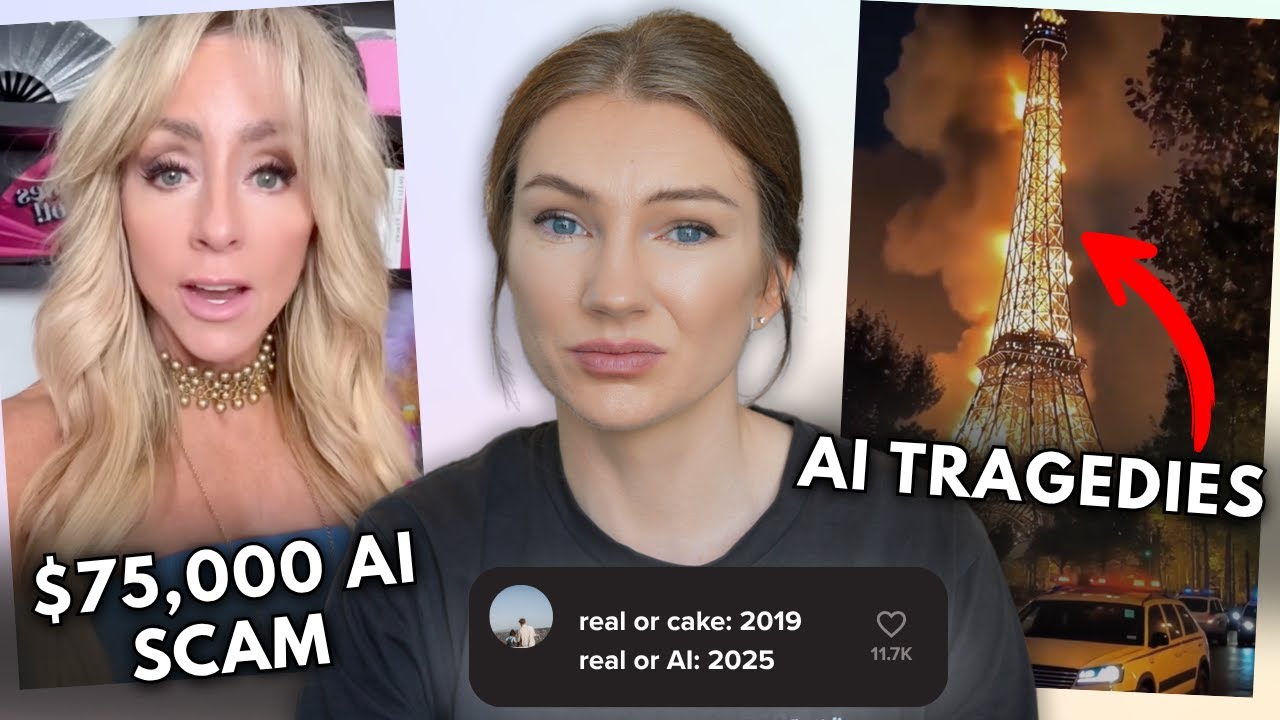
The video explores the growing challenge of distinguishing real from fake content on the internet due to advances in AI-generated deepfake videos and images. It highlights alarming cases where AI is used to impersonate individuals, including government officials like Secretary of State Marco Rubio, to spread misinformation and conduct scams. These deepfakes are not only used for political manipulation but also for fraudulent activities such as scams targeting vulnerable people, including a story of a grandmother losing $50,000 to a phone scam involving AI-generated voices and caller ID spoofing.
The video also discusses the misuse of AI in marketing and advertising, where AI-generated images and videos of real people are used without consent to promote products they do not endorse. This includes doctors and influencers whose likenesses are exploited to sell dubious health treatments or supplements, misleading consumers and potentially causing harm. The ethical concerns extend to AI influencers—completely synthetic personas with large followings—who promote products despite having no genuine experience or authenticity, raising questions about trust and transparency in digital marketing.
Another significant issue raised is the impact of AI on creative industries and craftsmanship. The video shares examples of AI-generated content and products flooding platforms like Etsy, where scammers use AI to slightly alter stolen photos and claim others’ handmade work as their own. This mass production of AI-generated content threatens the value of human creativity and artisanal work, as machines increasingly replace human creators in fields like graphic design and content creation, leading to a loss of authenticity and uniqueness.
The environmental and societal consequences of AI proliferation are also addressed. The video points out that AI-generated products, such as fake crystal coffee mugs, often result in waste and pollution, as these items are cheaply made, unwanted, and end up in landfills. Additionally, the push by companies to mandate AI use in the workplace to stay competitive raises concerns about job security and ethical responsibility. The video calls for collective accountability, urging viewers to blame companies exploiting AI irresponsibly rather than individuals who use AI tools for survival.
Finally, the video touches on the broader implications of AI on human connection, privacy, and trust. It references the “dead internet theory,” which suggests much of online interaction may already be with bots, making genuine human engagement increasingly rare. As AI-generated content becomes more sophisticated, the line between reality and fabrication blurs, challenging our ability to trust what we see and hear online. Despite these challenges, the video ends on a hopeful note, emphasizing the importance of preserving human authenticity and connection in an AI-driven world.