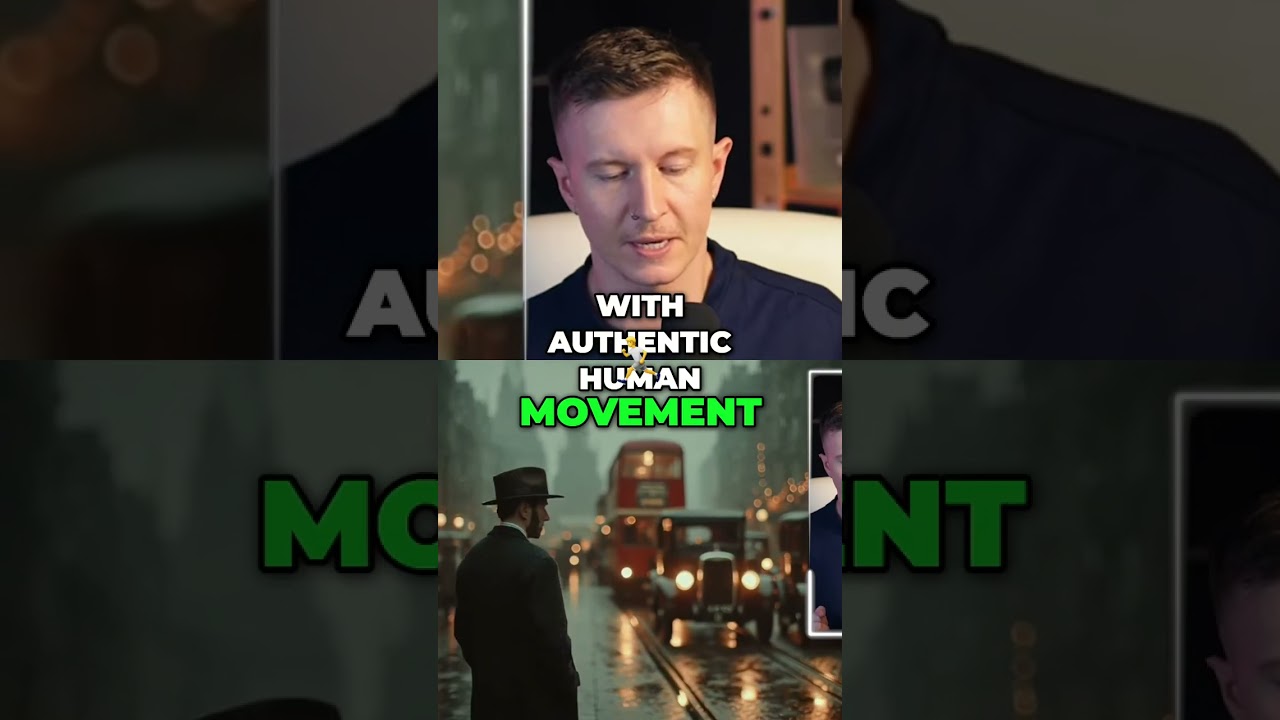
The video “Realistic AI Humans: Uncanny Movement & Emotions” discusses the challenges AI faces in replicating natural human movement and emotional expression, highlighting how many models produce stiff, unnatural walking and limited emotional cues. However, it also showcases a standout AI model that convincingly captures authentic gait and subtle emotions, marking significant progress toward lifelike digital humans.
The video titled “Realistic AI Humans: Uncanny Movement & Emotions” explores the advancements in AI-generated human models, focusing particularly on their movement and emotional expression. It highlights how many AI-generated videos still struggle with realistic human motion, especially during complex activities like walking. These unnatural movements often make it obvious that the footage is computer-generated rather than real.
A key point emphasized is the difficulty AI faces in replicating authentic human gait. The video showcases examples where the walking patterns of AI models appear stiff, awkward, or unnatural, which breaks the illusion of realism. This is a common challenge because human walking involves subtle shifts in balance, weight distribution, and fluid limb coordination that are hard to mimic perfectly.
However, the video also points out a particular AI model that excels in this area, standing “head and shoulders above the rest.” This model demonstrates remarkably authentic human movement, capturing the nuances of gait and body mechanics more convincingly than others. Its ability to replicate these complex motions makes the AI-generated humans appear much more lifelike and less uncanny.
Beyond movement, the video touches on emotional expression as another critical factor in achieving realism. Authentic emotions conveyed through facial expressions and body language are essential for making AI humans believable. While many models still fall short in this regard, the highlighted AI shows promising progress in rendering subtle emotional cues alongside natural movement.
In summary, the video presents a balanced view of the current state of AI-generated humans, acknowledging both the challenges and breakthroughs. It underscores that while many AI models struggle with unnatural movement and emotion, some are making significant strides toward creating truly realistic digital humans. This progress opens exciting possibilities for applications in entertainment, virtual reality, and beyond.