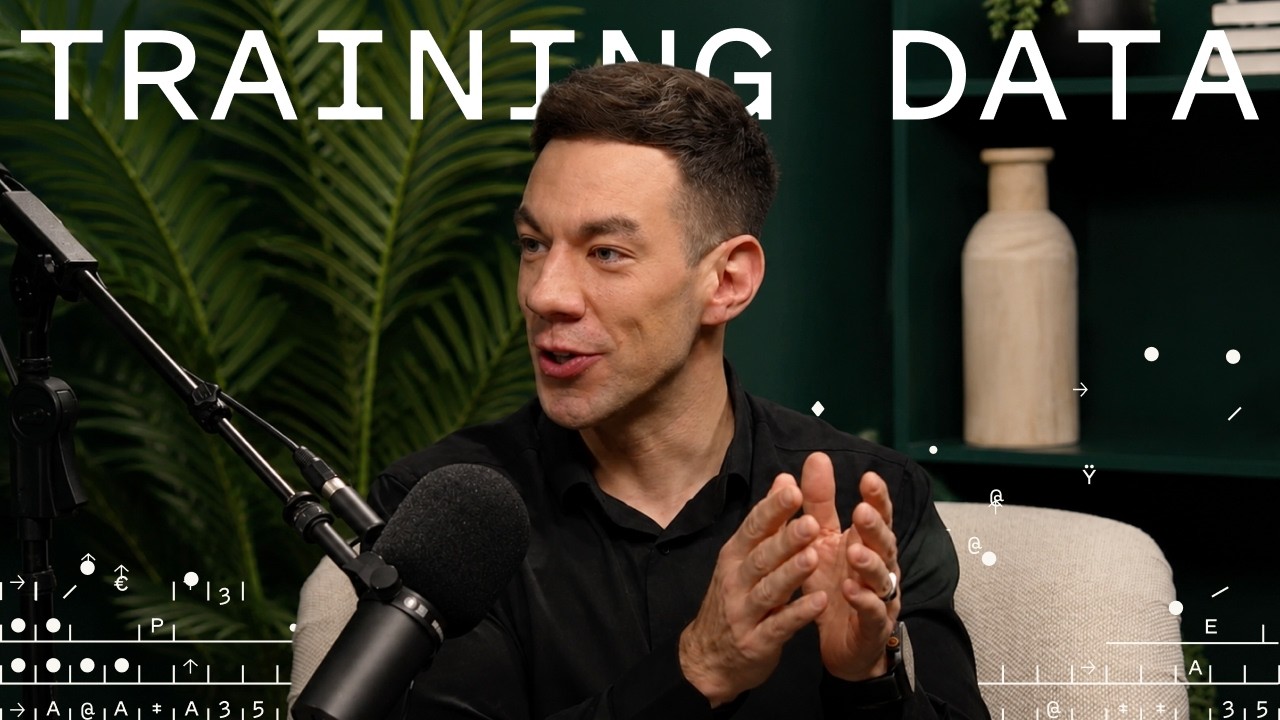
Jake Stauch, founder and CEO of Serval, discusses how his company is building an AI-native enterprise service management platform designed to revolutionize employee support by automating help desk workflows. Unlike traditional platforms like ServiceNow, which rely on manually built workflows and databases that require significant development time and maintenance, Serval leverages AI to instantly generate and update workflows from natural language descriptions. This approach drastically reduces the time and effort needed to implement automation, enabling businesses to keep pace with rapidly changing processes.
A key insight Jake shares is the importance of making automation as easy, if not easier, to build than performing manual tasks. This philosophy encourages IT teams to opt for automation because it simplifies their work rather than complicates it. However, Serval also addresses the challenge of “slop automation,” where redundant or overlapping workflows can confuse AI agents. To manage this, they developed an intelligent assistant that analyzes existing workflows, suggests consolidations, and helps maintain a clean, efficient automation environment.
Jake emphasizes Serval’s strong customer focus, personally engaging with over a hundred customers daily through Slack channels to gather feedback and understand their needs deeply. He believes that this customer insight is a critical competitive advantage, more sustainable than product features alone, especially in an era where foundational AI models evolve rapidly. Serval integrates models from OpenAI and Anthropic, carefully balancing improvements with stability and security, and continuously adapting their product to leverage the latest AI capabilities while maintaining enterprise-grade controls.
The company’s culture is described as highly collaborative, energetic, and kind, but also demanding, expecting new hires to be productive from day one without extensive mentorship or rigid career paths. Serval operates as an AI-native organization, rethinking traditional roles and departments by evaluating whether AI can replace or augment human functions. For example, they have eliminated roles like solutions engineers and SDRs by empowering sales reps with AI tools that provide instant product knowledge and content generation during customer interactions.
Looking ahead, Jake envisions Serval’s impact as fundamentally improving work lives by automating repetitive, menial tasks and allowing employees to focus on meaningful, fulfilling work. He acknowledges the tension between individual employees’ desire for autonomous AI assistance and organizational needs for control and security, a balance Serval aims to manage through its platform architecture. Despite rapid growth and evolving AI landscapes, the company prioritizes agility, talent density, and continuous reinvention to stay ahead and deliver lasting value to enterprises.