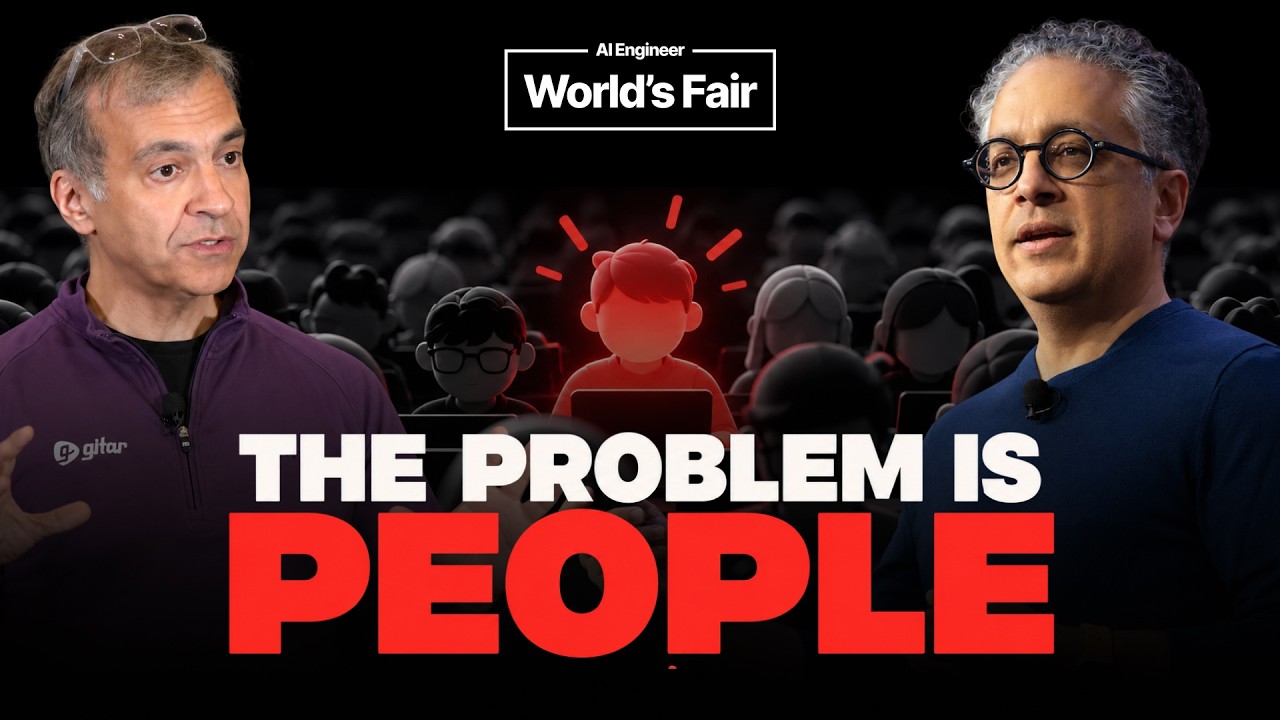
The panel discussion centers on the evolving role of AI agents in software development life cycles (SDLC) and the challenges organizations face in scaling AI deployments beyond pilot phases. Research indicates that while 80-90% of companies have integrated AI or agents in some form, less than a third have achieved significant business impact or scaled these solutions end-to-end. Key factors for successful scaling include redesigning workflows to accommodate AI, investing in appropriate tooling, and critically, rethinking organizational roles and operating models to embrace blurred boundaries between traditional job functions.
Tariq, CEO of Sonar, shares insights from their journey of adopting AI responsibly within their engineering teams. He emphasizes the importance of clear objectives focused on real value rather than token metrics, deliberate process design around guiding, verifying, and solving tasks with agents, and building trust among teams. Despite establishing lighthouse teams to model best practices, Tariq notes that broader cultural and mindset shifts are necessary for widespread adoption, as role modeling and tooling alone are insufficient to change how teams think about AI integration.
Ali, CEO of Gitai (now part of Sonar), contrasts experiences from small startups and large enterprises. He highlights that large organizations have structural advantages, such as platform teams dedicated to developer productivity and standards. Ali stresses the importance of comprehensive metrics to measure throughput, quality, and developer sentiment, and advocates for automating entire workflows to offload grunt work from developers. Maintaining developer flow and satisfaction is crucial to realizing productivity gains and ensuring successful AI adoption at scale.
Looking ahead, the panelists discuss the future implications of fully automated, orchestrated SDLCs powered by AI agents. While complete hands-off automation is unlikely, the balance between human oversight and machine autonomy will shift. Software developers will need to evolve into architects and orchestrators of AI agents, requiring skills in explicit specification and critical thinking to evaluate AI outputs. The era of specialized silos may give way to more generalist roles as teams adapt to new workflows and responsibilities shaped by AI capabilities.
Finally, the discussion addresses trust in AI agents for automating complex tasks like validation and testing. Ali outlines a gradual progression where users initially rely on AI for code reviews and CI failure analysis, then move to blocking problematic changes, automated fixes, and eventually autonomous PR creation, approval, and merging. This trust builds over time through demonstrated precision and the establishment of guardrails. The panelists anticipate that within the next year, more teams, including those in large enterprises, will achieve fully autonomous end-to-end software delivery pipelines, marking a significant transformation in how software is built.
Useful Links