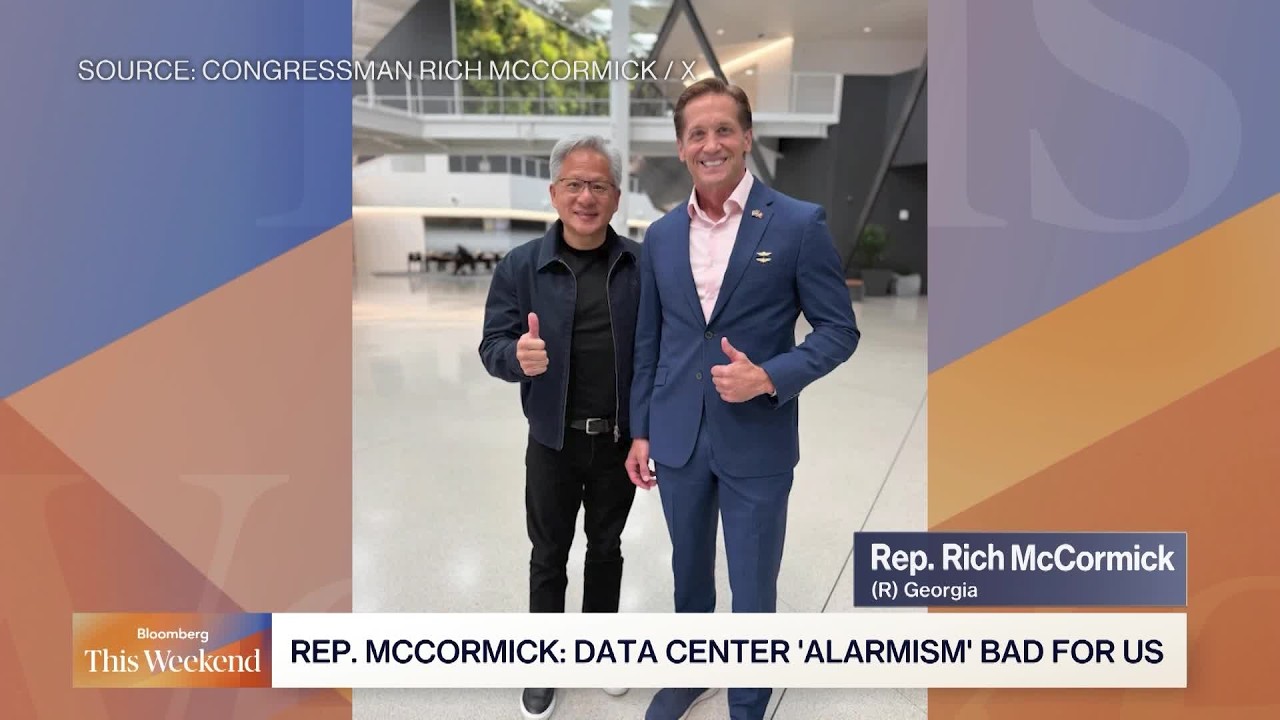
Rep. McCormick emphasizes the urgent need to address the U.S. national debt and advocates for rapid AI data center development to maintain technological leadership, while countering misinformation and community opposition. He also highlights the importance of strong U.S.-South Korea military cooperation for regional stability and acknowledges the challenges faced by service members during extended deployments.
Rep. McCormick highlights the critical challenges facing the U.S. government, emphasizing education, healthcare, and the national debt as top priorities. He expresses concern over the rapidly increasing national debt, which has doubled from $20 trillion to $40 trillion in the past decade, leading to currency downgrades and rising interest rates. McCormick warns that the growing debt servicing costs will severely limit the government’s borrowing ability and impact funding for essential services. He advocates for eliminating the filibuster on budget bills to reduce deficit spending, stressing that budget decisions are a constitutional responsibility that should not be hindered by political gridlock.
On the topic of AI and data center construction, McCormick supports the rapid development of data centers, viewing them as vital for maintaining U.S. technological leadership and economic competitiveness. He acknowledges community concerns but suspects some protests are influenced by external forces, possibly foreign adversaries like China, aiming to hinder U.S. progress. McCormick points out that modern data centers are environmentally responsible, using closed-loop water systems and clean energy sources, and can positively impact local economies. He suggests building data centers on military bases to minimize community opposition and leverage existing infrastructure.
McCormick stresses the importance of educating the public about the realities of data centers to counter misinformation and alarmism. He notes that construction jobs, while temporary, provide economic benefits and that data centers do not significantly impact local resources or energy costs. He calls for a proactive and visionary approach to policy-making rather than reacting to protests fueled by incomplete or inaccurate information. This approach, he believes, is essential to securing America’s future in technology and innovation.
Regarding military matters, McCormick expresses hope that the U.S. withdrawal from joint military exercises with South Korea is temporary. Drawing from his experience as a Marine, he praises the South Korean military’s professionalism and shared values, emphasizing the strategic importance of strong U.S.-South Korea ties for regional stability and deterrence against communist threats. He advocates for continued integration and cooperation with allied forces to maintain peace through strength and effective force projection in the Pacific.
Finally, McCormick reflects on the challenging conditions faced by U.S. military personnel during extended deployments, referencing his own experiences aboard ships with harsh environments and limited amenities. He acknowledges that long deployments can lead to morale issues, including mental health struggles among service members. While recognizing the necessity of such deployments, he underscores the importance of managing deployment lengths to minimize hardship, though operational demands sometimes require extended missions.