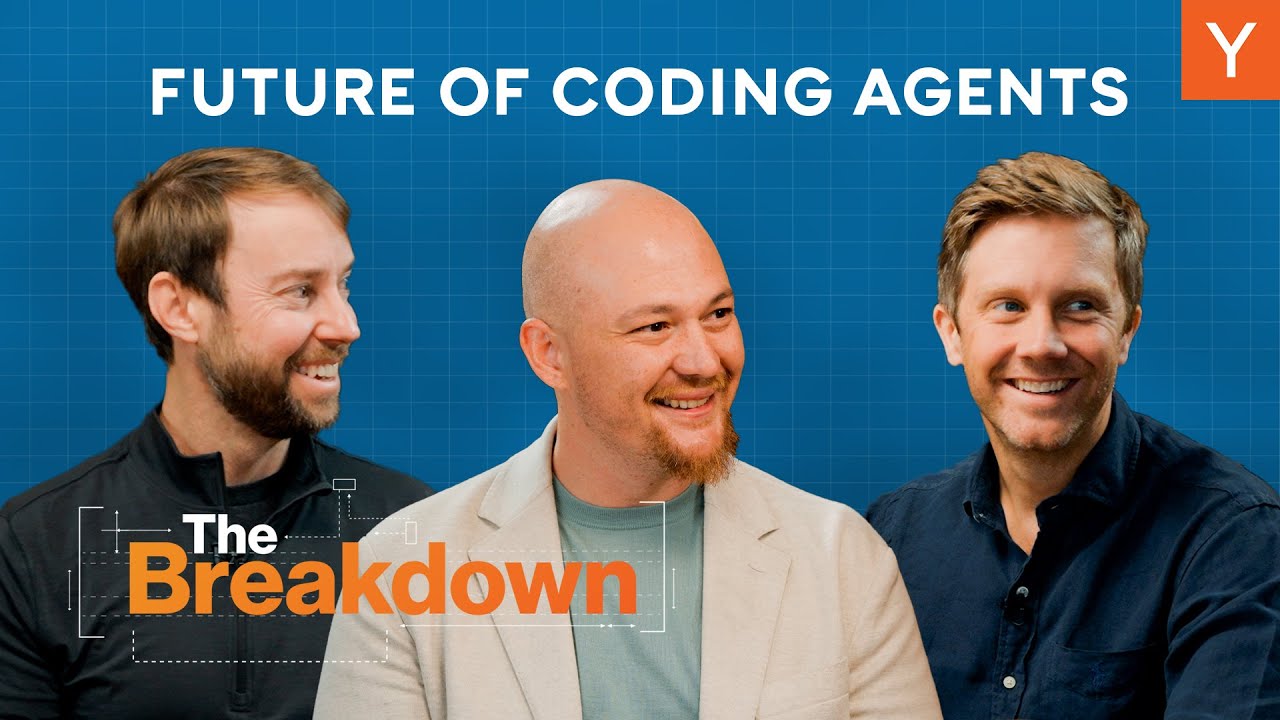
In the interview with Amjad Masad, CEO of Replit, the discussion centers on the evolution of coding, AI-assisted development, and the future of work. Masad emphasizes that the dystopian view of AI taking all jobs is misguided; instead, AI will make work more human, interactive, and multimodal. He highlights that as creating things becomes easier with AI, the real bottleneck shifts to the generation of ideas. Masad advises that rather than focusing solely on learning to code traditionally, people should learn to make things using code, video, and AI, embracing a broader creative skill set.
Replit began as a platform to simplify programming by providing web-based development environments but has since pivoted towards AI-assisted coding with autonomous agents. Masad recounts the company’s challenging journey, including layoffs and a critical bet on AI agents that only became viable with advancements like GPT-3.5. He explains that the key to successful autonomous coding lies in the ability of AI agents to maintain coherence over extended periods and the importance of transactional systems that allow safe experimentation and rollback, akin to how Git works for human developers.
The conversation also explores how Replit is empowering non-traditional developers such as product managers and designers to build and deploy software, sometimes even bypassing engineers. While this democratization accelerates innovation, it raises concerns around security, scalability, and responsibility for bugs. Replit addresses these by integrating secure, pre-built components for critical functions like authentication and payments, partnering with security firms for code scanning, and emphasizing the need for enterprise adaptation to these new workflows.
Masad discusses the broader AI coding ecosystem, contrasting tools aimed at professional developers with those targeting non-engineers. He envisions Replit as a universal problem solver accessible to a billion knowledge workers, focusing on ease of use and integration with existing company systems. The interface challenge—balancing natural language interaction with the need to understand complex code logic—is acknowledged, with Masad suggesting future tools will blend visual programming concepts with code generation to create more intuitive, multimodal development experiences.
Finally, Masad offers advice for founders and future creators, urging them to work at the cutting edge of AI technology and to anticipate where the market is heading. He predicts significant disruption in vertical SaaS markets as AI lowers the cost and time to build custom software solutions. For the next generation, he recommends cultivating broad creative skills and adaptability rather than traditional coding alone, as the future of work will be defined by the ability to generate ideas and leverage AI to bring them to life efficiently.