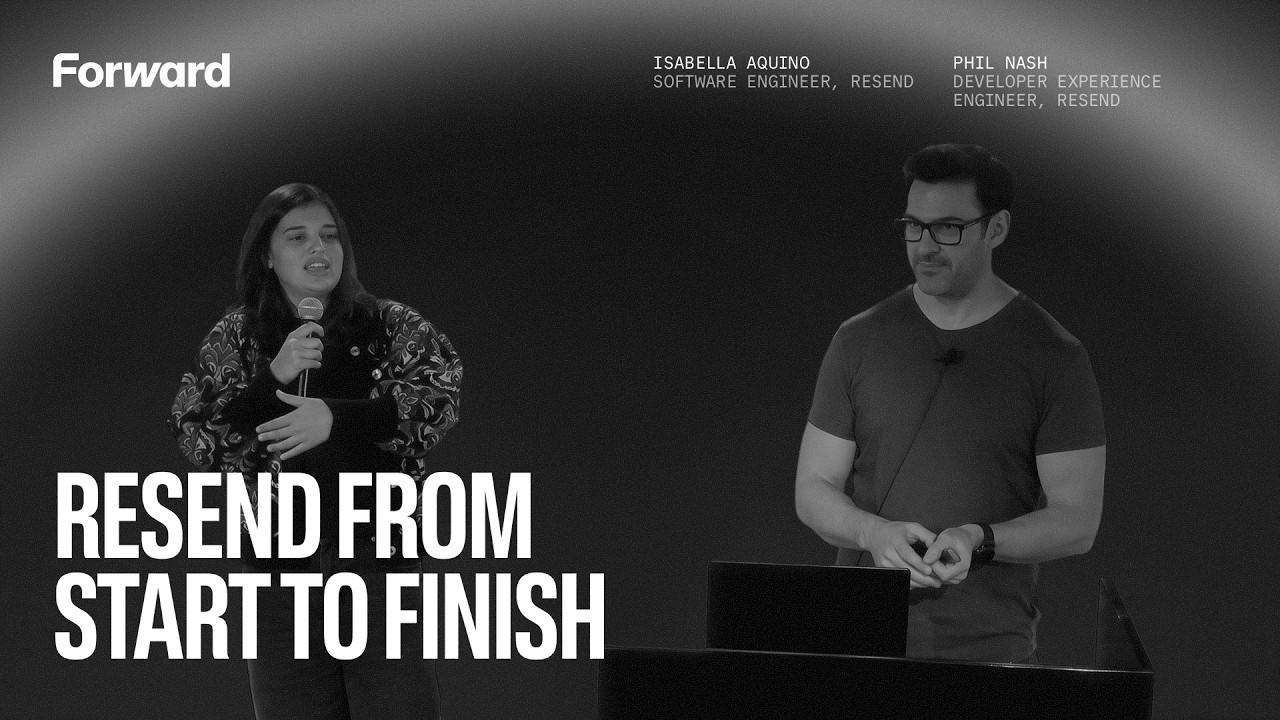
The presentation begins with an introduction to a creative project called TreeSend, an application designed to give individual email addresses to trees in a city, allowing users to adopt a tree and communicate with it via email. The speaker shares a personal anecdote about Melbourne’s initiative to assign email addresses to trees, which initially used a shared email with ID numbers rather than unique addresses. Motivated to improve this, the speaker, along with Isabella from the Resend engineering team, aims to build a system where each tree has its own inbox, enabling real conversations and updates about the urban forest.
The discussion then moves to the challenges of creating beautiful and functional email templates. Traditional email template building is complicated due to inconsistent support across email clients, with some like Outlook using Microsoft Word for rendering. To address this, the team introduces React Email, an open-source framework that simplifies email template creation using React components. This tool offers a gallery of pre-built components and templates, live previews, and the ability to host and manage templates easily, improving both design and development workflows.
Next, the focus shifts to automations, particularly for user engagement. The speakers demonstrate how to set up automated email flows that trigger based on user actions, such as signing up or adopting a tree. Using Resend’s dashboard, they show how to create conditional workflows that send reminders or follow-ups only when necessary, preventing users from receiving irrelevant emails. This automation capability helps maintain user interest and encourages interaction with the app, enhancing the overall user experience.
Broadcasting emails to a large audience is covered next, emphasizing the importance of segmentation and user consent. The platform allows the creation of contact lists with customizable properties and topics, enabling users to subscribe only to the types of emails they want, such as forest news or emergency alerts. The broadcast editor, powered by React Email, supports rich content creation and can be embedded into custom applications. Metrics like open rates, clicks, and unsubscribes provide valuable insights for maintaining audience hygiene and improving communication strategies.
Finally, the presentation highlights the new inbox feature, which allows multiple inboxes under a verified domain to manage conversations with users or, in this case, trees. Each inbox supports threaded conversations and integrates with AI agents that can draft replies based on custom instructions. This setup enables personalized, two-way communication, making the trees “responsive.” The speakers conclude by emphasizing how Resend’s comprehensive email system—from templates and automations to broadcasts and inboxes—empowers developers to build engaging, scalable, and manageable communication experiences tailored to their users’ needs.
Useful Links