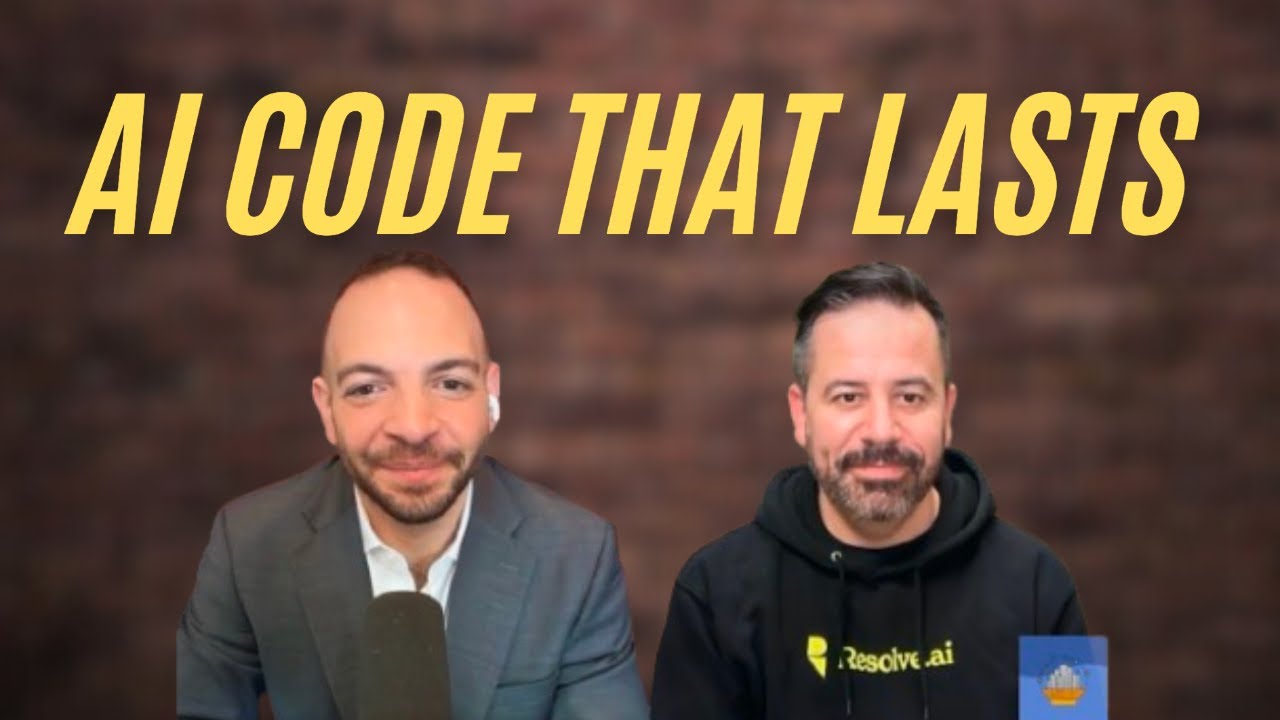
Certainly! Here’s a five-paragraph summary of the conversation with Spiros Xanthos, CEO of Resolve AI:
The discussion opens with an exploration of why, despite AI generating vast amounts of code, there are comparatively fewer AI-driven products running reliably in production. Spiros Xanthos emphasizes that AI is a transformative technology, driving significant productivity gains and making previously difficult or expensive tasks more accessible. However, he acknowledges that with rapid technological evolution comes hype and a proliferation of ideas, not all of which are viable. Nevertheless, he believes the real impact of AI is undeniable and that the best solutions will ultimately prevail as the technology continues to improve exponentially.
A key point raised is the difference between generating code and maintaining reliable production systems. While AI has revolutionized code generation—especially with tools like GitHub Copilot—this has led to an increase in the volume of code, which in turn creates new challenges for monitoring, troubleshooting, and maintaining software. Spiros notes that simply producing more code can become a liability if the subsequent steps, such as debugging and incident response, are not equally automated. He argues that the next wave of AI innovation must focus on these operational aspects to truly accelerate technological progress.
Resolve AI addresses this gap by developing AI agents that can monitor, investigate, and suggest remediations for software incidents, particularly in on-call engineering scenarios. Spiros likens the evolution of AI in operations to the development of self-driving cars, where trust and gradual increases in autonomy are essential. Initially, AI assists engineers by diagnosing issues and proposing solutions, but over time, as trust and capabilities grow, AI will be able to take more autonomous actions, eventually reaching a point where it can handle complex operational tasks with minimal human oversight.
The conversation also delves into the technical challenges of building robust multi-agent AI systems. Spiros explains that effective orchestration involves multiple specialized agents collaborating, reviewing each other’s work, and learning from both documentation and human feedback. This requires sophisticated planning, reasoning, and validation mechanisms to ensure reliability. He predicts that future gains in AI will come not just from bigger foundational models, but from domain-specific applications and multi-agent systems that deeply understand the context and requirements of their target environments.
Finally, the discussion touches on the cultural and professional implications for engineers. While there is some resistance to adopting new AI tools and concerns about skill atrophy, Spiros believes that AI will elevate engineers to higher levels of abstraction, allowing them to focus on more strategic tasks while AI handles the repetitive and stressful aspects of software maintenance. He shares real-world examples from Resolve AI’s customers, such as Coinbase and DoorDash, where AI-driven incident response has already improved engineers’ quality of life and operational efficiency. Spiros concludes that the future of engineering will involve close collaboration between humans and increasingly capable AI agents, ultimately enabling faster and more reliable technology development.