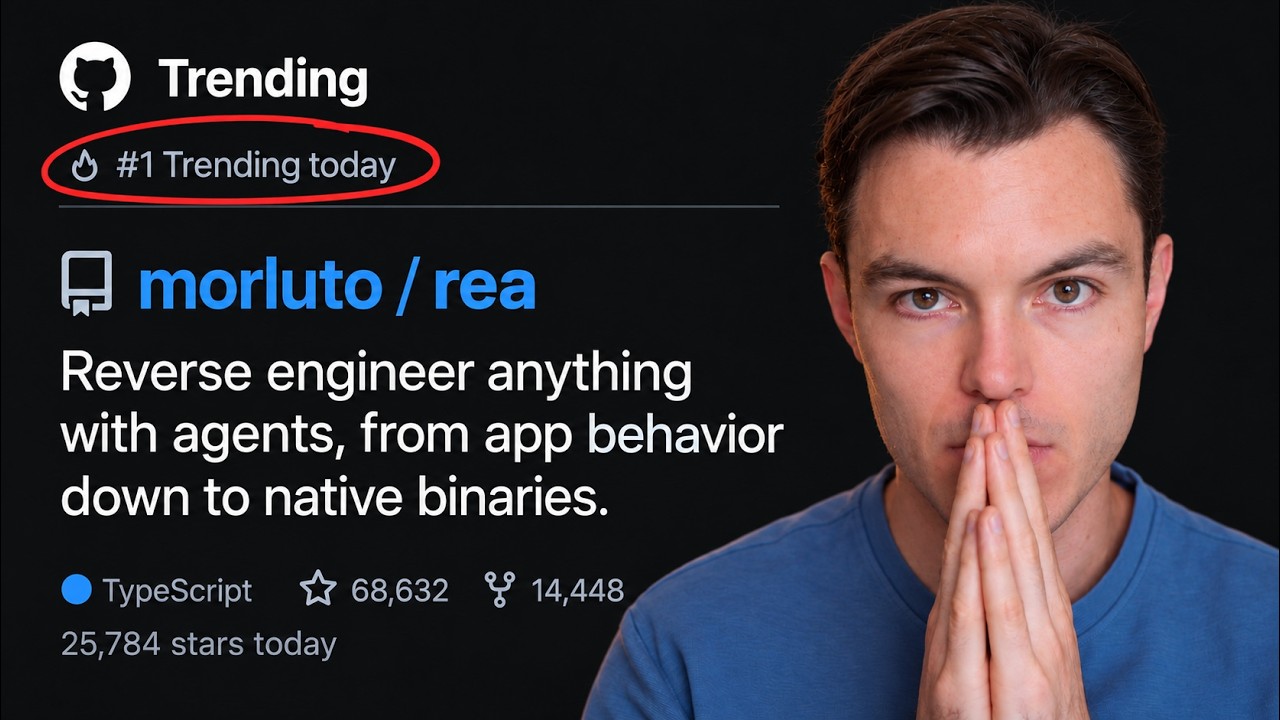
The video introduces REA (Reverse Engineer Anything), the number one trending repository on GitHub, which enables AI agents to reverse engineer any application on a computer. By pointing an agent to an application, users can have it deeply analyze, copy, or modify the software, including complex programs like Photoshop or games. The presenter highlights the significance of REA, noting the expertise behind it, as the contributors are highly skilled professionals in security research, formal verification, zero-knowledge systems, AI, and related fields. This library acts as a bridge between coding agents and reverse engineering tools, facilitating the understanding of binaries and native code.
The video explains the reverse engineering process, starting from high-level code like C, which compiles into binaries (zeros and ones) that users run. Reverse engineering aims to recover source code or understand application behavior from these binaries, which is challenging due to the complexity and obfuscation involved. Tools like Ghidra, Hopper, and IDA help by disassembling or decompiling binaries into assembly or source-like code. REA functions as an MCP server that directs coding agents to the appropriate tools and workflows based on the target application, streamlining the reverse engineering process with expert knowledge embedded in its adapters.
To test REA’s effectiveness, the presenter compares two AI agents: one using REA and one without it. The test involves reverse engineering an Android authenticator app’s APK to understand why its two-factor authentication code changes every 30 seconds. Strict rules prevent the agents from cheating by accessing the internet or source code. Both agents successfully reverse engineer the app, but surprisingly, the vanilla agent (without REA) completes the task faster, cheaper, and with stronger verification. This raises questions about the necessity of specialized libraries like REA as AI models improve.
The broader implications of this technology are discussed, particularly whether software development and reverse engineering are “done.” The presenter suggests that while AI is commoditizing easier software tasks, there remains a high premium on human expertise for complex, critical problems, such as creating new security methods that require human oversight and accountability. AI can accelerate many processes, but human judgment and deep understanding remain essential, especially in high-stakes environments where liability and trust are crucial.
In conclusion, the video emphasizes the transformative impact of AI on reverse engineering and software development, acknowledging both the power and limitations of current tools like REA. It encourages viewers to embrace learning challenging skills and deep knowledge to stay relevant in a world where AI handles many routine tasks. The presenter thanks the audience and hints at future explorations in this evolving field.
Useful Links