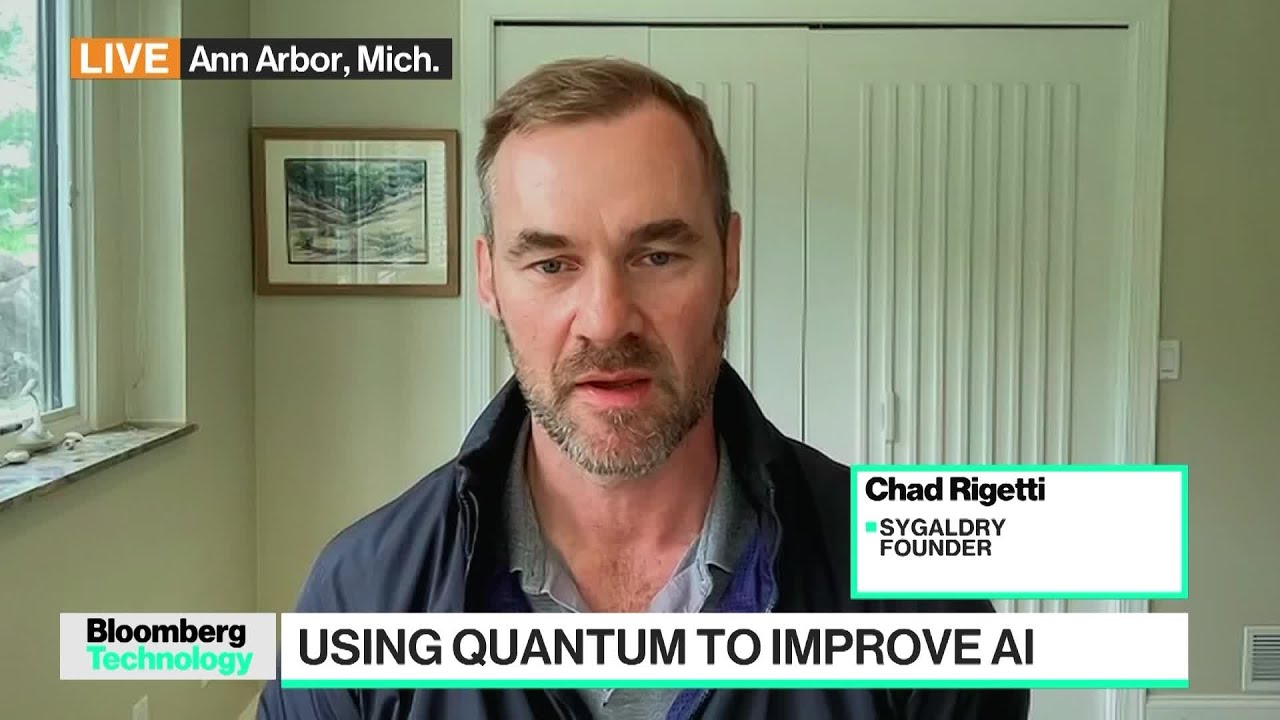
A former Rigetti executive has launched a new quantum computing company focused on developing quantum-accelerated AI servers to significantly improve AI training and inference efficiency by combining multiple qubit modalities within a fault-tolerant architecture. The company aims to redefine computing hardware for AI, address high costs and energy consumption, and capitalize on a potential $1 trillion market, while operating alongside classical infrastructure like GPUs.
The video features a discussion about a new quantum computing company founded by a former Rigetti executive, aimed at accelerating AI through quantum technology. The company’s primary goal is to develop quantum-accelerated AI servers that significantly speed up training and inference for large models. This approach addresses the growing energy consumption, high costs, and power requirements associated with traditional AI training, offering a potential solution through quantum computing’s exponential speed-ups.
The founder emphasizes that many companies are currently working on quantum computing, utilizing various modalities such as neutral atoms and photonics, alongside superconducting qubits. Despite this progress, they see a unique opportunity to combine multiple qubit types within a single, fault-tolerant architecture. This multi-modality approach aims to overcome the limitations of siloed technologies and create a more versatile and powerful quantum system specifically optimized for AI workloads.
A key motivation for launching this new company is the redefinition of computing hardware driven by AI’s widespread adoption. The founder notes that existing quantum companies’ roadmaps were established before quantum computing became the dominant paradigm for AI. Their vision is to develop a dedicated architecture focused on accelerating AI training and inference, reducing costs and energy consumption, and integrating different quantum modalities to achieve superior performance.
Regarding funding, the founder acknowledges the need for additional capital to realize this ambitious vision. They highlight the enormous market potential, estimating a $1 trillion opportunity once quantum computing impacts AI training and inference costs. The company plans to operate alongside classical infrastructure like GPUs, leveraging quantum mechanics to process information more efficiently and create a new, integrated computing paradigm that surpasses single-modality architectures.
Finally, the founder addresses the relationship with Rigetti, noting that their new company’s focus on AI-specific quantum architecture is a strategic choice made early on. They believe that establishing a clear, dedicated vision and team from the start is crucial, as changing course later would be challenging due to existing partnerships, talent, and internal culture. The company is in its early stages, but with rapid team growth and a focused approach, they are optimistic about the transformative potential of their multi-modality quantum architecture for AI and beyond.