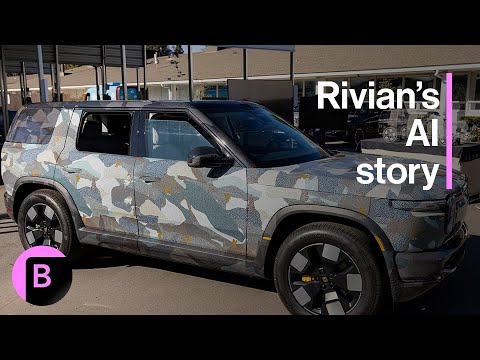
Rivian has made a significant commitment to advancing autonomous driving technology by developing a new AI chip, enhanced camera systems, and integrating lidar sensors into their vehicles. Since launching their first vehicles in late 2021, Rivian has been working on a clean-sheet approach to autonomy, culminating in a Gen two fleet that improved computing power and camera capabilities by tenfold. The upcoming Gen three architecture will feature in-house designed processors, further camera enhancements, and lidar integration, enabling a substantial leap in autonomous driving capabilities.
The company’s autonomy strategy revolves around a large-scale data flywheel, where millions of miles driven by their vehicles feed into a continuously improving AI driving model. Rivian plans to roll out over-the-air updates that will expand hands-free driving capabilities from under 150,000 miles to over 3.5 million miles in North America. By 2026, they aim to offer point-to-point navigation with hands-off driving, requiring driver supervision and attention monitoring. Looking further ahead, Rivian envisions “personal level four” autonomy, where vehicles can operate without a driver present, enabling functions like picking up family members or running errands autonomously.
Rivian’s approach to autonomy is distinguished by its vertical integration, including custom silicon development and in-house perception software. This strategy allows them to improve performance while reducing costs, particularly with their custom AI chip developed in partnership with TSMC. The cost of lidar sensors has also dramatically decreased, making their inclusion economically viable. This integrated hardware and software platform is designed to scale efficiently as Rivian moves from low-volume production to mass-market vehicles, supporting hundreds of thousands or even millions of units annually.
The company acknowledges the challenges of balancing the development of autonomous technology with scaling vehicle production but rejects the notion that these priorities are mutually exclusive. Rivian’s R&D infrastructure is built for large-scale production and innovation, and their vertical integration has already proven beneficial through software licensing deals with major automakers like Volkswagen. While their self-driving technology is currently exclusive to Rivian, they foresee potential licensing opportunities in the future, leveraging their well-architected platform and data advantages.
Finally, Rivian is positioning its autonomous driving package competitively in the market, offering it as a subscription service at $49.99 per month or a one-time purchase of $2,500, with the promise of continuous improvements over time. This pricing contrasts with higher-cost offerings like Tesla’s Full Self-Driving subscription. The company emphasizes that autonomy is their central R&D focus and a major investment area, with years of development work now coming to fruition. By revealing these advancements, Rivian aims to demonstrate its serious commitment to autonomy and differentiate itself in the evolving electric vehicle landscape.