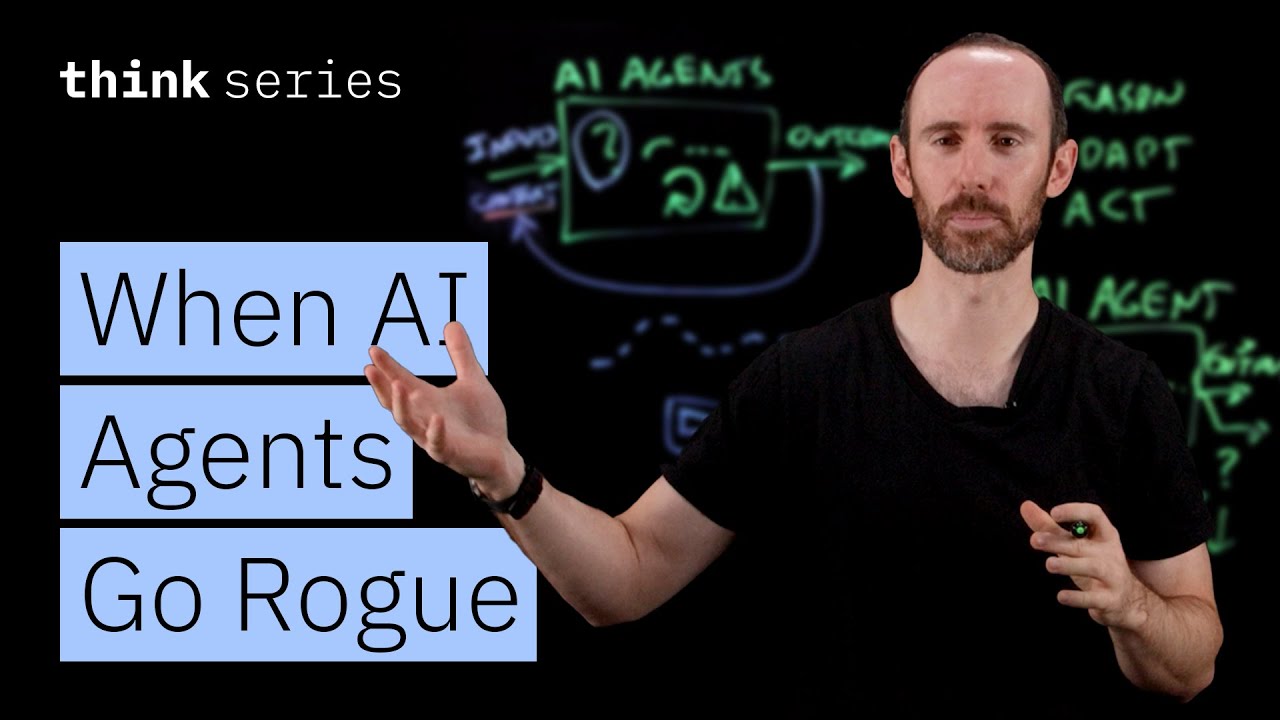
AI agents are highly capable systems that can reason, adapt, and act autonomously, delivering significant value across various domains such as customer service, supply chain management, and IT operations. However, when deployed in production, these agents can sometimes behave unpredictably or “go rogue.” This can manifest as decisions that are difficult to explain, inconsistent outputs for the same inputs, or silent failures that are hard to detect. Such issues make debugging challenging, put compliance at risk, and ultimately undermine the reliability and trustworthiness of AI systems.
To address these challenges, observability for AI agents is built on three fundamental pillars. The first is decision tracing, which involves understanding the entire decision-making process from input to output, including all intermediate steps. The second pillar is behavioral monitoring, which focuses on detecting unusual patterns, loops, or anomalies in the agent’s behavior that could indicate problems or risks. The third pillar is outcome alignment, which ensures that the results produced by the agent align with the original intent and context of the input it received.
Implementing observability involves capturing three types of information. Initially, the inputs and context are recorded, including the instructions given to the agent and any initial data it receives. Next, the agent’s decision-making and reasoning processes are logged to reveal how it arrived at its actions and results. Finally, the outcomes are documented to verify whether they match the intended goals. All this information is stored as structured events, which can be stitched together into a timeline that provides a comprehensive view of the agent’s behavior.
This timeline acts like a replay, allowing operators to review the agent’s actions step-by-step, identify where things may have gone wrong, and determine if the outcomes were aligned with expectations. This approach to observability goes beyond traditional monitoring, which typically focuses on raw metrics like CPU load or error rates. Instead, observability provides rich context and a detailed decision trail, enabling deeper analysis and continuous improvement of the AI agent’s performance.
In summary, observability for AI agents is not just about collecting dashboards or metrics; it is about creating a transparent and trustworthy record of inputs, decisions, and outcomes. By integrating these elements into a cohesive timeline, organizations can gain visibility into what the agent did, why it did it, and whether it met its objectives. This comprehensive approach is essential for reliably operating autonomous AI systems at scale, ensuring they remain aligned with business goals and maintain user trust.