The video demonstrates that running the Qwen 3.6 27B AI model locally on two decade-old Nvidia GTX 1080 Ti GPUs is feasible through software optimizations like Llama C++ with Turbo Quant, enabling efficient handling of large models despite hardware limitations. While performance and compatibility constraints exist, this affordable setup offers a practical entry point for enthusiasts to experiment with local AI without investing in expensive modern GPUs.
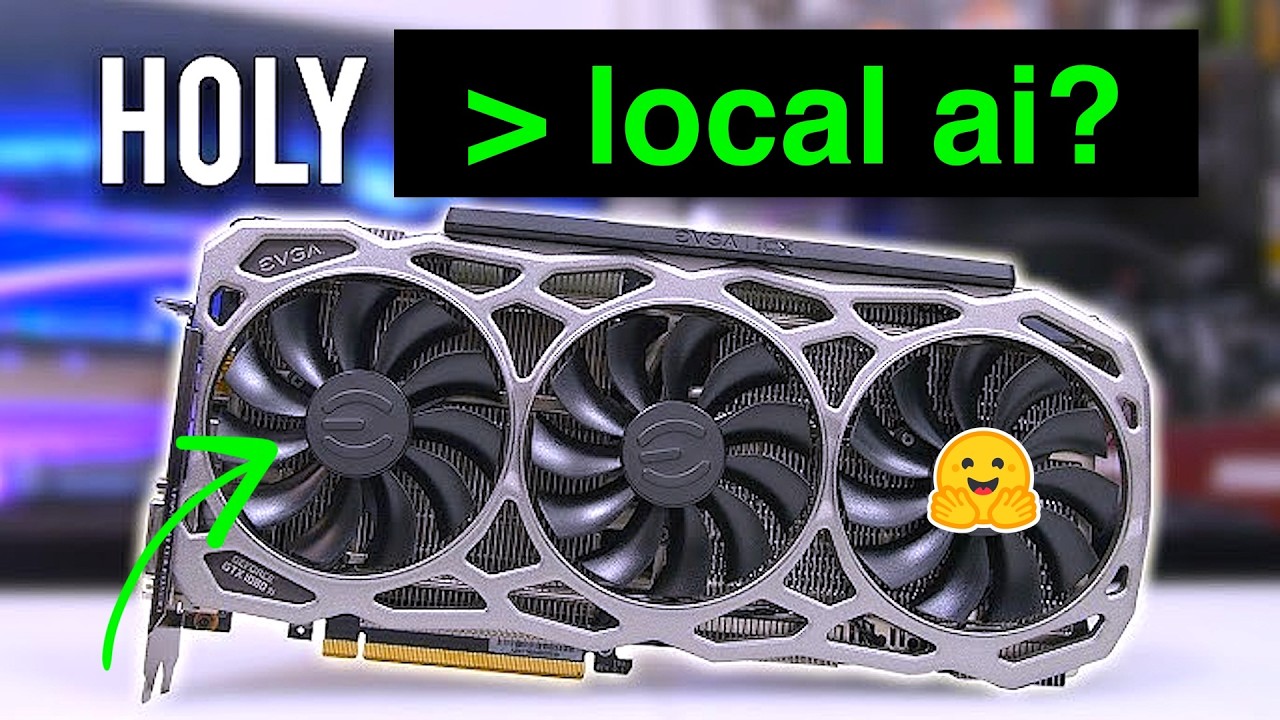
The video discusses the surprising feasibility of running the latest Qwen 3.6 27B AI model locally using two Nvidia GTX 1080 Ti GPUs, which are over a decade old and predate the RTX series. Despite the scarcity and high cost of modern GPUs with ample VRAM, an enthusiast managed to achieve this on a relatively modest setup—a dual Xeon HP Z840 workstation equipped with two 1080 Ti cards. This achievement is notable because the 1080 Ti was one of the few GPUs from its era with more than 10GB of VRAM, a critical factor for handling large AI models.
The key to making this possible lies in software optimizations, particularly the use of Llama C++ with a Turbo Quant fork. This setup allows efficient handling of the Qwen 3.6 27B model, specifically a quantized version (UDQ4K XL) that fits within approximately 17GB of VRAM. TurboQuant’s KV cache feature enables a large 131k token context window without sacrificing speed, maintaining a throughput of about 14 tokens per second. While this performance is modest, it is sufficient for agentic AI tasks like processing emails or running background AI workflows.
However, there are significant limitations. The old GPUs lack support for modern CUDA features and tensor parallelism, which restricts performance and scalability. Driver and software compatibility issues also arise due to the age of the hardware. As a result, more advanced frameworks like SG Lang and VLM do not work well, leaving Llama C++ as the best option for legacy GPU support. The VRAM bandwidth bottleneck further constrains efficiency, making this setup suitable primarily for low-intensity AI tasks rather than heavy real-time interaction.
From a cost perspective, the GTX 1080 Ti remains an attractive option for budget-conscious users. These GPUs can be found for around $100-$150 each, making a dual-GPU setup affordable compared to modern high-end cards that often cost thousands. The HP Z840 workstation itself is also inexpensive, allowing enthusiasts to build a functional local AI testbed for under $500 excluding RAM. This makes the 1080 Ti a viable entry point for those wanting to experiment with local AI without investing in costly new hardware.
In conclusion, while two GTX 1080 Ti GPUs cannot compete with modern GPUs like the RTX 3090 in raw performance or efficiency, they offer a surprisingly capable and affordable solution for running large AI models locally. The video encourages viewers with existing 1080 Ti cards to consider leveraging them for AI workloads and invites discussion on whether this changes their perspective on older hardware’s utility. Ultimately, this approach highlights how software innovations can extend the life and usefulness of older GPUs in the evolving AI landscape.