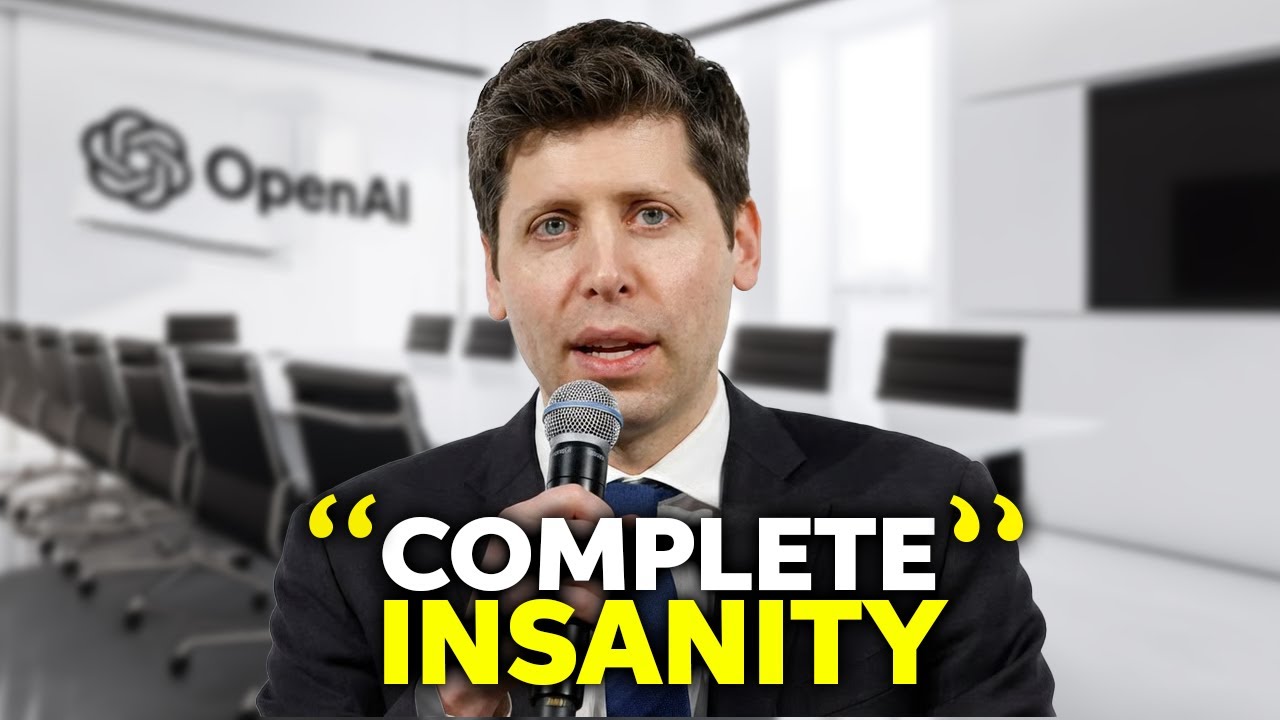
Sam Altman, CEO of OpenAI, recently addressed the growing chaos and speculation in the AI industry, particularly surrounding a rumored $100 billion investment deal between OpenAI and Nvidia. The deal, which was widely discussed in the tech community, is reportedly “on ice” due to concerns from Nvidia’s CEO Jensen Huang about OpenAI’s business discipline and the increasing competition from rivals like Google and Anthropic. Huang clarified that the $100 billion figure was never a binding commitment, and that Nvidia is still considering a significant investment, but wants to ensure a return on capital. This uncertainty has fueled widespread debate and concern about the future of AI and OpenAI’s financial stability.
OpenAI’s financial situation is a major point of contention. The company is projected to burn through $115 billion by 2029, with losses of $14 billion expected in 2026 alone. Despite being a leader in AI, OpenAI’s revenue streams remain uncertain, and its spending on sales, marketing, and employee retention is extremely high. The company is also spreading itself thin by launching multiple products—such as Sora 2, the Atlas web browser, consumer hardware, and humanoid robots—while its core product, ChatGPT, faces increasing competition and stagnating growth. Meanwhile, competitors like Google Gemini and Anthropic’s Claude are rapidly gaining market share, leveraging their existing user bases and more focused product strategies.
The competitive landscape is shifting quickly. Google, for example, has integrated Gemini into its suite of products, giving it instant access to billions of users and accelerating its growth far beyond OpenAI’s. Other companies like Anthropic and Perplexity are also growing rapidly, targeting specific user segments such as coders and researchers. This fragmentation of the market means that while ChatGPT remains the most widely used AI app, its dominance is being eroded as specialized competitors gain traction. Investors are wary of backing a company whose growth is flat while rivals are surging ahead.
The financial entanglements between OpenAI, Nvidia, Oracle, Microsoft, and other tech giants add another layer of complexity. OpenAI has a multi-year deal to purchase up to $300 billion in computing power from Oracle, and Microsoft has a massive financial stake in the company. If OpenAI were to falter, it could trigger a chain reaction affecting the entire tech sector, as these companies’ fortunes are closely linked. The situation is further complicated by the fact that tech companies are packaging data center debt into asset-backed securities, reminiscent of the risky financial practices that led to the 2008 financial crisis.
Finally, technical challenges are also contributing to the turmoil. OpenAI has expressed dissatisfaction with Nvidia’s hardware for certain inference tasks, particularly in coding applications, and has explored alternatives from companies like Cerebras and Groq. Nvidia responded by attempting to acquire these companies or secure exclusive deals, effectively blocking OpenAI’s backup plans. Amid all this, OpenAI’s CFO has even floated the idea of a government “backstop” or bailout, raising further questions about the company’s long-term viability. Sam Altman’s public comments reflect the broader sense of instability and “insanity” in the AI industry, as massive investments, fierce competition, and technical hurdles converge to create an uncertain future.