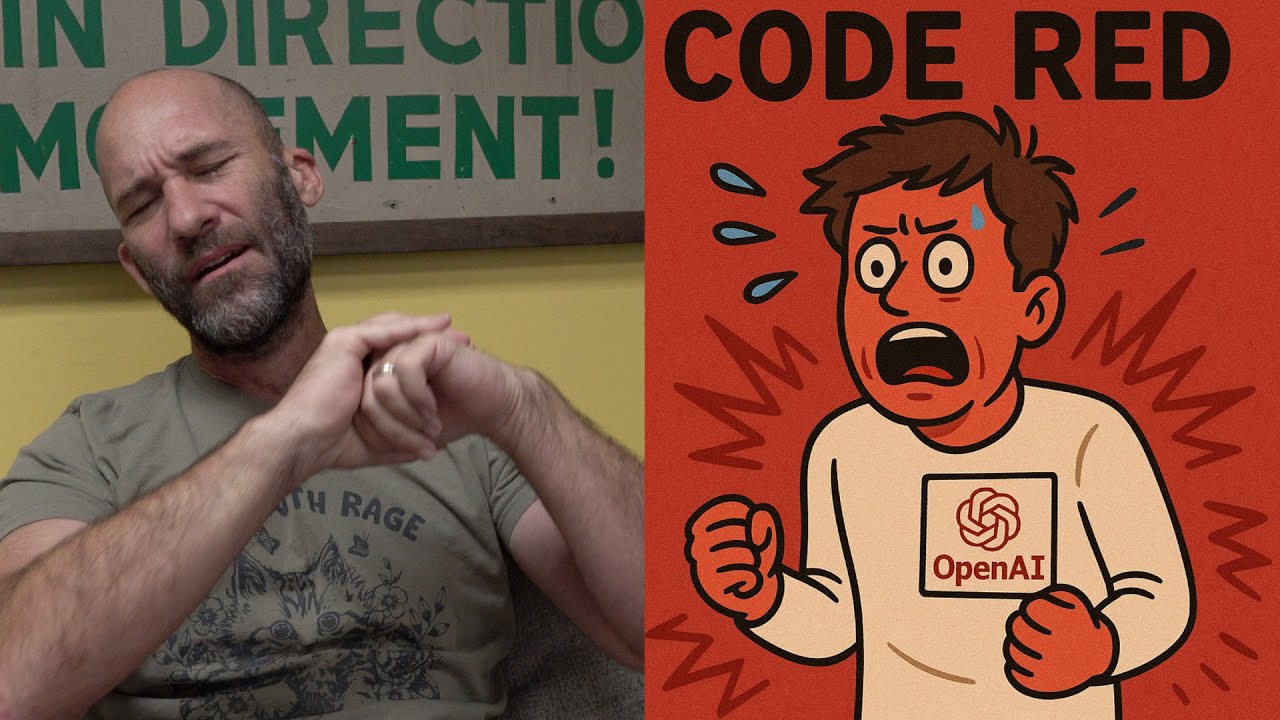
In this video, Eli, the computer guy, discusses the current state of the AI industry, focusing on OpenAI’s recent “code red” declaration by CEO Sam Altman. Eli is recording from American Underground in Durham, North Carolina, where he is teaching a class on extending AI capabilities using REST APIs. He emphasizes that while he is not anti-AI or anti-OpenAI—he uses ChatGPT daily and finds it valuable—there are significant concerns about the business models and competition in the AI space. Many companies, including Meta and Google, are aggressively competing in AI, but the market’s true economic value remains uncertain.
Eli highlights the recent launch of Google’s Gemini 3 Pro model, which has gained 200 million users in just three months and reportedly outperforms ChatGPT on some benchmarks. Despite this, Eli points out that he personally sticks with ChatGPT because it is “good enough” for his needs, and he doesn’t have the time to constantly test every new model. He stresses that while incremental improvements in AI models are important, the real value in the coming years will likely come from add-ons and integrations, such as AI agents and personalized assistants, rather than just raw model performance.
The video also covers OpenAI’s internal response to the competition, with Sam Altman reportedly delaying plans for advertising and other product features to focus on improving the core chatbot model. Eli questions this strategy, arguing that focusing solely on the chatbot might be shortsighted. Instead, he believes that the future lies in building AI systems that integrate with real-world data and services, such as health monitoring and shopping assistants, which provide practical value to users beyond just better chatbot responses.
Eli raises concerns about the sustainability of OpenAI’s business model, noting that many users of AI services are free users, and even paying customers may not cover the high operational costs. He points out that OpenAI is seeking massive capital investments—up to $1.4 trillion—which could be risky if their assumptions about the value of frontier AI models prove incorrect. This high-stakes approach contrasts with other companies like Anthropic and Grok, which are aiming for profitability with smaller user bases and more focused offerings, suggesting a more sustainable path forward.
In conclusion, Eli expresses skepticism about the current AI industry’s focus on rapid cash burn and market dominance at the expense of profitability and practical value. He encourages viewers to think critically about where real value in AI lies and to consider the importance of integrations and user-focused features over incremental model improvements. Throughout the video, Eli maintains a candid and somewhat humorous tone, inviting viewers to engage with his content and support his educational efforts at Silicon Dojo.