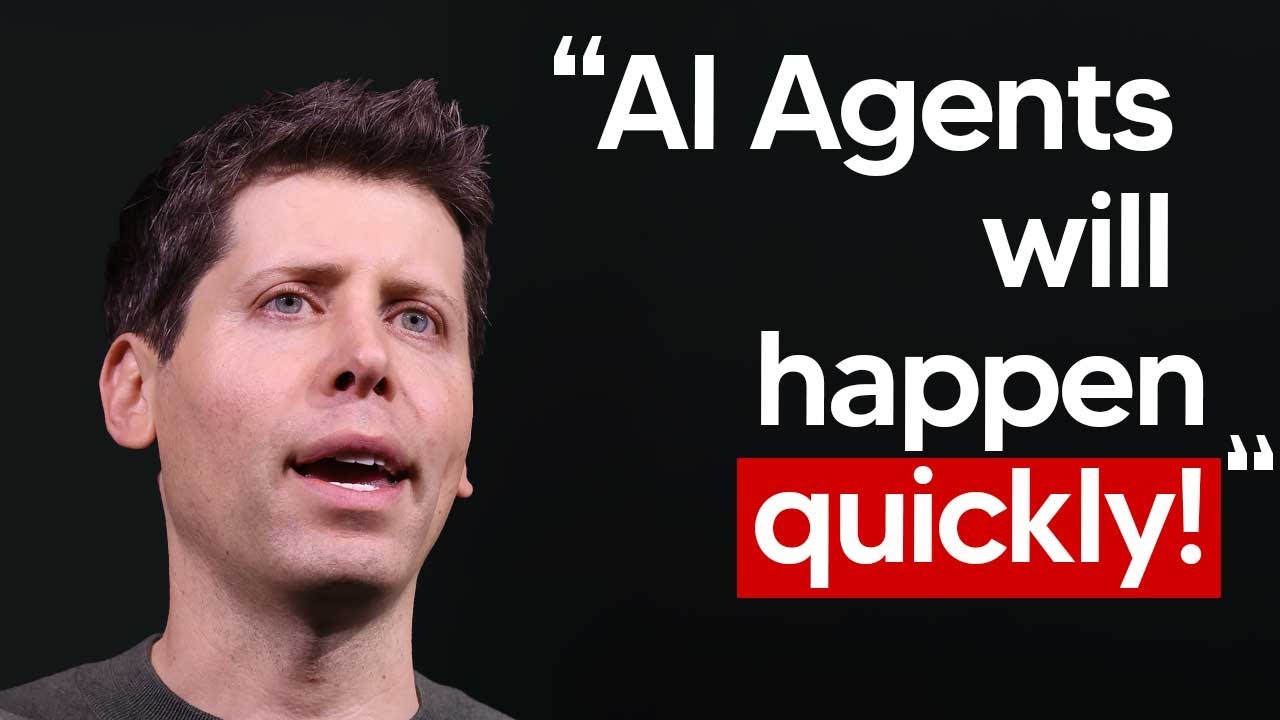
In the video, the focus is on the future of AI agents and digital humans, particularly through the lens of a company called Altera AI, which is pioneering the development of AI agents that exhibit realistic and human-like behaviors. Founded by former MIT professor Yang and his co-founders, Altera aims to create digital humans capable of collaborating with people and even experiencing emotions. Their first product utilizes GPT-4 to create autonomous agents that can play games like Minecraft, simulating interactions akin to those with a human friend. This innovation is seen as a significant step towards a future where AI agents can assist and engage with humans in more profound ways.
Altera AI has garnered substantial funding, including a $9 million seed round, to support its research and development efforts. The company employs advanced AI algorithms inspired by neuroscience to build its digital humans, mimicking human brain functions such as memory and social cognition. This architecture is designed to enhance the agents’ ability to interact in a more human-like manner, allowing for productive collaboration and emotional engagement. The video emphasizes the potential impact of these digital humans, suggesting they could revolutionize various industries by providing more personalized and effective interactions.
One of the challenges faced by AI agents is data degradation, where the quality of decision-making deteriorates over time due to the reliance on their own outputs as future inputs. Altera addresses this issue by leveraging OpenAI’s large language models, which help maintain the integrity of decision-making processes. This collaboration has enabled Altera to create agents capable of longer and more complex interactions without a decline in performance, marking a significant advancement in the capabilities of AI agents.
The video also discusses the architecture of Altera’s AI agents, which is designed to simulate human cognitive functions. This system includes various modules that replicate aspects of human thinking, such as attention, memory, and social cognition. As these agents evolve, they are expected to operate autonomously for extended periods, with current benchmarks showing they can function for up to four hours. The potential for future models to surpass these capabilities is highlighted, suggesting that advancements in AI will lead to even more sophisticated digital humans.
Finally, the video touches on the broader implications of AI agents and digital humans across various sectors, including customer service, healthcare, and advertising. With advancements in generative AI and computer graphics, digital humans are poised to transform how we interact with technology, making these interactions more engaging and personalized. The video concludes with a sense of excitement about the future of AI, emphasizing that the developments in this field could lead to significant changes in how we live and work, with a pivotal moment expected around 2025.