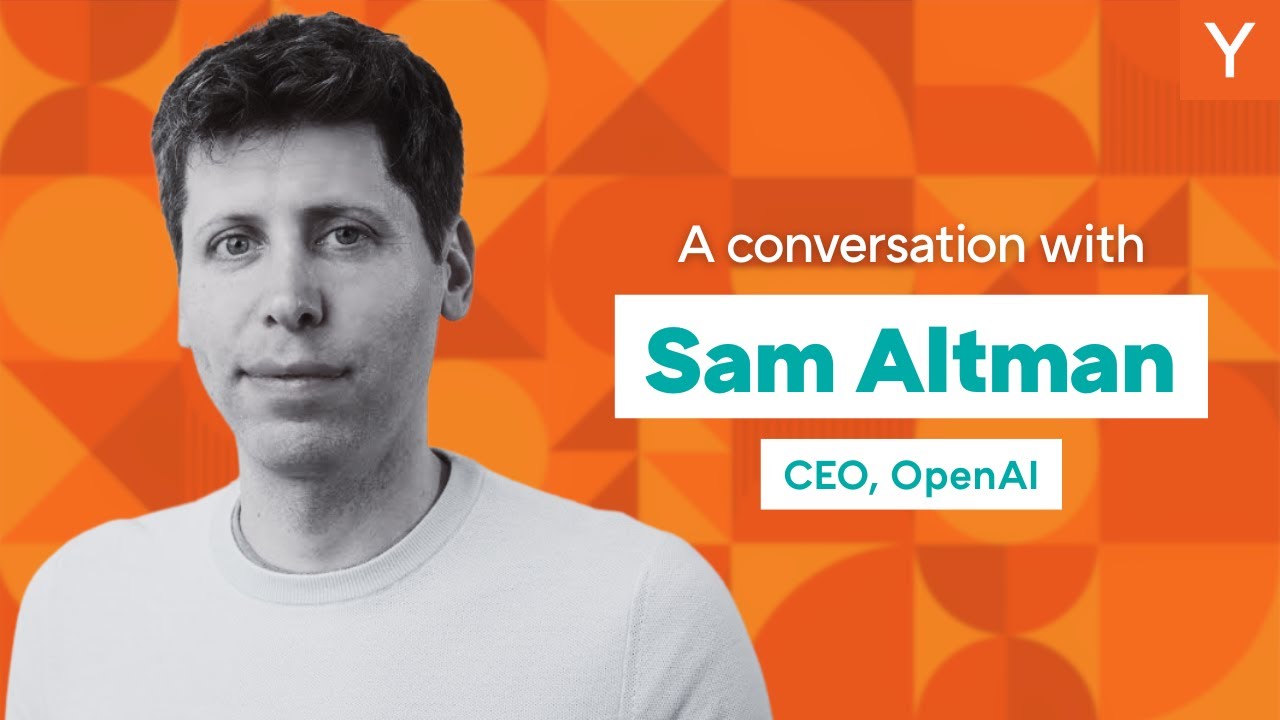
In this insightful discussion, Sam Altman, CEO of OpenAI, reflects on the ambitious journey of building OpenAI and pursuing artificial general intelligence (AGI). He recalls the early skepticism they faced, with 99% of the world doubting the feasibility of AGI, yet a small, passionate 1% resonated deeply with the vision. The initial phase was marked by uncertainty and modest beginnings—OpenAI started with just a handful of people focused on research without clear products or revenue. Altman emphasizes the importance of conviction and resilience in pursuing groundbreaking ideas, noting that many successful ventures begin as small, uncertain projects driven by a core team willing to take risks.
Altman highlights the transformative potential of recent AI advancements, particularly with models like GPT-3 and GPT-4, and the emerging capabilities of reasoning and multimodal models. He discusses the evolving use cases of AI, from simple chatbots to sophisticated agents that can proactively assist users by integrating with their data and devices. Memory features in ChatGPT exemplify this shift toward AI companions that understand and anticipate user needs. He envisions a future where AI runs persistently in the background, seamlessly integrated into daily life, and even extends to physical robots capable of performing real-world tasks.
The conversation also delves into the challenges and opportunities of AI infrastructure and hardware. Altman acknowledges the difficulty in scaling compute resources but remains optimistic about the rapid decrease in costs and the rise of powerful open-source models. He stresses the importance of startups focusing on unique, defensible ideas rather than replicating existing AI assistants, encouraging innovation in unexplored areas. The integration of AI with real-world data and the potential for new human-computer interfaces, designed by top talents like Johnny Ive, point toward a future where technology becomes more intuitive and less intrusive.
On a broader societal level, Altman reflects on the historical arc of technology as a tool to amplify human capability and reduce coordination costs. He believes the next decade will see individuals and small teams achieving unprecedented impact thanks to AI. He underscores the interconnectedness of AI and energy, noting that energy availability will be a fundamental limiter of AI’s growth. Altman expresses excitement about AI’s potential to accelerate scientific discovery, which he sees as the key driver of long-term economic growth and improved quality of life. He also touches on the importance of policy innovation and manufacturing revitalization in maintaining technological leadership.
Finally, Altman shares personal insights on leadership, hiring, and entrepreneurship. He advises focusing on hiring driven, curious, and team-oriented individuals rather than relying solely on prestigious resumes. He candidly discusses the challenges of being OpenAI’s CEO, managing complex decisions amid fierce competition. Reflecting on his own journey, he stresses the value of conviction, resilience, and trusting one’s instincts through failures. Altman encourages the next generation of founders to embrace the current era as the best time in history to start a company, driven by the transformative power of AI and the opportunity to shape the future.