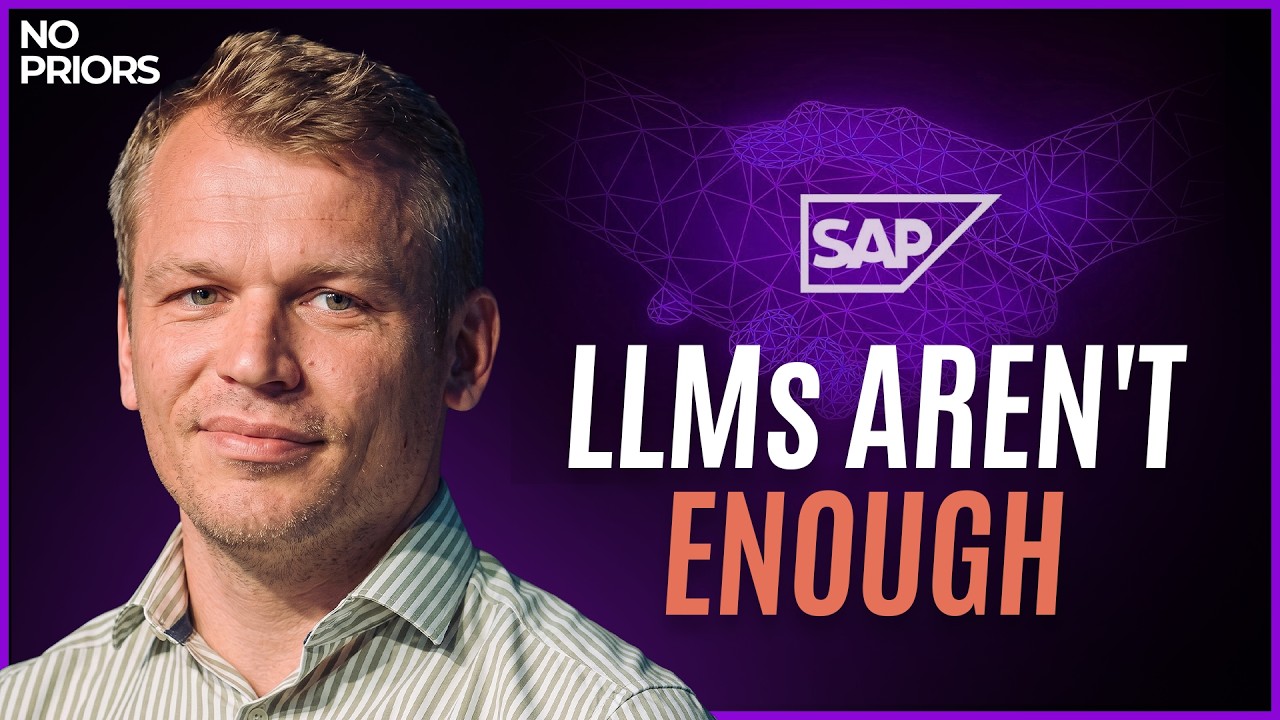
In the conversation with Philipp Herzig, CTO of SAP, the discussion centers on how SAP is evolving its enterprise software platform to embrace the AI era. SAP, known as the “operating system” of many large companies, manages end-to-end business processes across finance, HR, supply chain, and more for 400,000 customers worldwide. Herzig emphasizes that SAP’s durability stems from its ability to deliver real business outcomes through continuous technological transitions—from mainframe to cloud and now AI—while addressing complex, large-scale enterprise needs.
Herzig outlines SAP’s AI strategy, highlighting three major areas of transformation: the user interface, business processes, and the data layer. Traditional software interfaces that require users to manually navigate tasks are becoming obsolete, replaced by generative UIs that proactively provide insights and recommendations. Business processes are becoming more flexible and intelligent through AI agents that blend structured and unstructured data, enabling automation and improved decision-making. Meanwhile, SAP is harmonizing vast amounts of enterprise data to fuel AI models, recognizing that AI’s effectiveness depends heavily on data quality and integration.
A key challenge SAP faces is scaling AI solutions to handle the complexity and volume of enterprise data and processes. Unlike simple chatbot demos, SAP must manage thousands of APIs and tailor AI responses to specific organizational contexts, such as regional regulations and company policies. Herzig also discusses the importance of verifiability and reliability in AI-driven automation, stressing the need for rigorous testing and continuous evaluation (evals) to ensure AI agents perform correctly and securely at scale.
Herzig distinguishes between the capabilities of large language models (LLMs) and the requirements for predictive analytics in enterprises. While LLMs excel in unstructured data and natural language tasks, they are not sufficient for structured, tabular data predictions critical for business planning, such as demand forecasting or cash flow prediction. SAP has developed specialized relational pre-trained transformers (RPT1) to address these needs, enabling more accurate and scalable predictive models that democratize access to advanced analytics beyond expert data scientists.
Looking ahead, Herzig envisions AI transforming enterprise roles by automating mundane tasks and enabling faster, better decision-making, thus elevating employees to more strategic functions. He acknowledges that SAP’s business model is evolving from seat-based licensing toward a hybrid and eventually more consumption- and outcome-based pricing, reflecting the shift to AI-driven software outcomes. Ultimately, Herzig believes SAP’s success will depend on delivering measurable business outcomes quickly and securely, making technology seamless and accessible for customers, and continuously adapting to the evolving AI landscape.