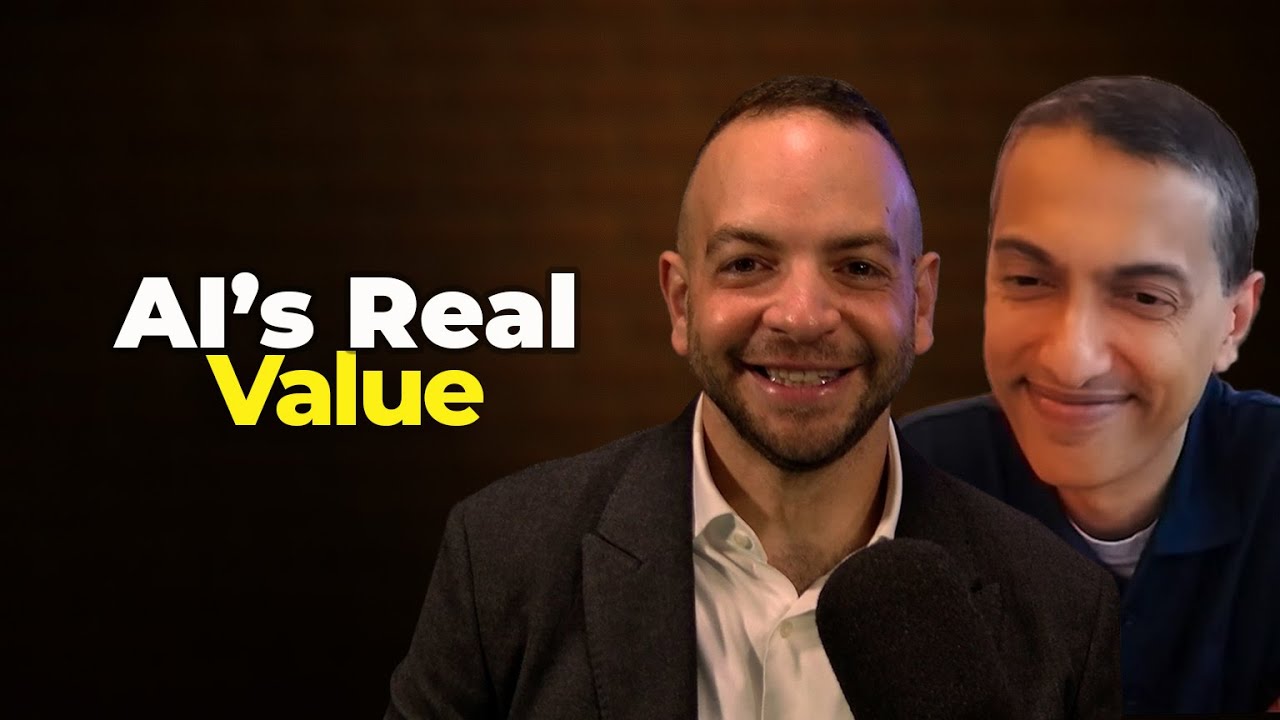
In this insightful conversation, Muhammad Alam, head of product and engineering at SAP, addresses the common concern about generative AI leading to job losses. He explains that while AI significantly enhances efficiency, especially in software development, it has not resulted in job reductions at SAP. Instead, the company is leveraging AI to accelerate innovation and handle massive backlogs, aiming for a 5x to 10x improvement in productivity. This approach allows SAP not only to maintain but potentially grow its workforce to meet increasing customer demands, emphasizing that AI is a tool for scaling innovation rather than replacing people.
Alam highlights the evolving roles within organizations as AI becomes more integrated. Product managers, for example, are transitioning from merely specifying requirements to actively building prototypes using AI tools, which senior engineers then refine. This shift empowers individuals and teams to dramatically increase their output, with some SAP teams reporting up to seven times the productivity in recent sprints. The interplay between product and engineering teams is becoming more collaborative and dynamic, with AI enabling a new model of product development that blends creativity and technical execution.
When discussing AI’s return on investment (ROI), Alam offers a nuanced perspective. He acknowledges contrasting studies on AI ROI but stresses that value realization depends heavily on the use case and industry context. SAP’s approach focuses on embedding AI seamlessly into core business applications—such as finance, supply chain, and human capital management—where AI can operate directly on harmonized data within the workflow. This integration maximizes ROI by avoiding fragmented solutions and enabling AI to enhance decision-making and operational efficiency in a holistic manner.
Alam provides concrete examples of AI applications within SAP’s ecosystem, such as AI assistants for accounts receivable and controlling roles that automate tasks like accruals management and dispute resolution. These assistants improve efficiency by reasoning over historical data and making accurate predictions, gradually building trust to enable autonomous execution of routine processes. Similar AI-driven automation is applied in customer service to handle simpler cases autonomously, illustrating how AI can augment human roles and streamline business operations incrementally.
Finally, Alam reflects on the hype surrounding AI, recognizing both its positive and negative aspects. The hype has generated awareness, interest, and investment, which are crucial for advancing AI adoption. However, it also risks creating unrealistic expectations that can lead to disappointment. SAP’s strategy is to remain pragmatic, focusing on delivering tangible value through close collaboration with customers rather than chasing hype. This grounded approach aims to ensure sustainable progress and meaningful outcomes in the evolving AI landscape.