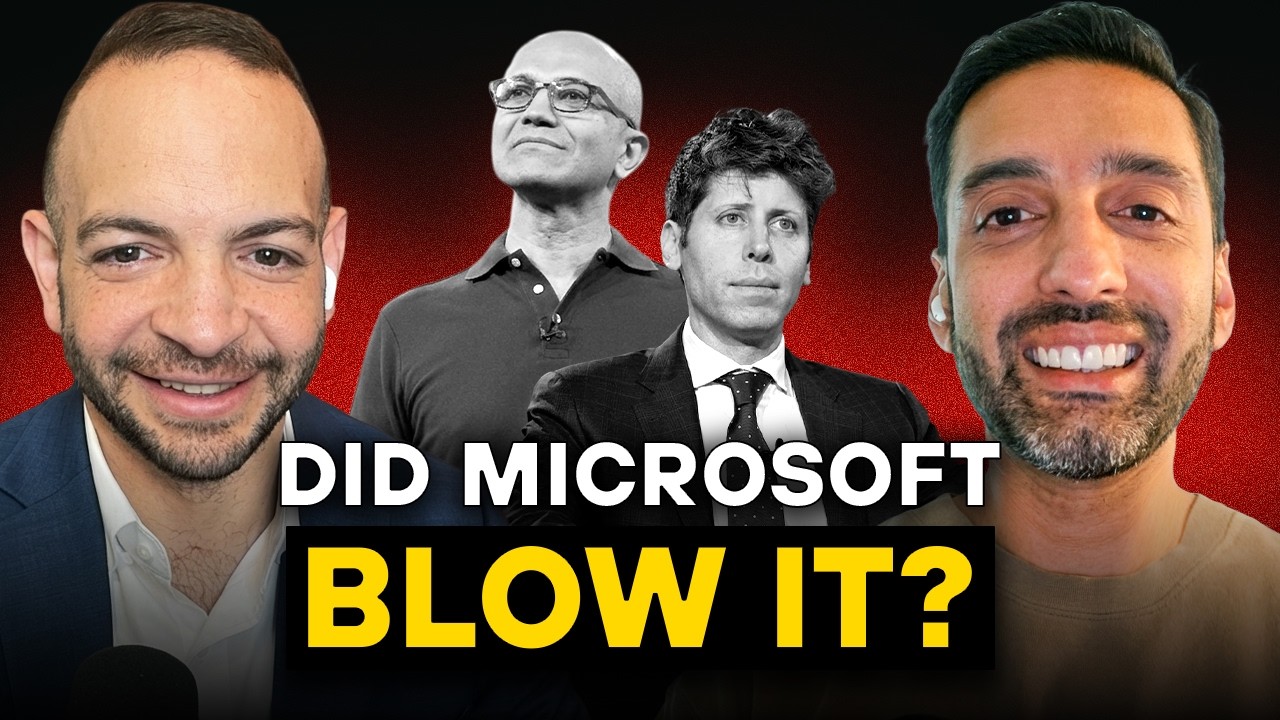
The podcast discusses Microsoft CEO Satya Nadella’s concerns over limited control in the OpenAI partnership, the competitive AI landscape with Google’s upcoming Gemini model and Anthropic’s business-focused tools, as well as challenges in AI integration exemplified by Apple’s poor Siri implementation. It also highlights debates around AI-generated art sparked by a Monet prank and emerging legal issues like Matthew McConaughey’s efforts to protect his digital likeness amid growing AI content monetization concerns.
The Big Technology Podcast delves into several key developments in the AI industry, starting with Microsoft CEO Satya Nadella’s candid internal emails revealing his concerns about the company’s partnership with OpenAI. Nadella expresses frustration over Microsoft’s lack of control and ownership of foundational AI intellectual property, highlighting that Microsoft is essentially a thin layer on top of Nvidia and OpenAI’s IP, while incurring significant financial losses. The hosts debate Nadella’s perspective, with one arguing that Microsoft squandered its early advantage in AI integration, particularly with Bing and GitHub Copilot, by not aggressively leveraging OpenAI’s technology to dominate AI applications.
The discussion then shifts to the competitive landscape among major tech companies in AI development. Google is preparing to announce a new Gemini AI model at its upcoming Google IO event, which is expected to be competitive with OpenAI’s GPT-5.5 but still behind Anthropic’s Mythos model. Despite Google’s leadership in AI model building and cloud infrastructure, the hosts note a lack of groundbreaking innovation recently, especially in consumer-facing AI products. Meanwhile, Anthropic is targeting small businesses with its new Claude for Small Business suite, offering AI-powered tools integrated with popular software like QuickBooks and Canva, though the hosts express some skepticism about the novelty and impact of these offerings.
The podcast also covers the strained relationship between OpenAI and Apple, with reports of potential legal action due to Apple’s limited and poorly executed integration of OpenAI’s technology into Siri. The hosts criticize Apple’s implementation as one of the worst product integrations, suggesting that OpenAI’s frustration may stem from the subpar user experience that failed to showcase the AI’s capabilities effectively. This situation highlights ongoing challenges in AI partnerships and the complexities of integrating advanced AI into existing platforms.
A lighter segment features a prank involving a real Monet painting being falsely presented as AI-generated art, which sparked widespread debate and criticism online. This incident underscores the growing confusion and skepticism around AI-generated content and the difficulty in distinguishing between human-created and AI-created art. The hosts reflect on the broader implications of AI in creative fields and the evolving public perception of AI’s artistic capabilities.
Finally, the podcast touches on the emerging legal and ethical issues surrounding AI-generated content, exemplified by actor Matthew McConaughey’s efforts to trademark his voice and likeness to protect against unauthorized AI use. This raises important questions about how creators and celebrities will monetize and control their digital personas in an AI-driven future. The hosts anticipate that such legal battles will become increasingly prominent as AI technology advances and becomes more integrated into media and entertainment.