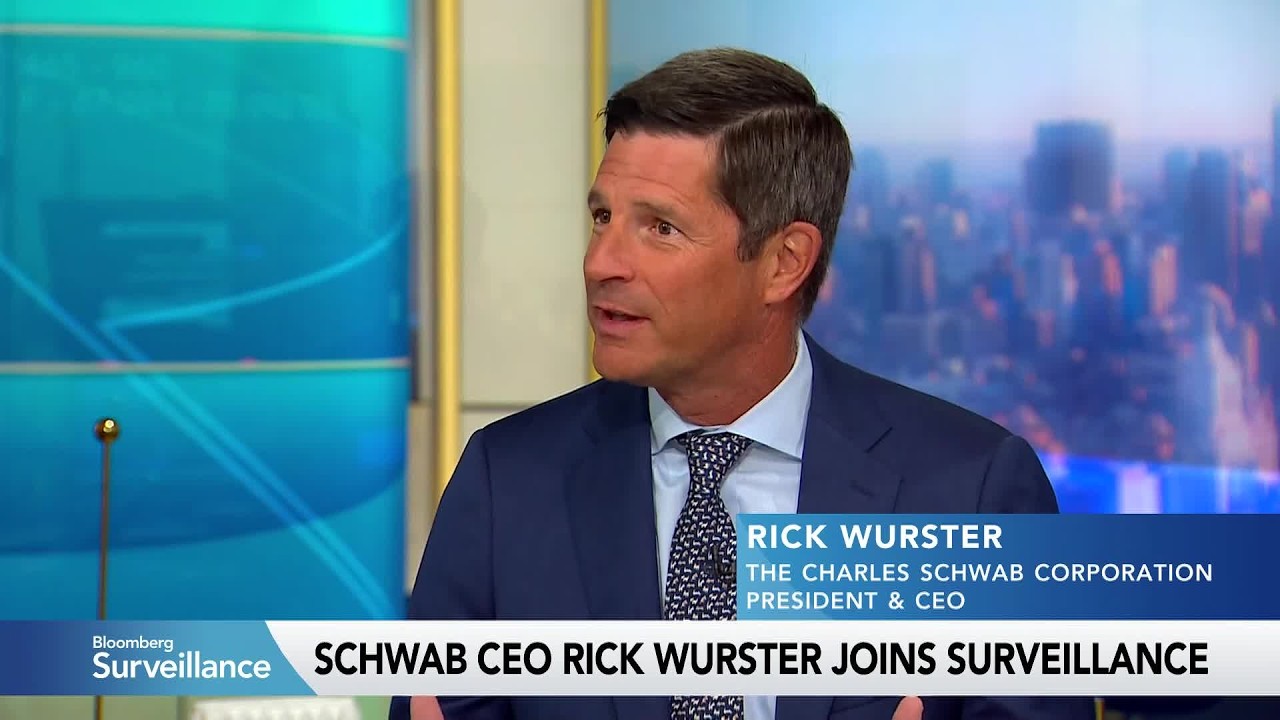
Schwab CEO Rick Wurster highlighted the company’s focus on tax-aware strategies, fixed income appeal for retirees, and engaging younger investors through creative content and AI tools like their in-house assistant, Charlie, while maintaining strict cybersecurity measures. Despite AI-driven efficiencies, Schwab plans to grow its workforce to meet increasing demand for personalized wealth advice, emphasizing a balance between technology and human interaction.
In a recent discussion, Schwab CEO Rick Wurster highlighted the company’s strong client engagement driven by tax-aware strategies, fixed income, and personalized advice. Despite rising yields prompting increased interest in bonds, clients remain heavily invested in equities with high trading activity and margin use. Wurster emphasized the appeal of fixed income for retirees seeking stable real yields, noting the attractiveness of locking in returns like 3.4% real on 30-year bonds.
Schwab is actively attracting younger generations, particularly Gen Z and millennials, by meeting them where they are—especially on platforms like YouTube. Creative content such as “get ready with me” videos that combine lifestyle elements with financial education helps engage young investors early, encouraging them to benefit from the power of compounding over time. This approach is part of Schwab’s broader strategy to foster long-term investor success.
A key innovation discussed is Schwab’s in-house AI assistant, Charlie, designed to provide clients with conversational, text or voice-based access to their accounts and financial services. However, Schwab is cautious about security and liability concerns, blocking unauthorized AI agents like Muse from accessing client accounts. Instead, Schwab offers controlled pathways for AI use, ensuring clients can safely leverage large language models (LLMs) for research and account information without risking unauthorized transactions.
Cybersecurity remains a top priority for Schwab, given the trust-based nature of its business. Wurster explained that the company employs advanced models to detect and patch vulnerabilities quickly. The main concerns revolve around preventing unintended actions by AI agents and protecting clients from potential cyber threats. Schwab’s approach balances innovation with stringent safeguards to maintain client security and confidence.
Regarding workforce implications, Wurster expects Schwab’s employee count to grow despite AI-driven efficiencies. The demand for wealth advice is increasing as clients’ portfolios become more complex, leading to more advisory roles. While AI enhances efficiency and enriches client interactions, Schwab believes human involvement remains crucial, especially given the emotional nature of financial decisions. This contrasts with some other banks that anticipate workforce reductions due to AI, underscoring Schwab’s commitment to combining technology with personalized service.
Useful Links