The video reviews Scrapling, a Python web scraping framework that promises to unify multiple scraping tasks—fetching, parsing, crawling, and AI-assisted automation—into a single library. Scrapling boasts nearly 100,000 GitHub stars and offers features like fast HTTP requests with Chrome-like TLS fingerprinting, stealth browser support for JavaScript-heavy pages, and built-in Cloudflare challenge solvers. The presenter installs version 0.5.1 and runs several tests to evaluate its capabilities, including simple page fetching, crawling multiple pages with spiders, and adaptive element tracking to handle website changes.
Scrapling’s fetching capabilities include a fast HTTP fetcher that mimics Chrome’s TLS fingerprint to avoid detection and a stealth browser fetcher for pages requiring JavaScript. The parsing supports CSS selectors, XPath, text search, and a unique adaptive element tracking feature that remembers an element’s fingerprint and can find it even if the page structure changes. The spider system is similar to Scrapy, supporting asynchronous crawling, pause/resume, auto-throttling, obeying robots.txt, and caching responses for development. Exporting results is straightforward with built-in support for JSON, CSV, and XML formats.
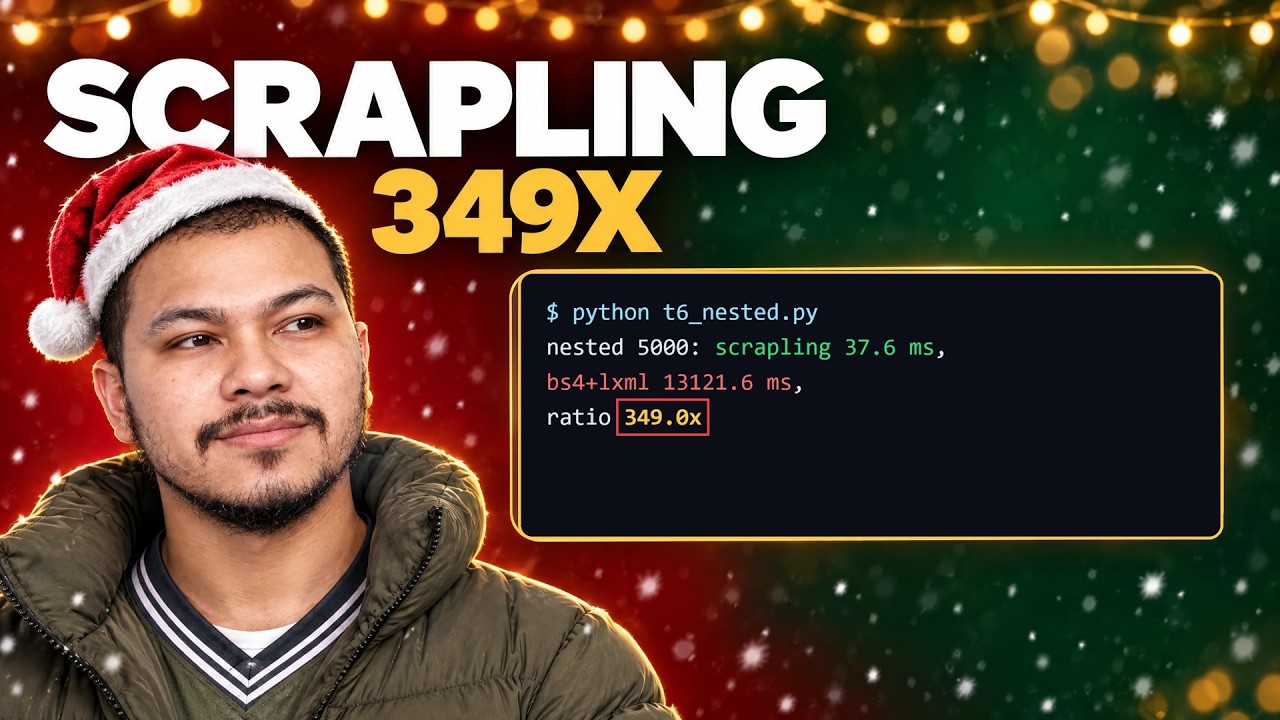
A key highlight is Scrapling’s adaptive selector feature, which helps maintain scrapers when websites change their HTML structure. The presenter demonstrates this with a toy example where a paragraph’s ID and class change between versions, but Scrapling still locates the element using similarity matching. While promising, the presenter cautions that this feature’s effectiveness on large, complex real-world sites remains to be tested. Speed tests show Scrapling parsing 5,000 nested elements in about 38 milliseconds, significantly faster than BeautifulSoup, though the presenter notes the speed advantage is less pronounced on flat pages.
The video also tests Scrapling’s Cloudflare challenge solver on a demo page with soft Cloudflare protection. While Scrapling eventually bypasses the challenge and returns the page, it takes over two minutes, which would be impractical at scale. The presenter emphasizes that anti-bot systems frequently change, so this feature should be seen as helpful but not guaranteed. Additional features include proxy rotation, session management, DNS over HTTPS, request recording in browser sessions, and integration with AI agents for automated scraping and markdown conversion.
In conclusion, Scrapling offers a modern, unified scraping framework with impressive speed, adaptive selectors, and a familiar API for users of Scrapy or BeautifulSoup. It is actively maintained and well-documented, making it a strong choice for Python web scrapers looking to simplify their toolchain. However, users should test its Cloudflare bypass and adaptive features thoroughly on their target sites. The project is open source under a BSD license and funded through proxy and solver sponsorships. Overall, Scrapling is presented as a valuable, honest, and evolving tool for web scraping enthusiasts and professionals alike.