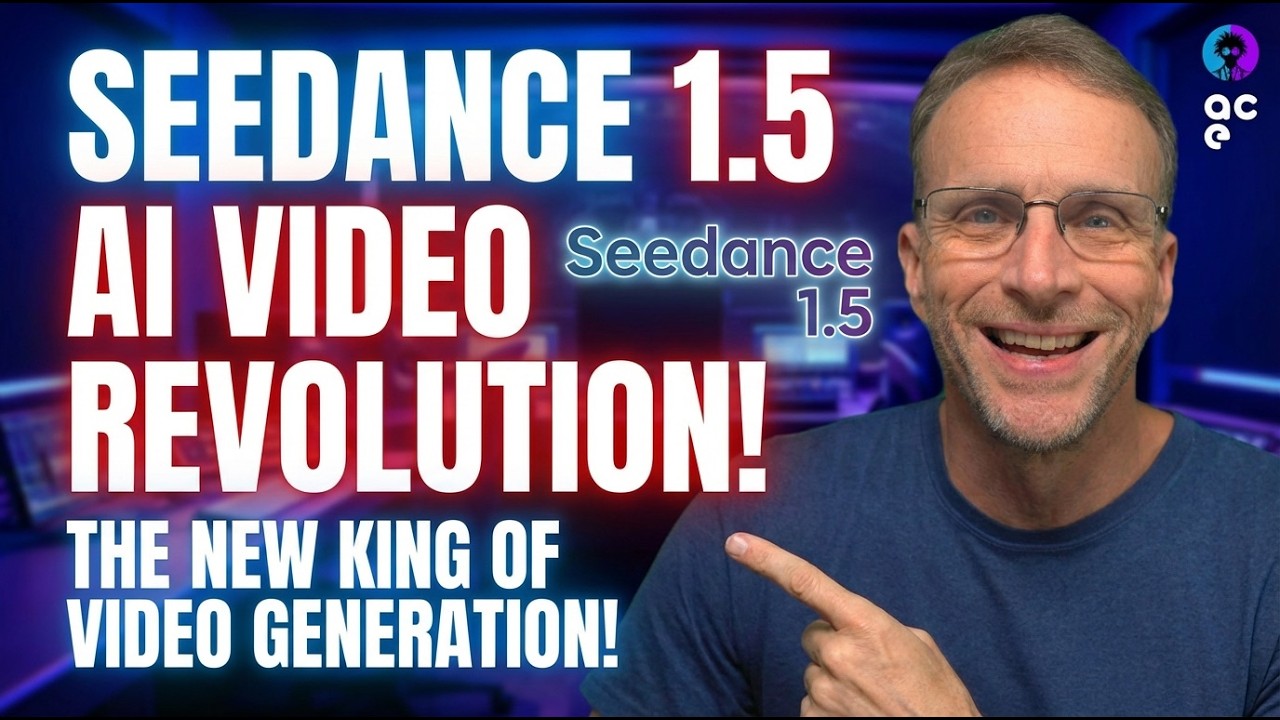
Certainly! Here’s a five-paragraph summary of the video “Seedance 1.5 Pro AI Video on OpenArt – Full First Look”:
The video introduces Seedance 1.5, a new AI video generation model released by ByteDance and now available on the OpenArt platform. The host emphasizes that this model is designed for cinematic storytelling rather than fast-paced action or chaotic scenes. Seedance 1.5 excels at creating fluid motion, atmospheric visuals, and emotional continuity, making it ideal for generating the kinds of scenes found within movies rather than trailers. The video serves as a showcase of the model’s capabilities, rather than a step-by-step tutorial.
One of the standout features of Seedance 1.5 is its ability to generate audio alongside video, including speech with accurate lip sync, music, and sound effects. The host demonstrates this with several examples, such as a woman standing alone on a city street at dusk, where the model captures subtle micro-expressions and emotional shifts in her face. Other examples include continuous cinematic shots in a library, gentle dancing, and scenes with transforming environments, all highlighting the model’s strengths in realism and emotional nuance.
The host also explores how prompt engineering affects the output. Initially, simple paragraph-long prompts are used, but later, more detailed and segmented prompts—often generated with the help of ChatGPT—yield richer results. For instance, a prompt for an underwater ocean scene includes specific instructions for audio and visual details, resulting in a more immersive video. The host recommends using AI chat tools to research and craft effective prompts, which can significantly improve results and save time and credits.
Seedance 1.5’s versatility is further demonstrated through image-to-video generation and the use of start and end frames, where the AI fills in the narrative between two images. Examples include a woman with a lamp approaching a glowing tree, a dystopian steampunk bar scene, and a person experiencing astral projection. The model impresses with its attention to detail, such as subtle sound effects and even including elements like the “silver cord” in astral projection scenes, which were not explicitly prompted.
In conclusion, while Seedance 1.5 is not perfect—sometimes generating minor visual oddities or missing small prompt details—it excels at creating cinematic, emotionally resonant videos with integrated audio. The host praises its ability to bring images and stories to life in a believable and artistic way, and encourages viewers to try it out on OpenArt. The video ends with a lighthearted call to subscribe for more AI model news and demonstrations.