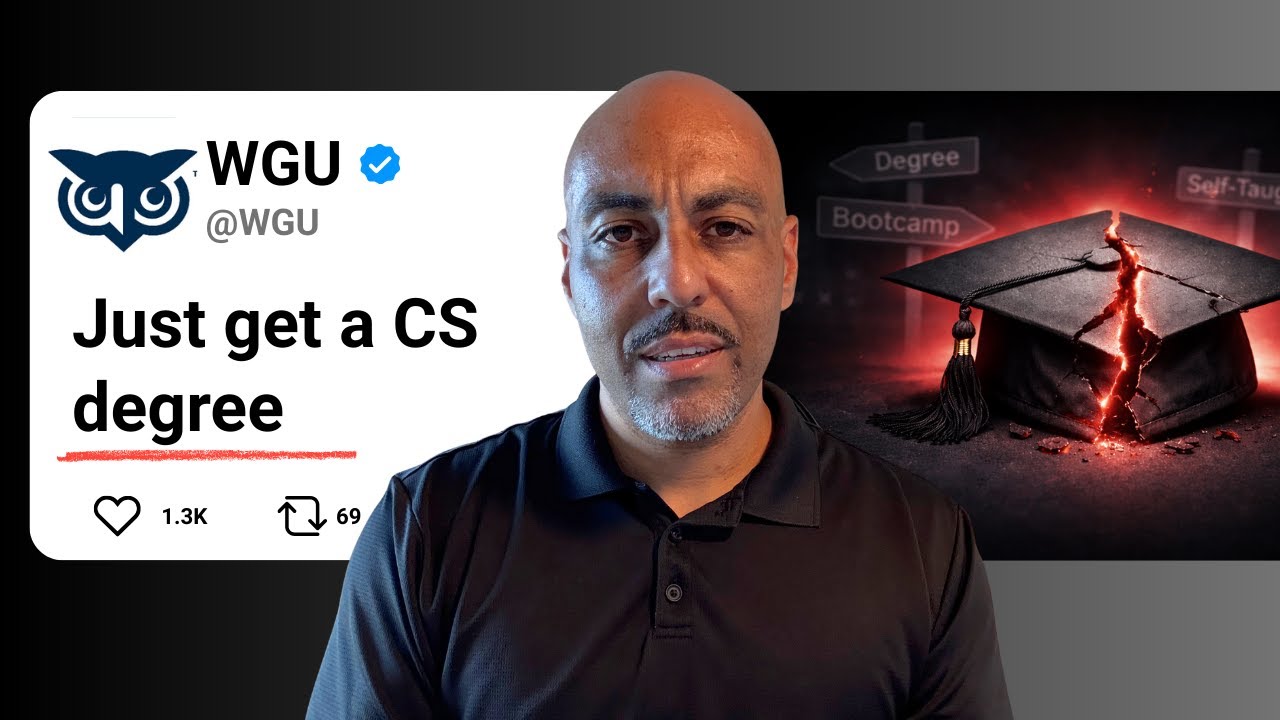
The speaker compares three main paths to becoming a software developer: self-taught, coding bootcamp, and college degree, emphasizing that the best choice depends on individual circumstances. Drawing from personal experience—having been both self-taught and a bootcamp graduate—the speaker notes that the tech industry, especially in places like the San Francisco Bay Area, often cares less about formal education and more about practical skills and the ability to pass technical interviews. While a college degree can help clear initial hiring filters, its importance diminishes as one progresses in their career, particularly at top tech companies on the coasts.
College degrees, especially from prestigious universities, can offer valuable networks and internship opportunities, which can accelerate job placement. However, the speaker warns that attending a mid- or lower-tier college is unlikely to guarantee a high-paying tech job, especially in competitive markets. College programs often lack practical training in modern frameworks and tools, which are essential for many entry-level roles. Theoretical knowledge from college becomes more relevant later in one’s career, particularly for senior positions that require a deeper understanding of computer science fundamentals.
Coding bootcamps are presented as a viable option for those who need structure, accountability, and a faster route into the industry. While bootcamps are sometimes viewed skeptically, they can be effective for motivated individuals, especially when choosing reputable programs like App Academy or Hack Reactor. Bootcamps tend to focus heavily on practical skills, which helps graduates hit the ground running in their first jobs. However, they often lack depth in computer science theory, which can become a disadvantage as one seeks more senior roles.
The self-taught route is described as attractive due to its low cost and flexibility, but it requires a high degree of discipline, organization, and the ability to curate one’s own curriculum. The speaker admits that, despite initial attempts to learn independently, attending a bootcamp was crucial for bridging knowledge gaps and gaining the confidence to apply for jobs. While it is possible to succeed as a self-taught developer, most people struggle with direction and accountability, leading to longer timelines and less efficient learning.
Ultimately, the speaker advises choosing a path based on personal needs, resources, and learning style. Bootcamps are recommended for those with limited time and a need for structure, while college may be worthwhile for younger individuals with access to top-tier programs. The self-taught route is viable for highly motivated learners, especially if they have mentorship or access to curated curricula. The speaker cautions against outdated advice and emphasizes the importance of focusing on the minimum effective knowledge needed to get hired, regardless of the chosen path.