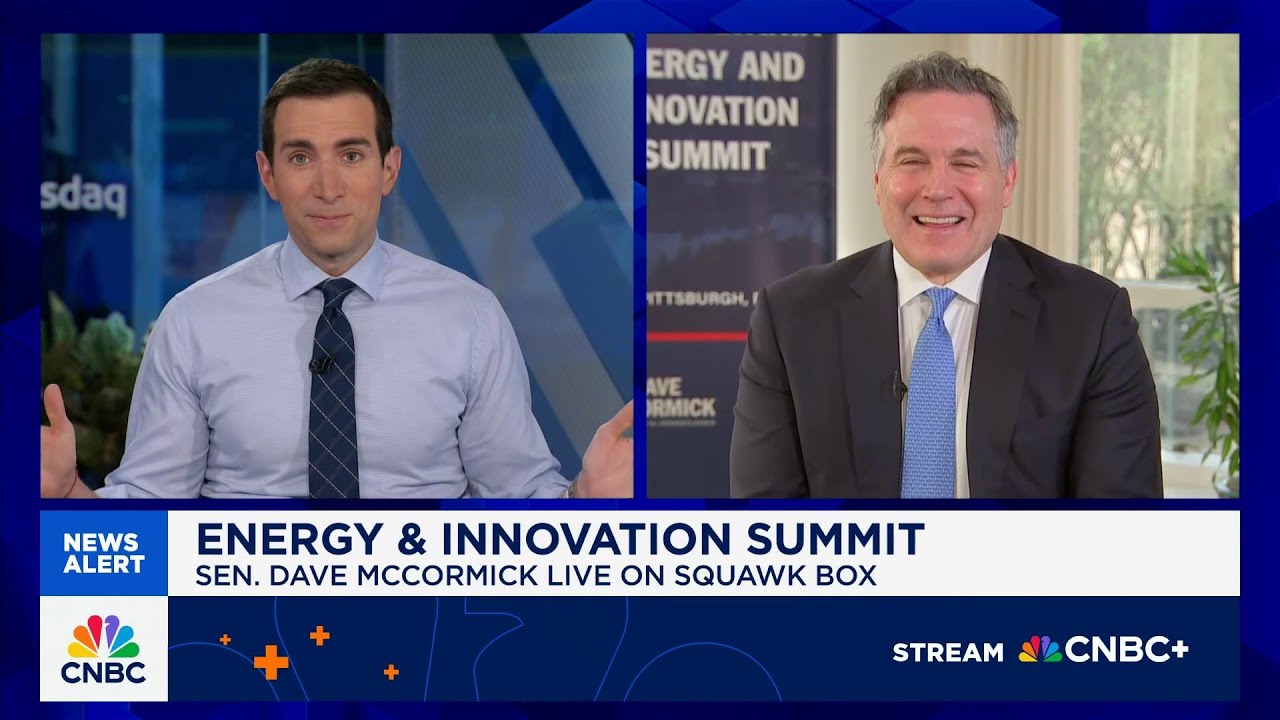
Senator David McCormick joined CNBC to discuss the inaugural Energy and Innovation Summit held in Pittsburgh, highlighting the unique convergence of energy and artificial intelligence (AI) leaders at the event. Hosted at Carnegie Mellon University, the summit brought together around 60 CEOs from major companies, focusing on how to lead the upcoming energy and AI revolutions. Pennsylvania’s strategic advantages, including abundant energy resources, a skilled workforce, and technological expertise, position it as a critical hub for these industries. The summit also showcased commitments exceeding $90 billion towards investments in data centers, energy production, transmission, distribution, and workforce development programs aimed at preparing the next generation for the evolving industrial landscape.
On the topic of energy, Senator McCormick emphasized Pennsylvania’s significant role as the second-largest energy producer in the U.S. with vast natural gas reserves and a strong nuclear energy base. He advocated for an all-encompassing energy approach that includes nuclear power, natural gas fracking, and other energy sources, while expressing opposition to subsidies that distort market dynamics. McCormick acknowledged the increasing energy demands driven by AI advancements, predicting that energy consumption could triple in the next 15 years. To meet this demand without negatively impacting consumers, he stressed the importance of ensuring a robust and diverse energy supply.
Addressing concerns about AI’s impact on the workforce, McCormick conveyed optimism about the potential for job creation through investments in skilled worker programs. He highlighted the need for training initiatives that equip Pennsylvanians with the skills required to thrive in the new industrial era shaped by AI and energy innovations. This approach aims to balance technological progress with workforce development, mitigating fears about job displacement and ensuring economic growth benefits local communities.
The conversation also touched on the geopolitical aspects of AI technology, particularly the competition with China. McCormick discussed the recent decision by Nvidia to sell its H100 AI chips to China, a move that marked a shift from previous export restrictions due to national security concerns. He explained the delicate balance between maintaining U.S. leadership in advanced chip technology and participating in the global market. While emphasizing the need to keep the most advanced chips within the U.S. and allied countries, McCormick recognized the importance of allowing U.S.-based companies to access international markets to avoid creating alternatives like Huawei.
In summary, Senator McCormick portrayed the Energy and Innovation Summit as a pivotal moment for aligning energy and AI sectors to drive economic and technological leadership. He advocated for a comprehensive energy strategy, workforce development, and a nuanced approach to technology exports that balances national security with global market participation. Pennsylvania’s unique resources and talent pool were highlighted as key assets in this endeavor, positioning the state and the nation to lead in the next industrial revolution fueled by energy and AI advancements.