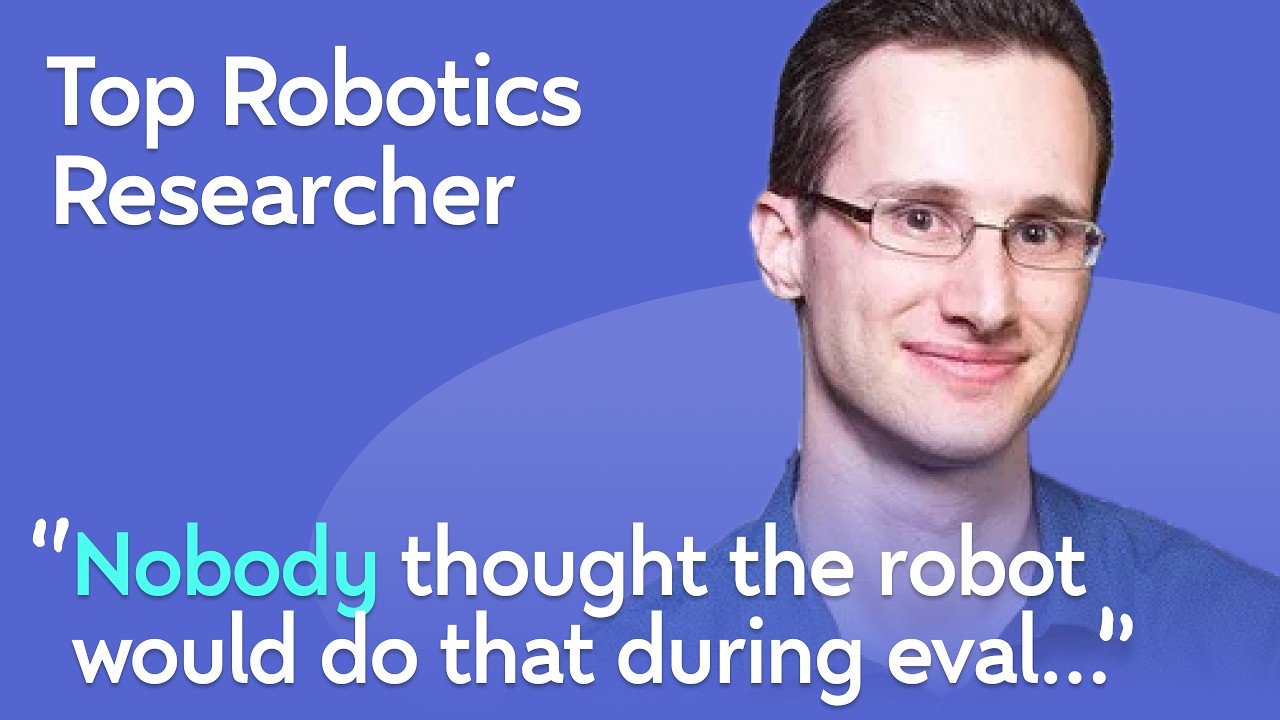
Sergey Levine discusses the current challenges and promising advancements in humanoid robotics, emphasizing the need for diverse, embodied data and a robust ecosystem to achieve reliable, generalizable robots capable of autonomous operation within the next decade. He highlights the importance of learning from global developments, particularly in China, and envisions robots as integrated physical assistants rather than mere labor replacements, while advocating for empirical AI safety research and broad foundational knowledge in the field.
In this insightful discussion, Sergey Levine, a leading robotics researcher, delves into the current state and future prospects of humanoid robotics. He emphasizes that unlike large language models (LLMs) which have reached a stage of predictable scaling and industrialization, robotics is still in the phase of establishing fundamental technologies. The progress in robotics is marked by assembling various puzzle pieces rather than steady incremental improvements. Levine highlights some astonishing emergent capabilities in robotics, such as robots exhibiting common-sense behaviors like disentangling and folding clothes, and even making child-like mistakes that reveal a developing understanding of tasks.
Levine praises the advancements in autonomous driving as a proof point that complex, learning-based physical AI systems can be successfully deployed in the real world. He notes that robotics, unlike NLP or computer vision, faces unique challenges such as safety concerns and a less mature ecosystem for data sharing and hardware availability. He stresses the importance of building a healthy, holistic ecosystem encompassing research, manufacturing, and supply chains to accelerate progress. Levine also acknowledges the impressive robotics work coming out of China and suggests that the U.S. and Europe should learn from global developments to strengthen their own ecosystems.
A key theme Levine discusses is the importance of generalization and data diversity in robotics. He explains that robots benefit from training on broad, embodied data that grounds their understanding of the physical world, which then allows them to better absorb other types of data, including human video demonstrations. He shares fascinating findings that robot foundation models trained solely on robot data can represent human and robot experiences similarly, indicating strong potential for cross-domain learning. Levine also describes innovative approaches like using intermediate image-based “thinking” steps to enable skill transfer across different robot morphologies.
Addressing the timeline for widespread humanoid robotics deployment, Levine is cautiously optimistic about significant progress within single-digit years. He outlines milestones such as robots autonomously improving through experience in new environments and demonstrating robust common-sense reasoning to handle unexpected situations. However, he warns that achieving the high reliability and generalization needed for practical use remains a major challenge. He contrasts robotics with LLMs, noting that robots must operate autonomously without constant human intervention, raising the bar for robustness and safety.
Finally, Levine reflects on the broader implications of robotics and AI safety. He advocates for empirical experimentation to understand real-world impacts and acknowledges the complexity of anticipating societal responses. He envisions robots not as mechanical humans replacing labor but as ubiquitous physical assistants integrated into everyday life, analogous to how computing proliferated in diverse forms. Levine also shares advice for newcomers to the field, emphasizing the value of incorporating broad prior knowledge and scaffolding learning with existing understanding rather than starting from scratch. This holistic perspective underscores the exciting yet challenging path ahead for humanoid robotics.
Useful Links