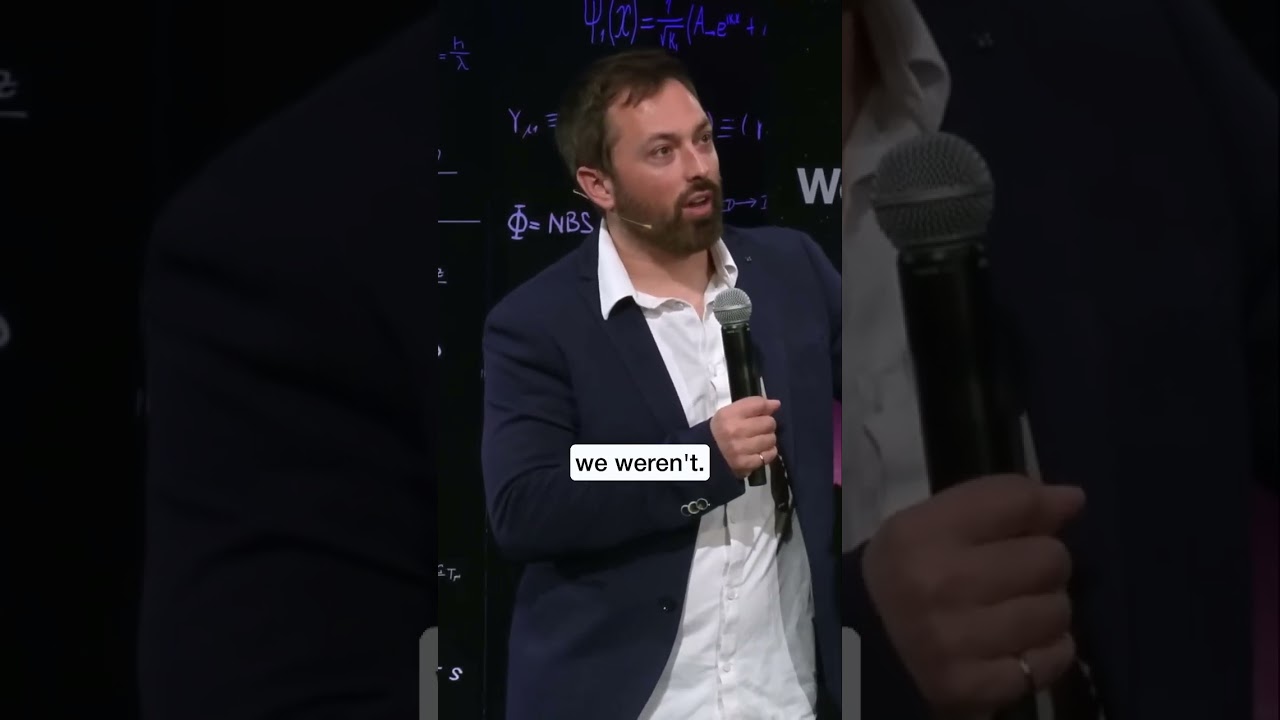
The speaker warns that overusing AI aids in education may hinder students’ development of essential skills and critical thinking, especially in early learning stages. They advocate for a balanced, phased approach—restricting AI use during foundational learning while allowing it in appropriate contexts—to ensure meaningful skill development through hands-on practice.
The speaker expresses concern about the overuse of AI aids in education, particularly highlighting the risk that these tools might enable students to complete tasks without engaging in the necessary work themselves. They emphasize that the process of doing the work is crucial for learning and developing understanding, and reliance on AI could undermine this fundamental aspect of education. The speaker worries that if students bypass the effort involved in learning, they may not develop the skills and critical thinking needed for real comprehension.
They suggest that it might be beneficial to restrict the use of AI tools during the early stages of education. In these formative years, students should focus on developing foundational skills through traditional methods, such as manual problem-solving and writing. The idea is to ensure that students first gain a solid grasp of core concepts without over-reliance on AI, which could potentially hinder their learning process at this critical stage.
The speaker draws a parallel to the use of calculators in school exams, referencing the TI 82 or TI 83 models. They recall that calculators were permitted during certain parts of exams but not others, allowing students to develop mental math skills while also benefiting from technological aids when appropriate. This analogy supports the idea that AI tools could be integrated selectively, with some tasks allowing AI assistance and others requiring independent effort to promote genuine learning.
They advocate for a balanced approach, where AI aids are permitted in some contexts—such as during writing or problem-solving exercises—while others remain AI-free. This approach would help preserve the essential learning experiences, especially in foundational education, by ensuring students still engage deeply with the material. The goal is to maintain the challenge and effort necessary for meaningful skill development while leveraging AI as a supportive tool when appropriate.
Finally, the speaker emphasizes the importance of hands-on, in-class experiences, such as dedicated writing sessions, to ensure students develop the necessary skills through practice. They believe that in early education, students need to spend significant time engaging directly with tasks to build competence and confidence. Overall, the message advocates for a thoughtful, phased integration of AI aids in education, prioritizing foundational skill development before widespread adoption in later stages.