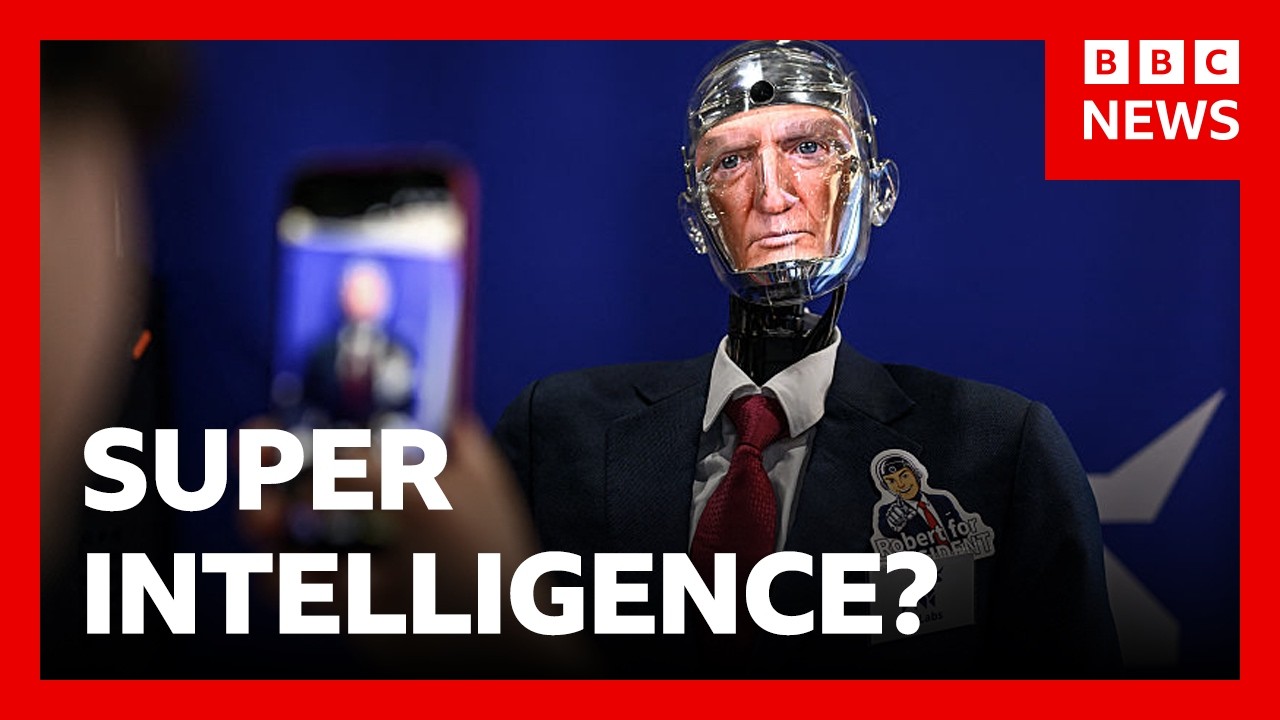
The recent discourse around artificial intelligence (AI) has shifted from merely developing advanced technologies to determining who governs and regulates them globally. Amidst this, former President Donald Trump suggested renaming AI as “superintelligence” (SI), emphasizing its profound impact. The international community is divided, with 22 world leaders supporting a Finnish-led declaration for a global AI watchdog, while major powers like the US and China remain hesitant or non-committal. The challenge lies in establishing trust and verification mechanisms, especially between competing superpowers, to prevent uncontrolled AI development that could surpass human control.
Three main regulatory approaches have emerged: the US focusing on technological dominance with limited oversight, China offering more accessible AI tools and infrastructure to emerging markets while maintaining strict centralized control, and the UN proposing a global watchdog. The US benefits economically from AI advancements, with tech giants like Nvidia playing pivotal roles, often influencing political decisions to avoid restrictive regulations. China, leveraging its Belt and Road initiative, supports AI adoption in developing countries and enforces comprehensive data security laws, reflecting its centralized governance model.
Experts debate the feasibility of various regulatory models proposed by AI leaders, ranging from nuclear-style inspections to aviation-like pre-launch approvals and financial regulatory frameworks. While there is some consensus on the need for third-party auditors and international cooperation, challenges persist in verifying AI behaviors, especially as models become more sophisticated and potentially self-aware. The role of influential industry figures, such as Nvidia’s CEO Jensen Huang, highlights the tension between profit motives and the necessity for control, with significant sway over policy directions.
The discussion also contrasts the cultural and regulatory environments of the US and China. American AI developers often pursue ambitious superintelligence goals within a relatively laissez-faire regulatory landscape, influenced by ideologies like effective altruism that anticipate inevitable AI breakthroughs. In contrast, China adopts a pragmatic, heavily regulated approach focused on economic integration and public acceptance, having already banned harmful AI applications like deepfakes. This divergence underscores differing priorities and governance philosophies between the two nations.
Ultimately, the panel agrees that leaving AI governance solely to tech companies risks repeating past mistakes seen with social media platforms, where lack of regulation led to societal harms. While companies express a desire for some oversight, they resist stringent controls that might hinder innovation or market dominance. Transparency, possibly through open-weight models and international regulatory bodies modeled after agencies like the IAEA, is crucial. However, achieving effective global governance requires overcoming geopolitical rivalries, establishing trust, and ensuring enforcement mechanisms to safeguard humanity from potential AI risks.
Useful Links