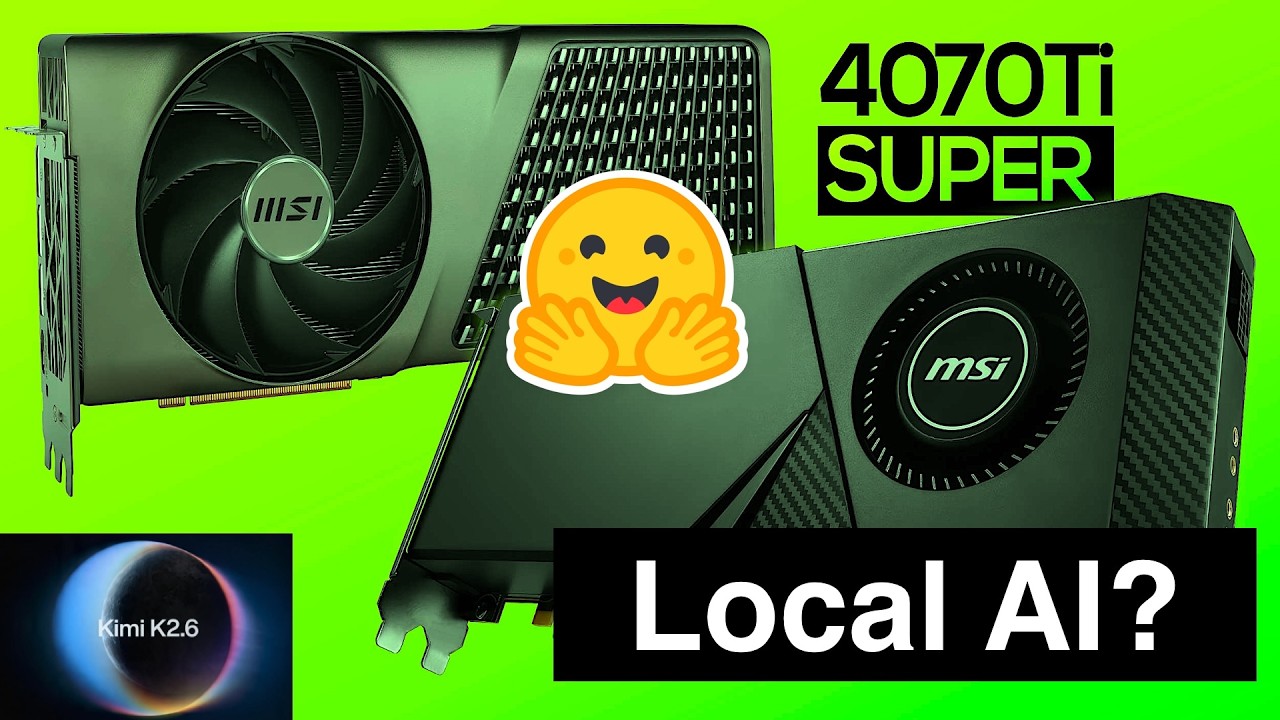
The video discusses whether the Nvidia RTX 4070 Ti Super GPU is a good purchase for local AI workloads in 2026. The presenter notes that while the GPU is interesting and more capable than lower-tier models like the 4060 or 4060 Ti, it is important to ensure you get the 16 GB VRAM variant, as there are multiple versions available. The 4070 Ti Super offers improvements over the 4070 Ti, including increased VRAM from 12 GB to 16 GB and a wider memory interface (256-bit vs. 192-bit), which enhances memory throughput. However, the presenter cautions that these improvements may be less impactful if the AI models require offloading due to VRAM limitations.
In terms of performance, the 4070 Ti Super is not as powerful as the RTX 4090 or even the older RTX 3090, but it remains a capable option for certain local AI models. The video highlights the Kimmy K25 GUF quant from Unsloth as a promising model that can run efficiently on this GPU, especially with upcoming quantized versions optimized for 16 GB VRAM. This model is praised for its reasoning capabilities, making it suitable for general-purpose AI tasks. Additionally, the Quen 3.6 model is recommended for coding tasks, although it may still require some offloading on the 4070 Ti Super, where the 3090 might perform better.
The presenter references localai.computer as a useful resource for benchmarking various AI models on GPUs, noting that the 4070 Ti Super handles smaller quantized models well and performs reasonably with INT4 quantizations. The GPU is also noted for its efficiency in multi-GPU setups and concurrent throughput, making it suitable for agentic AI workflows like coding agents. However, some older GPUs from the 3000 series may face challenges with efficient GPU-to-GPU communication compared to newer models.
A significant downside discussed is the pricing of the 4070 Ti Super. The GPU is often found inflated in price, typically ranging from $700 to $800 or more, especially for the 16 GB variant. In comparison, RTX 3090 cards, despite being older, can sometimes be found at similar or slightly higher prices but offer more VRAM and better overall performance. The presenter also points out that newer GPUs like the RTX 5070 Ti or 560 Ti, which come with 16 GB VRAM, are available for not much more money and generally provide better performance, making the 4070 Ti Super less attractive as a purchase.
In conclusion, while the RTX 4070 Ti Super is a solid Nvidia GPU and capable of running many local AI models effectively, the presenter does not recommend buying it for local AI in 2026 due to its price-to-performance ratio and competition from other GPUs. The video encourages viewers to share their opinions and experiences in the comments, especially if they have found better GPUs for local AI workloads. Overall, the advice is to consider alternatives before investing in the 4070 Ti Super for AI tasks.