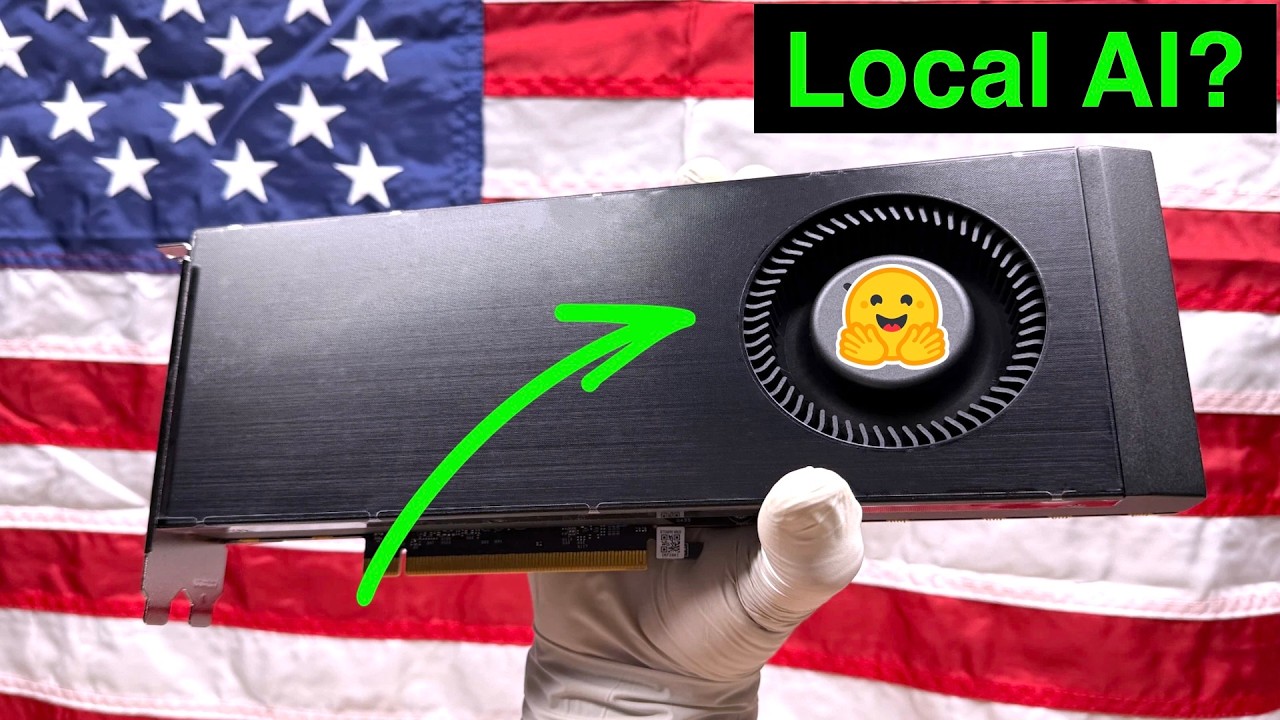
In 2026, buying GPUs has become increasingly challenging due to high demand and supply constraints, likened to navigating a large oil tanker through a missile-filled strait. Factors such as Sam Altman purchasing large amounts of RAM and copper, and rising power costs driven by data center construction in populated areas, have exacerbated the situation. Despite these difficulties, there is optimism centered around the Nvidia GeForce RTX 4090, especially with recent developments involving domestic modifications in the US, which could signal a positive shift in GPU availability and performance for AI applications.
The RTX 4090 occupies an interesting niche in the GPU market. While it is less sought after in some professional sectors, this has led to more units entering the secondary market and a gradual price reduction. Previously priced above $2,400, these GPUs can now be found for under $2,000 on platforms like eBay and Facebook Marketplace. Although not as affordable as the RTX 3090 or as powerful as the RTX 5090, the 4090 offers a compelling balance of performance and cost, making it an attractive option for many users, especially those interested in local AI workloads.
From a technical standpoint, the RTX 4090 features 16,000 CUDA cores, 24GB of GDDR6 memory, and fourth-generation Tensor cores delivering around 1,300 AI TOPS. Compared to the 3090, it offers a 15-26% performance boost in most AI inference tasks, with some cases showing nearly double the speed. However, it lacks NVLink support and NVFP4 capabilities, which are advantages found in the newer 5000 series GPUs. Despite these limitations, the 4090 performs impressively in local AI inference engines like Llama.cpp, and ongoing optimizations with tools like Deep Flash and Qwen GPEX are enhancing its utility further.
Performance benchmarks reveal that while pairs of 3090 TIs and Nvidia RTX Pro 6000 Black GPUs still hold some top scores, the RTX 4090 as a single GPU delivers strong results, particularly with models like Qwen 3.6 27B using Q4KM GGUF formats. This makes it a solid choice for local AI tasks, even if it is somewhat more challenging to scale across multiple GPUs compared to other models. The community is actively exploring ways to maximize the 4090’s capabilities, which bodes well for its continued relevance in AI workflows.
In terms of pricing, the RTX 4090 is becoming more accessible, with good deals available around the $2,000 to $2,200 range, a significant discount compared to the $3,000+ price tags of the RTX 5090 series. The video’s creator recommends avoiding purchases above $2,600 for the 4090, emphasizing that it remains a fantastic option for 2026, especially for running large AI models locally. The discussion closes by inviting viewers to consider whether they will opt for the standard 4090 or invest in the more expensive 48GB variant, highlighting the ongoing debate about value versus capability in the current GPU market.