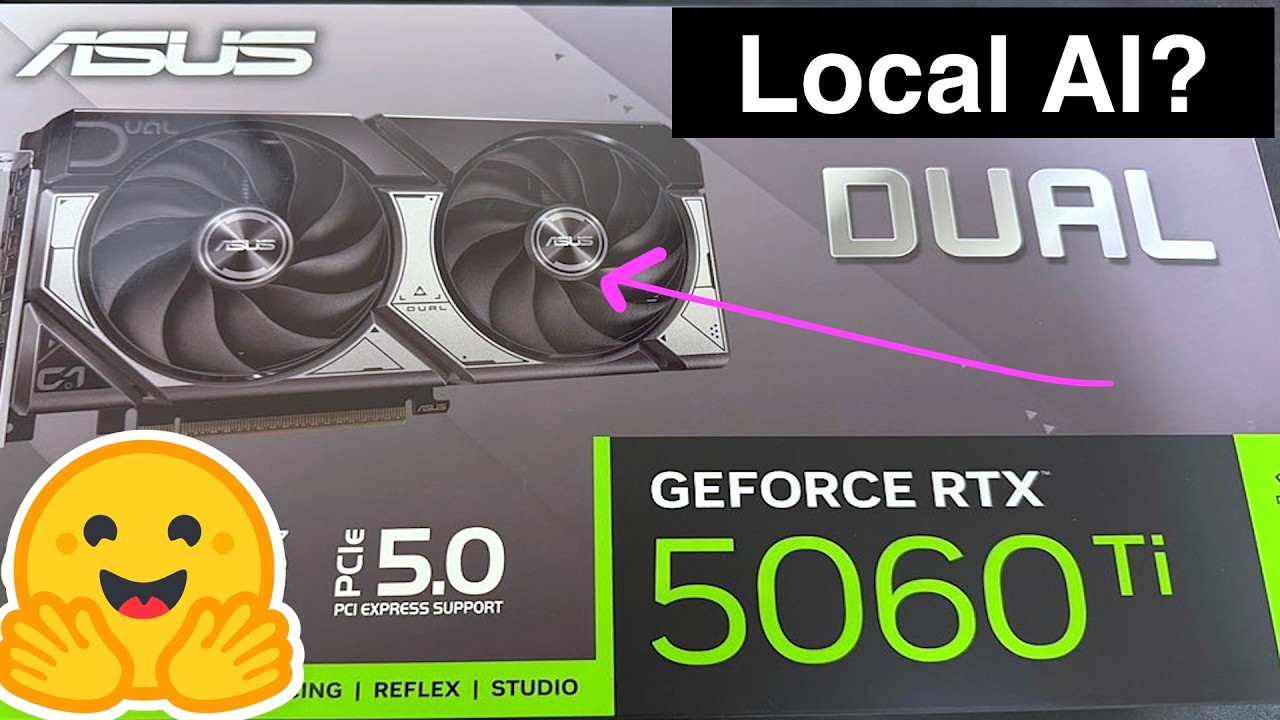
The NVIDIA RTX 5060 Ti 16GB GPU is emerging as one of the best options for local AI tasks available at MSRP right now, despite originally being designed primarily for gaming. Its performance is comparable to the RTX 3090 in many respects, though it is limited by factors such as memory bandwidth and bus width. However, with advancements in software tools like LM Studio, VLM inference engines, and quantization techniques from developers like Unsloth, the 5060 Ti can deliver impressive results for local AI agents, video generation, and creative applications, making it a versatile and cost-effective choice.
This GPU offers 16GB of VRAM and fifth-generation tensor cores, providing solid AI performance at a relatively affordable price point, typically between $450 and $600 new, with used options often available for less. Its power requirements are modest, which means it does not demand high-end power supplies or complex setups, making it accessible for average users building local AI systems. The 16GB VRAM variant is essential, as the 8GB model is insufficient for most AI workloads.
The real strength of the 5060 Ti lies in its compatibility with recent AI models and quantization methods, particularly the Qwen 3.6 series and its successors like Qwen 3.5 and 3.6. These models have been optimized to fit within the 16GB VRAM limit with minimal offloading, enabling efficient local inference and agentic AI tasks. Researchers and users have reported strong benchmark results, especially in local coding, multimodal reasoning, and web-based AI agent applications, demonstrating that this GPU can handle complex AI workloads effectively.
Community benchmarks and user experiences further validate the 5060 Ti’s capabilities, showing it can run models like GLM47 at usable speeds and even support local video generation at 720p resolution. While it may not match the raw power of higher-end GPUs like the RTX 3090 in every scenario, its balance of price, performance, and power efficiency makes it a practical choice for those interested in local AI without investing in expensive, data-center-grade hardware.
In summary, the RTX 5060 Ti 16GB is a compelling mid-range GPU for local AI enthusiasts, especially when paired with advanced quantized models like Qwen 3.6 and tools such as Hermes or OpenClaw. Its affordability, decent VRAM capacity, and strong community support position it as a top pick for users looking to build capable local AI systems without breaking the bank. As local AI continues to grow, this GPU is likely to remain relevant and valuable for the foreseeable future.