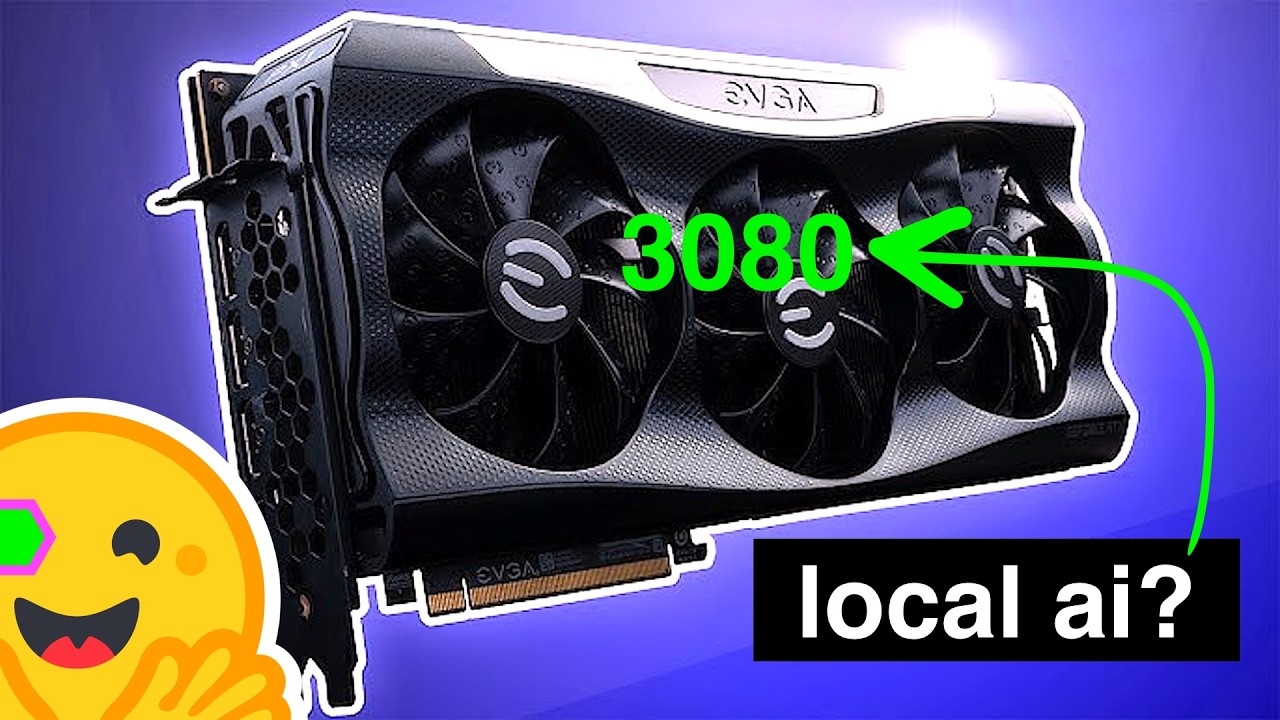
The video discusses the relevance of the Nvidia RTX 3080 GPU for local AI applications in 2026, particularly with the advancements brought by Gemma 4 and Google’s Turbo Quant. Gemma 4 is highlighted as a highly efficient AI model that maintains strong performance even when significantly quantized and trimmed down, allowing it to run effectively on GPUs with less VRAM, such as the RTX 3080, which typically has 10 to 12 GB of VRAM. This makes the 3080 a cost-effective option for local AI, especially since these GPUs remain relatively inexpensive compared to newer models and have not been heavily impacted by the VRAM market fluctuations.
The RTX 3080 is praised as one of Nvidia’s best engineering achievements, offering a solid balance of performance and features. It shares its GPU die with the RTX A5000, which has 24 GB of VRAM, making the 3080 a powerful yet affordable choice for AI workloads. While it lacks some features like NVLink found in the 3090, the 3080 still provides ample CUDA cores and architectural benefits suitable for running quantized AI models like Gemma 4. Variants such as the EVGA 12 GB version are noted for their reliability and performance, making them particularly appealing for AI enthusiasts.
Users have reported positive experiences running Gemma 4 quantized models on the RTX 3080, even with smaller quantizations like the E2B variant, which runs at a modest speed but is sufficient for many local AI tasks. The video emphasizes that modern local AI use cases often prioritize agentic orchestration and reasoning over raw speed, and Gemma 4’s design supports extended context windows and better cache performance, which are crucial for these applications. This contrasts with older models like Llama, which suffered significant performance drops when heavily quantized.
The video also explores different quantized versions of Gemma 4, including a 5-billion parameter model optimized for less powerful GPUs and edge devices, and a multimodal quant that supports advanced features like first-party VLM support. These quantizations enable the RTX 3080 and similar GPUs with under 16 GB VRAM to run sophisticated AI models effectively. The discussion touches on the pricing and availability of various RTX 3080 cards, recommending EVGA and Nvidia OEM cards for their build quality, while cautioning against less reliable brands. The video also mentions the existence of 20 GB RTX 3080 variants, which, despite offering more VRAM, are less cost-effective compared to the 3090.
In conclusion, the RTX 3080 remains a compelling choice for local AI in 2026 due to its balance of price, performance, and compatibility with advanced quantized models like Gemma 4. While it may not match the speed of higher-end GPUs, its affordability and solid engineering make it accessible for many users interested in running local AI workloads. The video encourages viewers to consider the 3080 for their AI projects and hints at future content exploring the use of Gemma 4 on even less powerful GPUs like the RTX 3070.